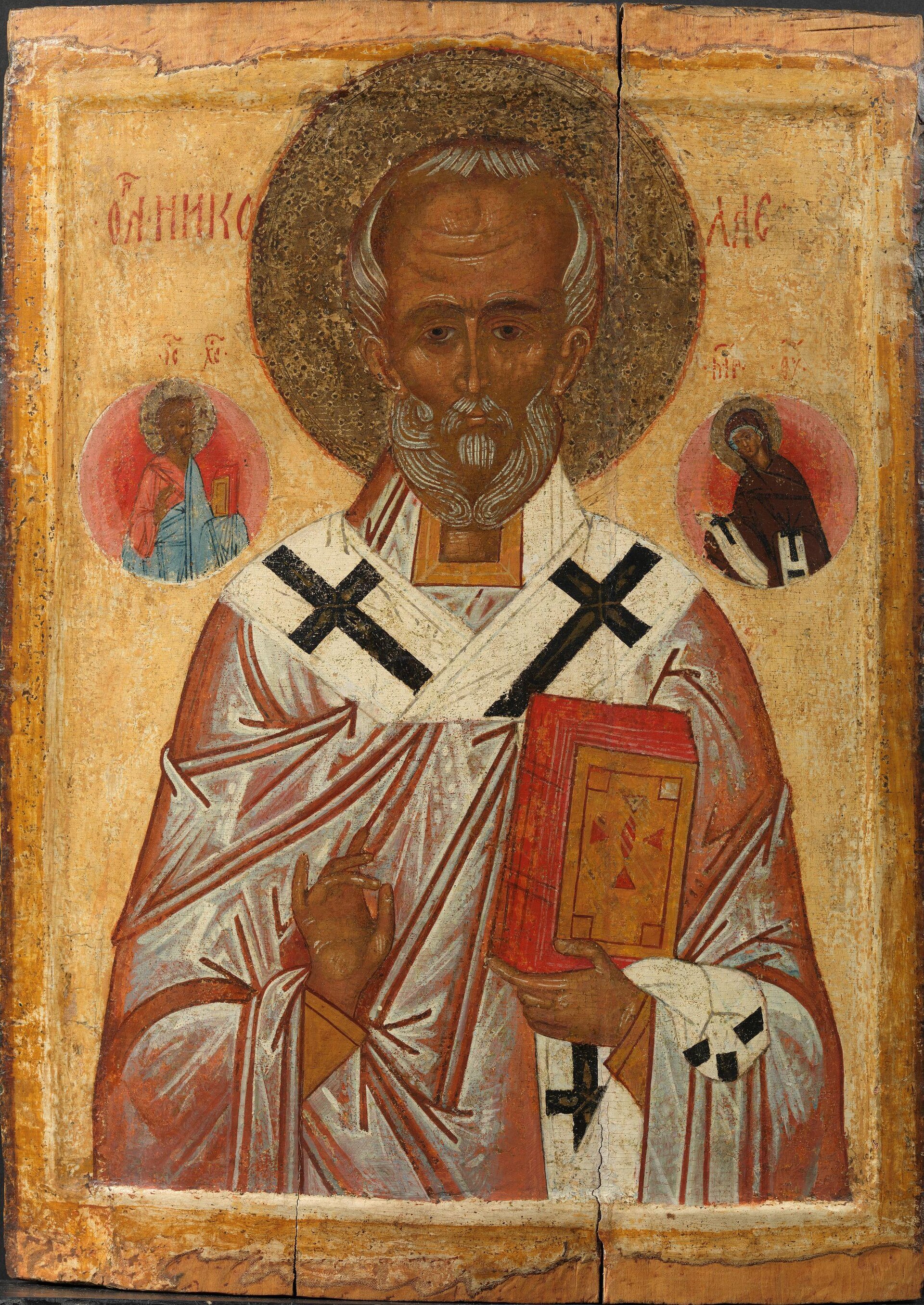
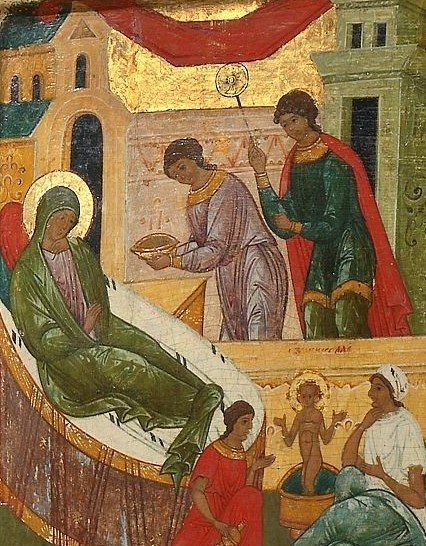
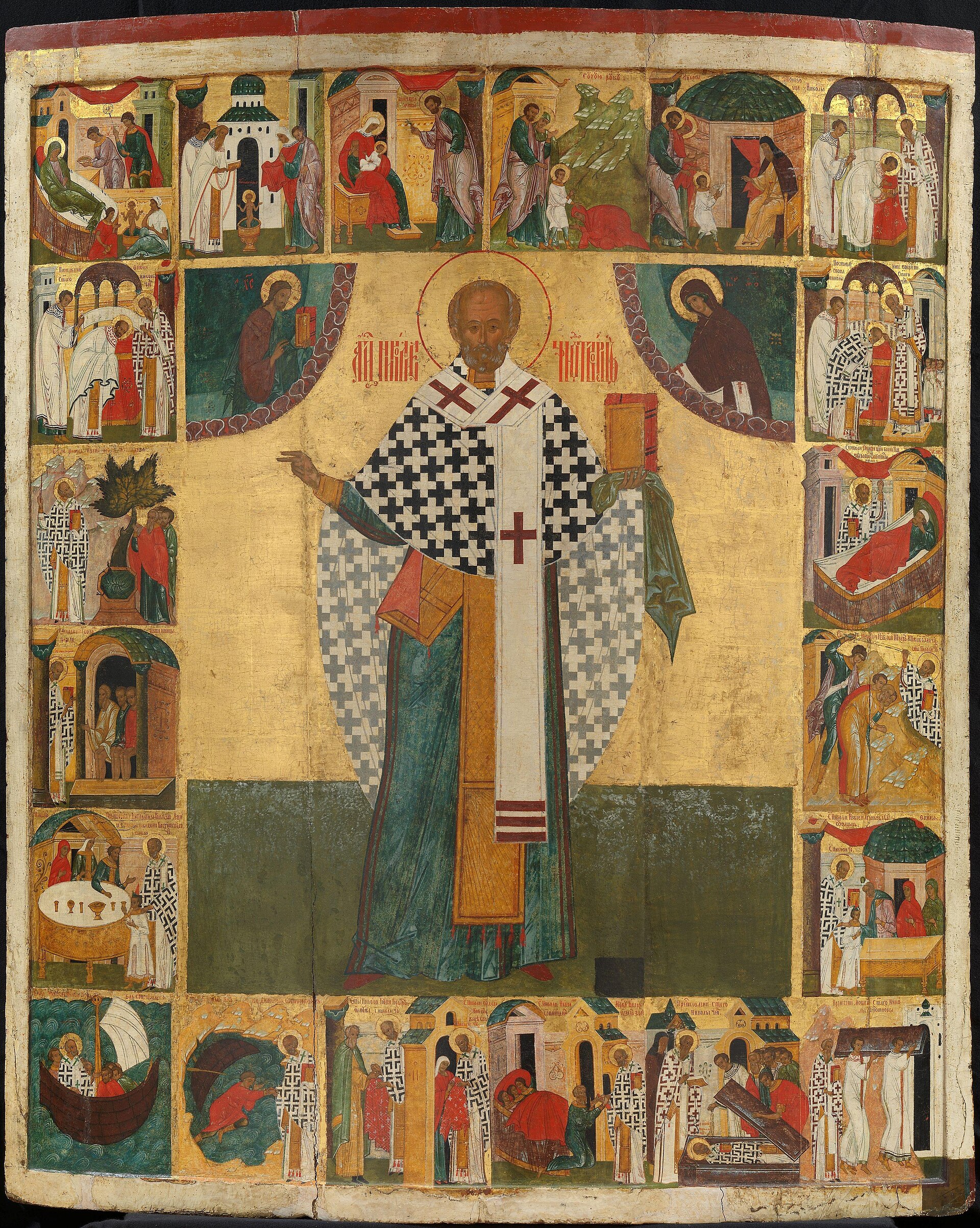
The land of Lycia nurtured me. I was born in the city of Patara. My parents, Theophanes and Nonna, were pious, noble, and wealthy; for their God-pleasing life, many alms, and great virtues the Lord granted them me — their only son. They were barren and had already lost hope of having children, but through many prayers, tears, and alms they begged me from God.
They gave me the name Nicholas — “victor of nations.” After my birth my mother was at once freed from her infirmity and remained barren until her very death: she could have no other such son; I alone was to be the first and the last. Still an infant, on Wednesdays and Fridays I took my mother’s milk only once, and that in the evening, after my parents had completed their customary prayers. My father and mother marveled at this and foresaw what a strict faster I would be. Having become accustomed to such abstinence from my swaddling clothes, I spent every Wednesday and Friday of my life until my very death in strict fasting.

As I grew in years, I also grew in understanding, being taught virtue by my pious parents. When the time came to study the Divine Scriptures, in a short while I comprehended much wisdom. I shunned vain friends and idle conversations, avoided speaking with women and would not even look at them; in the temple of God I spent whole days and nights in prayer and the reading of the Divine books: “I had rather be a doorkeeper in the house of my God” (Ps. 83).
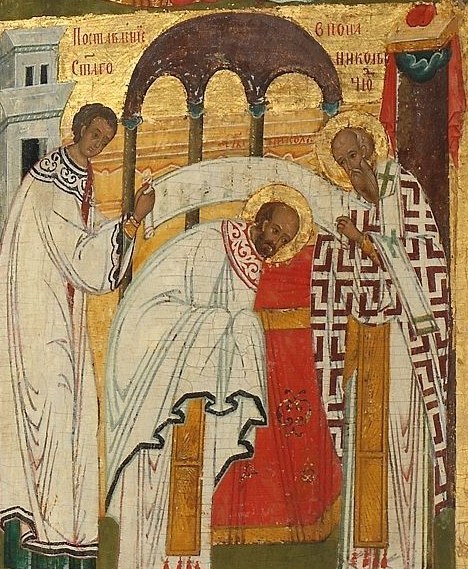
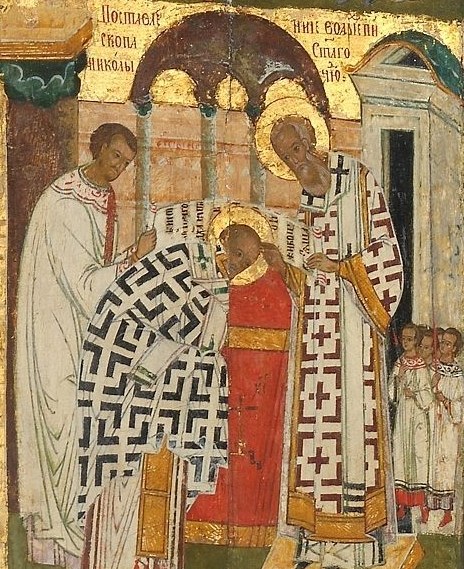
I had an uncle, the bishop of the city of Patara, who bore the same name as I — in his honor I too was named Nicholas. Seeing that I was advancing in virtuous life and withdrawing from the world, he advised my parents to offer me to the service of God. They obeyed and dedicated to the Lord their child, whom they had received from Him as a gift. The bishop raised me to the rank of presbyter and, while ordaining me, by the inspiration of the Holy Spirit said to the people: “I see, brethren, a new sun rising over the earth and bringing merciful consolation to the sorrowful. Blessed is that flock which shall be counted worthy to have him as its shepherd.”
Having received the presbyteral rank, I added labor to labor. When my uncle went to Palestine to venerate the holy places, he entrusted the governance of the Church to me. At that time my parents departed to eternal life; receiving their estate as inheritance, I distributed it to those in need, for I paid no heed to transient wealth: “Unto Thee, O Lord, do I lift up my soul” (Ps. 24).

There lived in Patara a man who had once been noble and wealthy but had now fallen into utter poverty. He had three daughters, very beautiful in appearance. When there was nothing left to eat and nothing to wear, he resolved to give his daughters over to fornication and to turn his house into a house of harlotry. O woe, to what unworthy thoughts utter poverty leads! The Lord, Who does not desire to see a man perish, put a good thought into my mind and by secret inspiration sent me to the man who was perishing in soul.
I did not wish to show this mercy openly: first, to avoid human glory, according to the word of the Gospel — “when thou doest alms, let not thy left hand know what thy right hand doeth”; second, so as not to offend him who had passed from riches into poverty, for alms would remind him of his former prosperity. I took a large bag of gold, came at midnight to his house, threw the bag through the window, and hastened home. In the morning he found the gold, could not believe his eyes, wept for joy — and gave his eldest daughter in marriage.
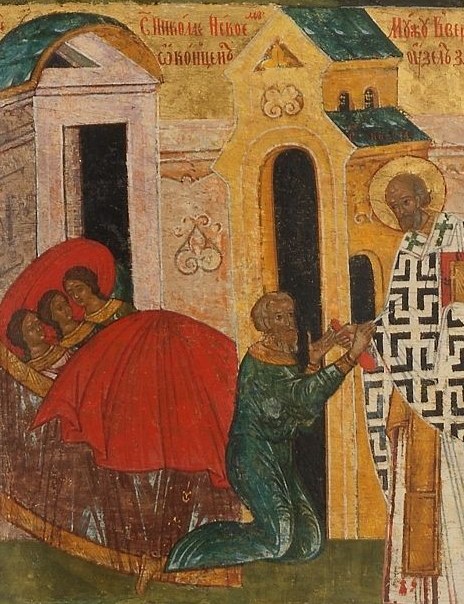
Learning that he had acted according to my desire, I loved him and on another night through the same window threw a second bag: he gave his second daughter in marriage. Then he began to stay awake at night, lying in wait for his benefactor. When I quietly came a third time and threw in the third bag, he, hearing the sound of the gold, ran after me, overtook me, recognized me, fell at my feet, and called me the deliverer of souls that had come to utter ruin. I barely raised him from the ground and took an oath from him that he would tell no one what had happened.
Of the many works of mercy, only one is recounted here.

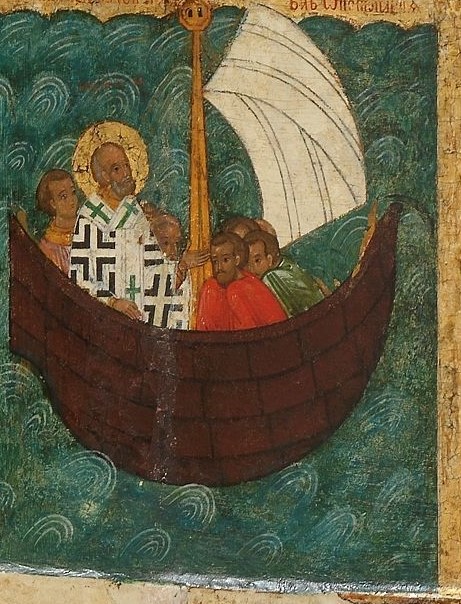
After this I desired to travel to Palestine — to see the holy places where our Lord Jesus Christ walked with His most pure feet. When the ship was sailing near Egypt, I foresaw that a storm would soon arise, and I announced to my fellow travellers: I saw the devil himself enter the ship to drown us all. At that very hour the sky became covered with clouds, and a terrible commotion arose upon the sea. The travellers in terror begged me to help them. Ordering them to take courage and place their hope in God, I began to pray fervently to the Lord — and immediately the sea grew calm and a great stillness came.
Then one of the sailors, descending from the mast, slipped and fell from on high onto the middle of the ship, was mortally injured and lay breathless. By my prayer I raised him up, and he stood as if awakened from sleep. Raising the sails, we safely reached the shore at Alexandria; having healed many sick there and comforted the sorrowing, I set out again for Palestine.

Having reached the holy city, I came to Golgotha, where Christ our God, stretching out His most pure hands upon the Cross, wrought salvation for the human race, and there from a heart burning with love I poured forth warm prayers. I visited all the holy places. When at night I wished to enter the holy church to pray, the locked church doors opened of themselves.
I intended to withdraw into the desert, but was stopped by a divine voice exhorting me to return to my homeland. On the return voyage the sailors plotted to deceive me and directed the ship to another country; I begged them to sail to Lycia, but they would not listen. Then a storm arose, turned the ship and swiftly carried it toward Lycia. Out of kindness I did them no harm and with a blessing let them go to their own country.
I myself came to the monastery founded by my uncle and called Holy Sion, and hoped to spend the remainder of my life there without leaving. But once during prayer I heard a voice from above: “Nicholas, if thou desirest to be accounted worthy of a crown from Me, go and strive for the good of the world.” I was seized with dread and pondered what this voice required of me. And again I heard: “Nicholas, this is not the field on which thou must bring forth the fruit I expect of thee; but turn back and go into the world, and let My name be glorified in thee.” Then I understood that the Lord required me to leave the labour of silence and go to the service of men for their salvation.

Avoiding vain glory among my fellow citizens, I departed to another city where no one knew me — to the glorious city of Myra, the metropolis of all Lycia. There I remained as a beggar, having nowhere to lay my head; only in the house of the Lord did I find shelter.
At that time Archbishop John reposed, and all the bishops of Lycia gathered in Myra to elect a successor. There was great disagreement, and they resolved to give themselves to prayer and fasting. To the eldest of the bishops there appeared in prayer a Man of radiant appearance and commanded him to stand by the church doors at night and watch who would be the first to enter the church: “This is My chosen one; receive him with honour and install him as archbishop; the name of this man is Nicholas.”
I had the custom of rising at midnight for prayer and coming to the morning service before the others. As soon as I entered the narthex, the bishop stopped me and asked me to say my name. I remained silent. He asked again. I meekly and quietly replied: “My name is Nicholas, I am the servant of your holiness, master.” – “Follow me, child.” He led me to the bishops, and they said to the people: “Receive, brethren, your shepherd, whom the Holy Spirit Himself has anointed.”
Unable to bear human praises, I long refused to accept the rank, but yielded to the entreaties of the council and all the people. I was also moved to this by a vision that had come to me even before the death of Archbishop John: at night I saw the Saviour standing before me in all His glory and giving me the Gospel adorned with gold and pearls, while on the other side the Most Holy Theotokos was placing upon my shoulders the hierarchal omophorion. This vision is related by Saint Methodius, Patriarch of Constantinople.

Having received the rank, I said to myself: “Nicholas! The rank you have received requires of you other ways, that you should live not for yourself but for others.” I was meek and guileless by nature, my clothing was simple, my food lenten, and all day I received those who came, listening to the needs of each.
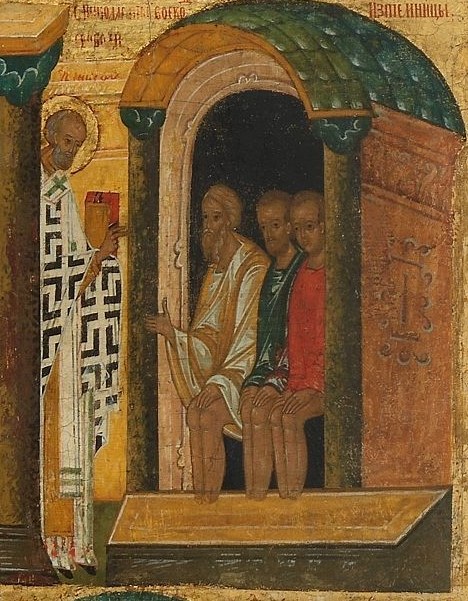
But the envious serpent raised up persecution against the Church through the impious emperors Diocletian and Maximian: an edict was issued that Christians should renounce Christ and worship idols. I freely and boldly preached the piety of Christ and was ready to suffer for Christ. I was seized and imprisoned together with many Christians in the dungeon. There I remained for no short time, enduring hunger, thirst and the confinement of the prison, and I fed my fellow prisoners with the word of God and persuaded them to be steadfast in the confession of Christ.
Then the Lord overthrew the tormentors; by the appearance of the Cross He entrusted the sceptre to Emperor Constantine, who set free all those imprisoned for Christ. Thus Myra again received its pastor.

The pious Emperor Constantine summoned the Ecumenical Council in Nicaea. The holy fathers set forth the right doctrine and anathematised the Arian heresy. Among the three hundred and eighteen fathers was I also. I stood courageously against the impious teaching of Arius and together with the holy fathers confirmed and delivered to all the dogmas of the Orthodox Faith.
The monk John of the Studite monastery relates that, being inspired like the Prophet Elias with zeal for God, I put Arius to shame not only by word but also by deed, striking him on the cheek. The fathers of the council were indignant with me and decreed that I should be deprived of the hierarchal rank. But to some of them there was a vision: on one side of me stood Christ the Lord Himself with the Gospel, and on the other the Most Pure Virgin Theotokos with the omophorion, and they gave me the signs of the rank of which I had been deprived. Understanding from this that my boldness was pleasing to God, the fathers ceased to reproach me.
Therefore the holy Church also calls me the winnowing fan that scatters the chaff-like teachings of Arius.

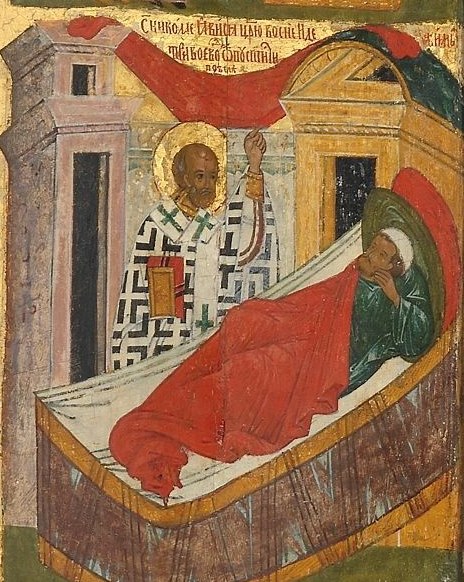
Once there was a great famine in Lycia. Taking pity on the people perishing from hunger, I appeared at night in a dream to a merchant in Italy who had loaded his entire ship with grain, gave him three golden coins as a pledge and commanded him to sail to Myra. Awakening and finding the gold in his hand, the merchant did not dare to disobey; he brought the bread to Myra and told the citizens of the vision.
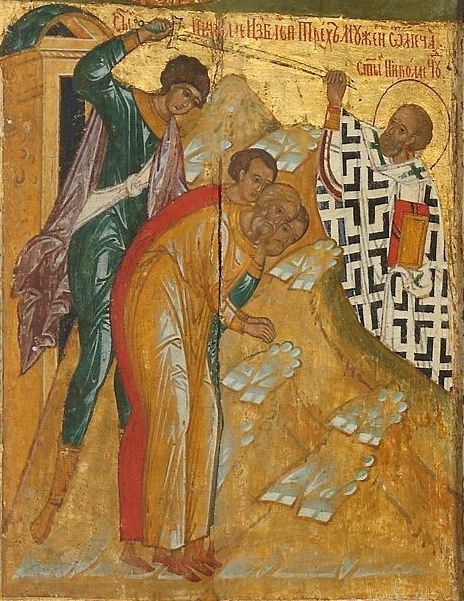
On another occasion the governor Eustathius, bribed with gold, condemned three innocent men to death. I hastened to the place of execution. The condemned men, with hands bound and faces covered, had already bowed to the ground and stretched out their bared necks; the executioner had drawn his sword. Combining meekness with wrath, I freely passed through the midst of the people, without any fear snatched the sword from the executioner’s hands, cast it to the ground and freed the condemned from their bonds. No one dared to stop me. I rebuked the governor; he long begged for forgiveness, and only when with great humility and with tears he acknowledged his sin did I grant him pardon.

The three commanders of Emperor Constantine – Nepotian, Ursus and Herpilion – who had been with me as witnesses of the salvation of those men, returned to Constantinople. The envious slandered them before the emperor, alleging that they were plotting evil against the empire; the emperor condemned them to death. In prison they remembered how I had delivered the innocent, and prayed: “O God of Nicholas, who delivered three men from an unjust death, look now also upon us”.
That same night I appeared to the emperor in a dream: “Arise quickly and release the commanders who are languishing in prison. They have been slandered to you, and they suffer innocently.” – “Who are you, that you dare to threaten us and our empire?” – “My name is Nicholas, I am the archbishop of the metropolis of Myra.” The same I said also to the governor Eulavius. In the morning the emperor summoned the commanders, learned the truth, repented and released them with the words: “It is not I who grant you life, but the great servant of the Lord Nicholas, whom you called upon for help.” He entrusted to them for me a golden Gospel, a golden censer adorned with precious stones, and two lamps, and commanded them to take them to the church of Myra.

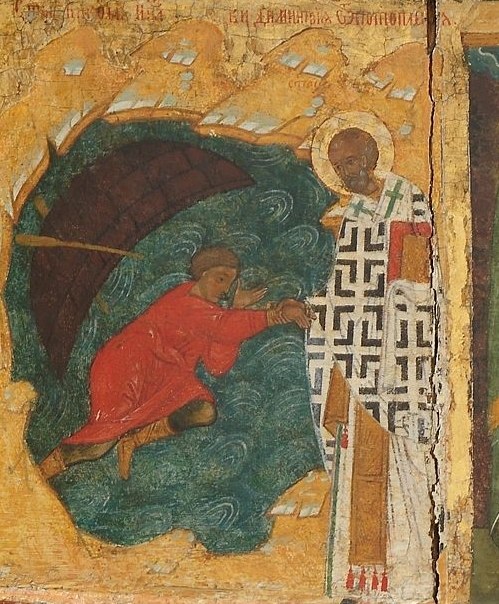
Travelers sailing from Egypt to Lycia encountered a storm: the sails were torn by the whirlwind, and the ship shuddered from the blows of the waves. They had never seen me, but had only heard that I am a swift helper to those who call upon me in troubles, and they began to call on me for help. I immediately appeared, entered the ship and said: “You called upon me, and I have come to help you; do not be afraid!” All saw how I took the helm and began to steer the ship; the storm subsided.
When they put in at Myra, they went into the city and met me on the way to church. I not only delivered them from distress, but also cared for their souls: seeing in them the sin of fornication, I said to them: “Children, I beseech you, consider within yourselves and amend your hearts and thoughts,” — and I sent them away in peace.

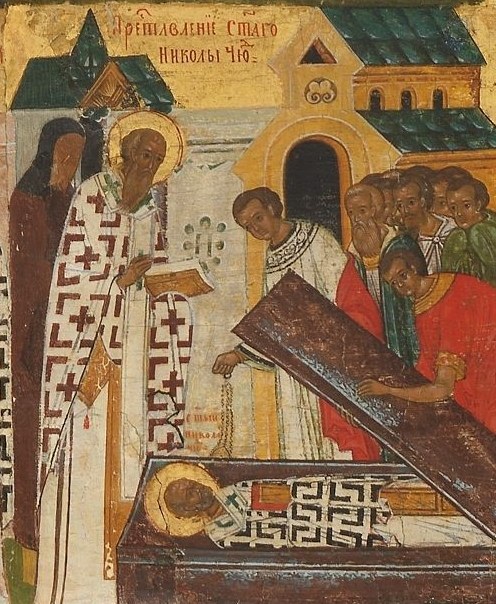
I lived many years in Myra. Having reached great old age, I paid the debt of human nature and after a short bodily illness ended my temporal life — with joy and psalmody, accompanied by the holy Angels. Bishops of Lycia gathered for the burial with all the clergy and monks and a countless multitude of people. My body was laid in the cathedral church of the Metropolis of Myra on the sixth day of December.
From my relics there began to flow fragrant and healing myrrh, with which the sick were anointed and received healing; people flocked to the tomb from all ends of the earth. For I not only in life, but also after my departure, arm myself against the demons and vanquish them — as I vanquish them even now.
The rule of faith and the image of meekness, / self-control teacher / show you to your flock / even the truth of things; / for this reason you have gained high humility, / rich in poverty, / Father Nicholas, / pray to Christ God, / to save our souls.
The rule is here: a measure, a sample. The image is here: sample. Reveal - revealed. Even things, truth is the subject of a sentence, placed at the end of it, and means knowledge of the truth. High – here: greatness. Rich - wealth. The priest is the head of the clergy, that is, the bishop (vocal case).
This troparion is also a general troparion to the saint - that is, a troparion that can be applied to any saint. Thus, Saint Nicholas appears before us both as the “rule and image” of the saint in general.
The rule of faith and the image of meekness, self-control, the teacher, show you to your flock as things are true. In the manuals of the early twentieth century, the following understanding of this expression is given: even things, truth was translated as “knowledge of the truth”: “Knowledge of the truth has made you for your flock a measure of faith, a model of meekness, a teacher of abstinence”; For this sake: for the sake of Christ, for Him (although, of course, a simple understanding of the expression “for this sake” as a preposition: “thanks to this,” “therefore”) is also possible.
You have acquired high humility, rich in poverty. He acquired greatness (the height of heaven) through humility, and wealth (paradise) through poverty. These kinds of oppositions (antinomies) are characteristic of New Testament thinking; they permeate the Gospel: He who exalts himself will be humiliated, and he who humiliates himself (in the Church Slavonic Gospel: humble yourself) will be exalted (Matthew 23:12; also Luke 14:11, 18:14); For you know the grace of our Lord Jesus Christ, that although He was rich, yet for your sakes He became poor, that through His poverty you might become rich (2 Cor. 8:9).