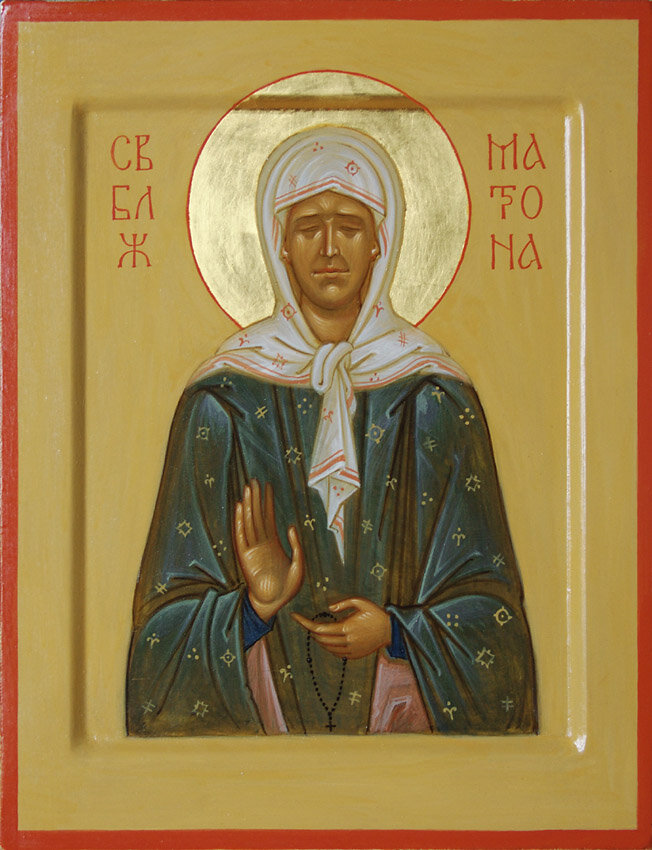
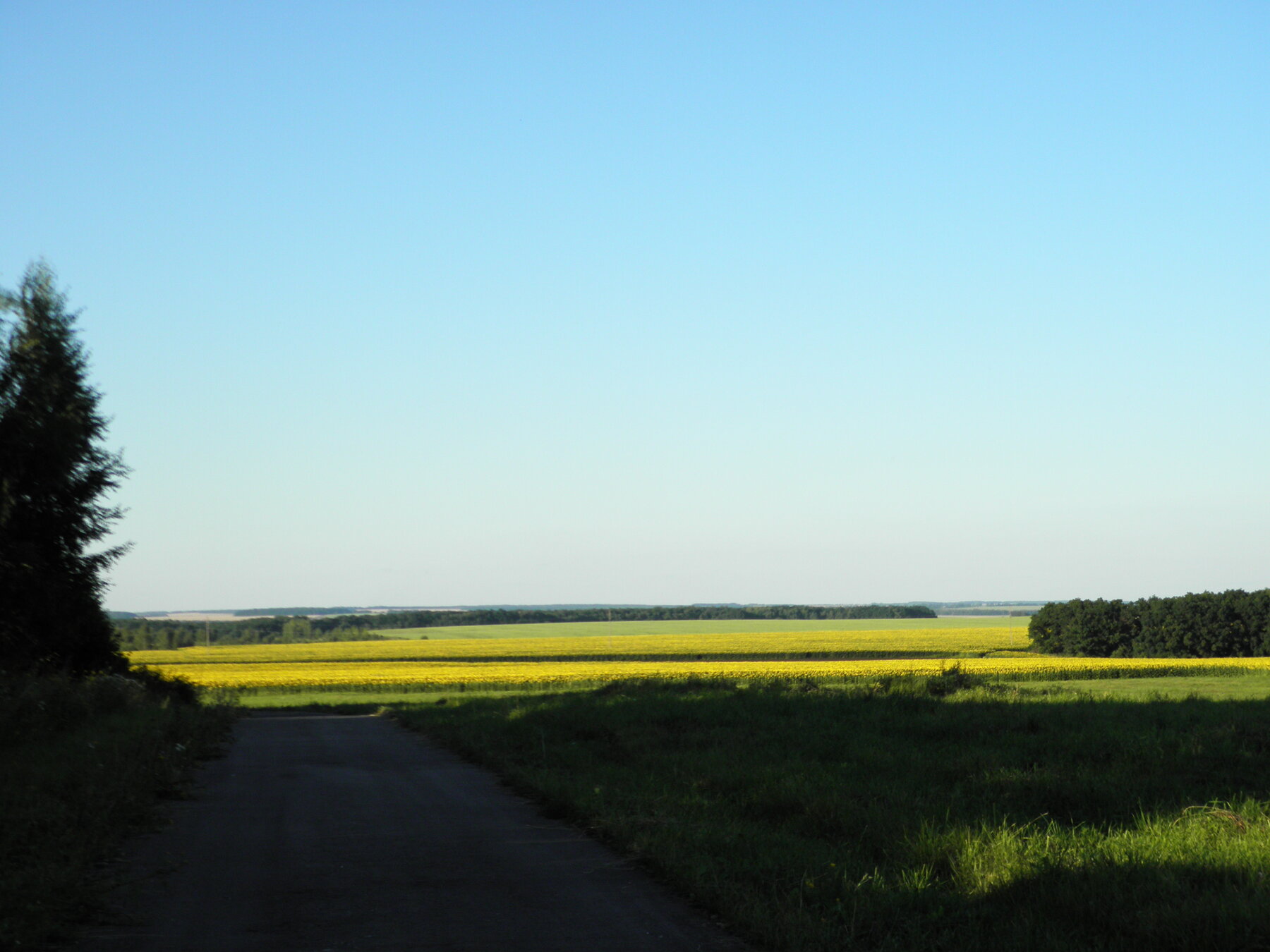
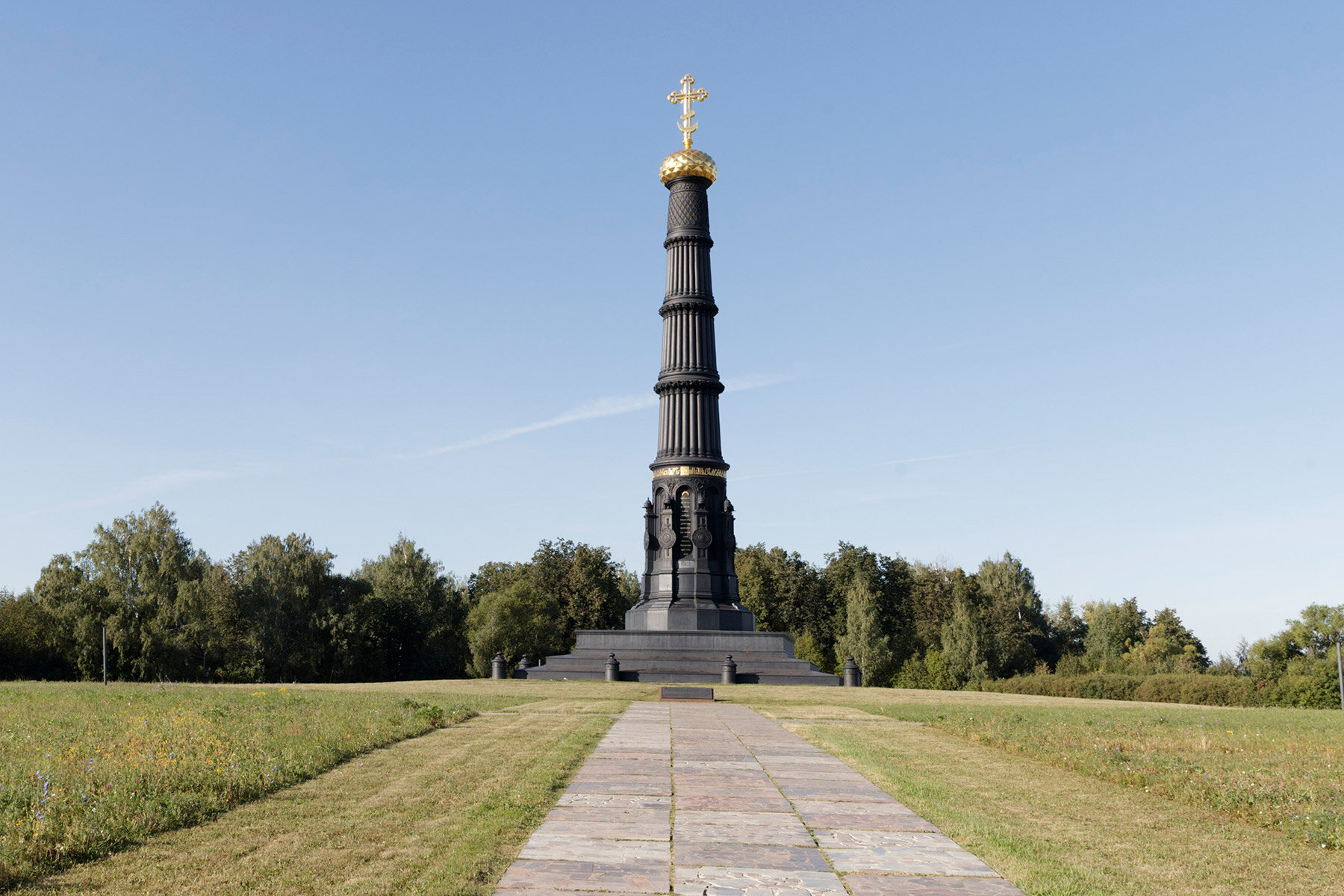
I was born in 1881 in the village of Sebino, Epifan District, Tula Province, twenty versts from the famous Kulikovo Field. My parents, Dimitry and Natalia, were peasants, pious people who worked honestly and lived in poverty. There were four children in the family: brothers Ivan and Michael, sister Maria, and I, the youngest; when I was born, my parents were already advanced in years.
My mother wanted to give me to the Golitsyn almshouse in the neighbouring village of Buchalki, but she saw a prophetic dream: her yet-unborn daughter appeared to her in the form of a white bird with a human face and closed eyes and perched on her right hand. Accepting the dream as a sign, she abandoned the idea. I was born blind, but my mother loved her «unfortunate child».
At my baptism I was named Matrona in honour of the Venerable Matrona of Constantinople. When the priest lowered me into the font, everyone saw above the infant a column of fragrant light smoke; Father Basil, who baptised me, was utterly amazed: «I have baptised many, but I see this for the first time, and this infant will be a saint». On my chest was a mark — a raised place in the shape of a cross, an unmade-by-hands pectoral cross.

In my youth an opportunity arose for me to travel. The daughter of the local landowner, the pious and kind maiden Lydia Yankova, took me with her on pilgrimages: to the Kiev Caves Lavra, the Trinity-Sergius Lavra, to Petersburg, other cities and holy places of Russia.
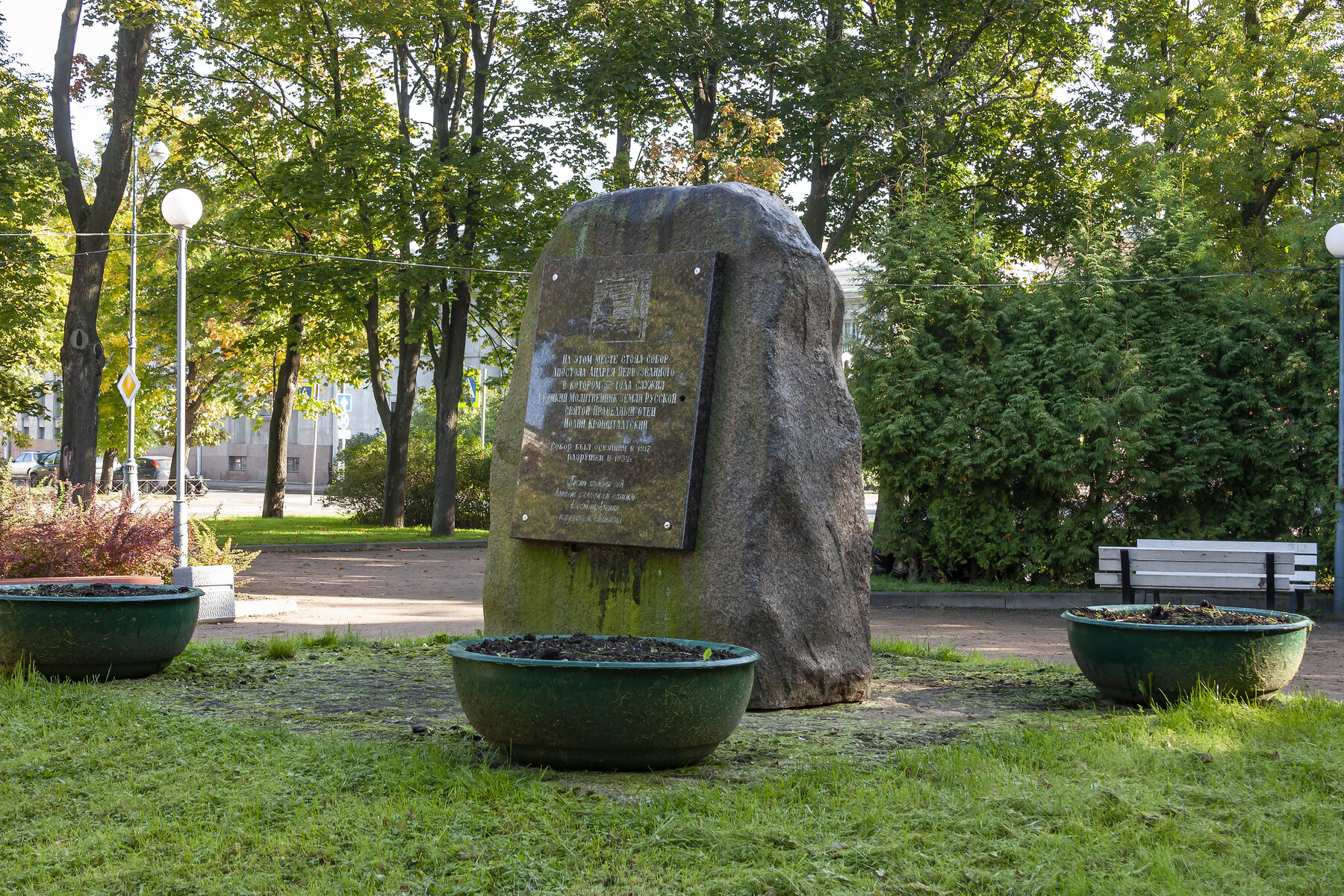
At the end of the service in the St Andrew’s Cathedral in Kronstadt, the holy righteous John of Kronstadt asked the people to part before me, a fourteen-year-old girl approaching the solea, and said aloud for all to hear: «Matronushka, come, come to me. Here comes my successor — the eighth pillar of Russia». I explained the meaning of these words to no one, but my relatives guessed that Father John had foreseen my special ministry to Russia and the Russian people in the times of persecution against the Church.

In my seventeenth year I lost the ability to walk: my legs suddenly became paralyzed. I was walking through the church after receiving Communion and I knew that a woman would approach me who would take away my ability to walk. And so it happened: «I did not avoid this — such was the will of God». Until the end of my days I was «sitting»; my sitting, in various houses and apartments where I found shelter, continued for another fifty years. I never murmured because of my infirmity, but humbly bore this heavy cross given me by God.
Even at an early age I foretold the revolution — how «they would rob and destroy churches and drive everyone away»; I showed how they would divide the land, seizing allotments with greed, only to take more for themselves, and then everyone would abandon the land and flee in all directions, for the land would be needed by no one. To the landowner from our village of Sebino, Yankov, I advised before the revolution to sell everything and go abroad.

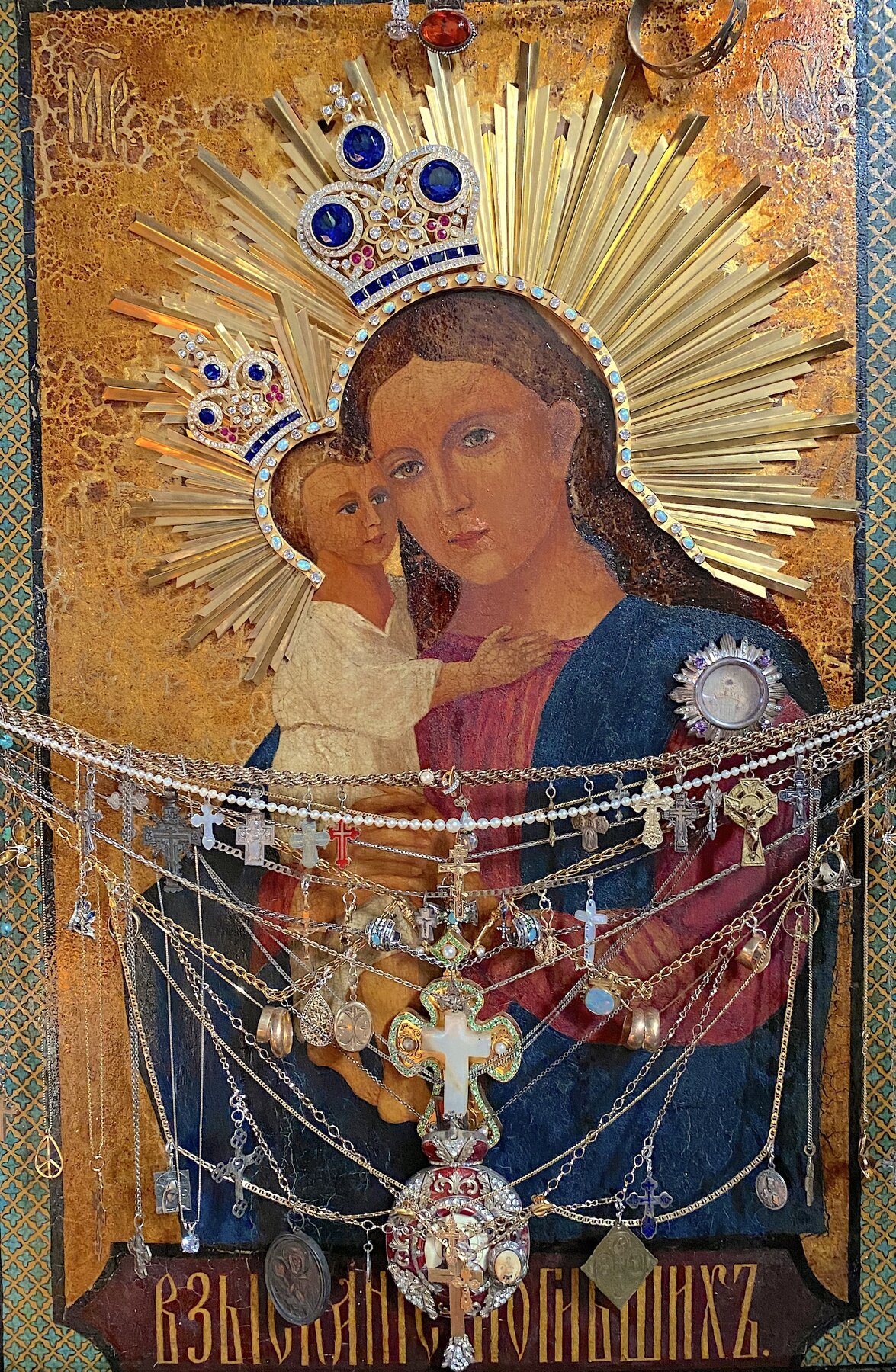
For our church of the Dormition of the Theotokos, at my insistence, an icon of the Theotokos «Seeking the Lost» was painted. I asked my mother to tell the priest that in his library, on such-and-such a shelf, lay a book with an image of this icon; the priest was very surprised, they found the icon, and I said: «Mama, I will order such an icon». My mother was saddened — how would we pay for it? Then I said to her: «Mama, the icon «Seeking the Lost» appears to me in my sleep all the time. The Theotokos is asking to come into our church», — and I blessed the women to collect money in all the villages.
With the money collected, at my blessing, another icon of the Theotokos «Seeking the Lost» was ordered in Bogoroditsk. When it was ready, it was carried in a cross procession with banners from Bogoroditsk all the way to the church in Sebino; I went to meet the icon four kilometres away, and I was led by the arms. Suddenly I said: «Do not go any farther, it will be soon now, they are already coming, they are near» — and half an hour later the cross procession indeed appeared. This image of the Theotokos «Seeking the Lost» became the chief local shrine and was glorified by many miracles.

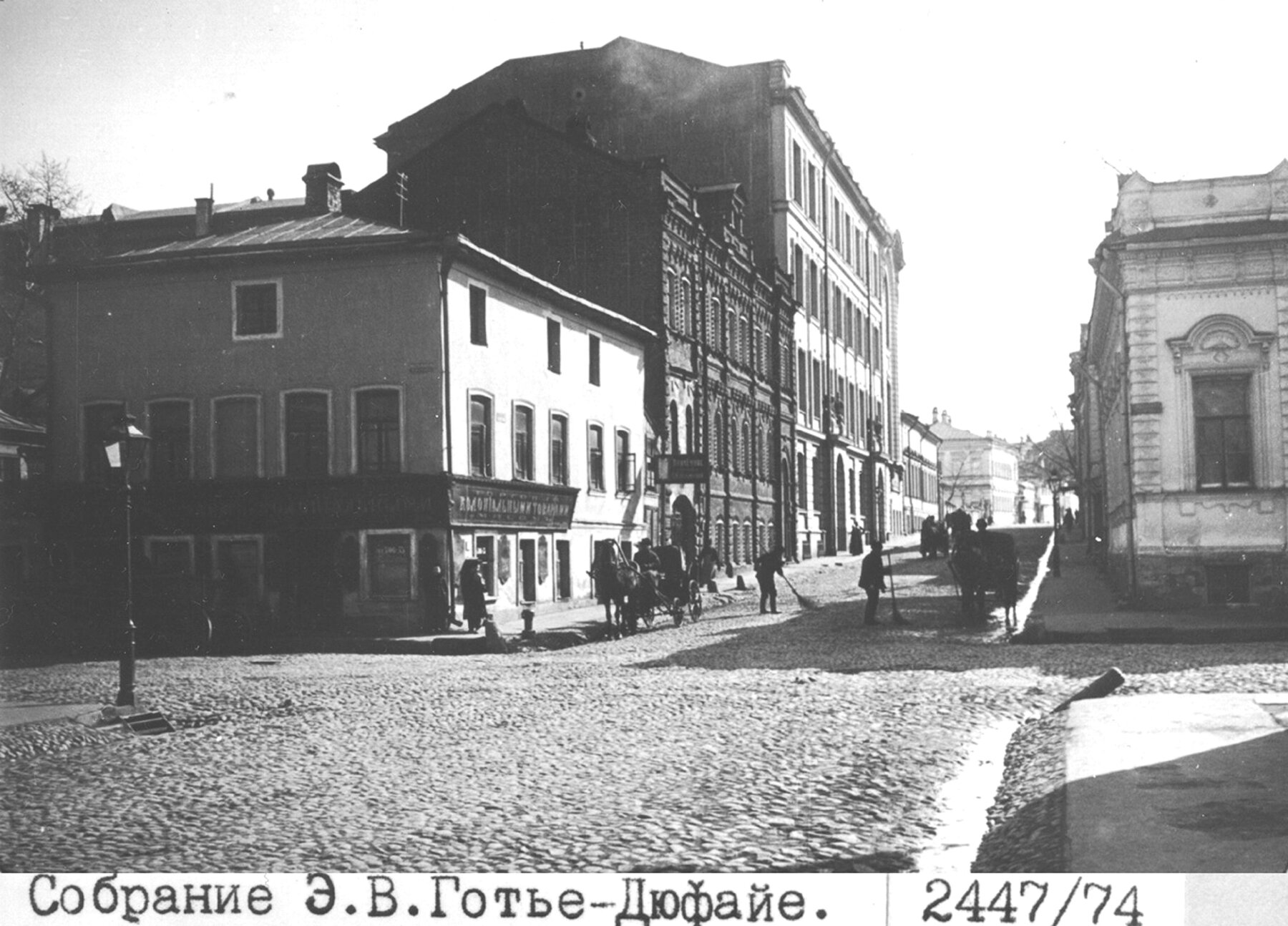
In the year nineteen hundred and twenty-five I moved to Moscow, where I lived until the end of my days. I loved Moscow very much, saying that it is a holy city, the heart of Russia. My wanderings began among relatives and acquaintances, in little houses, apartments, and basements; almost everywhere I lived without registration and several times miraculously avoided arrest. With me lived and cared for me nuns — my attendants. I lived the longest, from the year nineteen hundred and forty-two to the year nineteen hundred and forty-nine, on the Arbat, in Starokonyushenny Lane: here, in an old wooden mansion, in a forty-eight-square-metre room, lived my fellow villager E. M. Zhdanova with her daughter Zinaida.
I left some places in haste, sensing in spirit the troubles that were being prepared — always on the eve of the arrival of the police, since I lived without registration; in this way I saved from repression not only myself but also the hosts who had sheltered me. Once my nephew Ivan was living in Zagorsk; I mentally summoned him to me. He came to his superior: «I want to ask leave from you, I simply cannot, I must go to my aunt», — he arrived, not knowing what the matter was, and I said to him: «Come, come, take me quickly to Zagorsk, to your mother-in-law». As soon as we left, the police arrived.

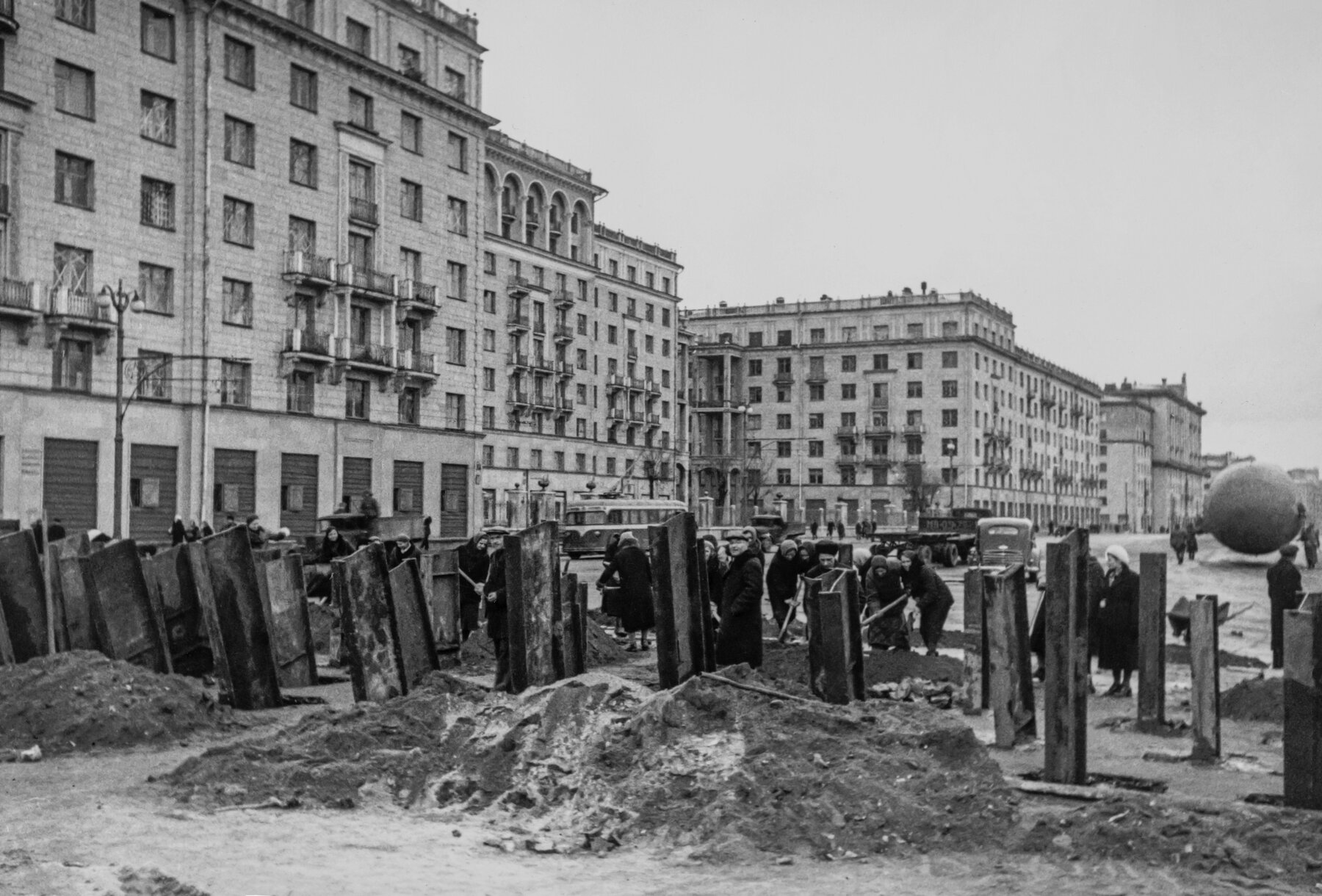
Even back in nineteen hundred and thirty-nine or nineteen hundred and forty I said: «Here you all are quarrelling and dividing things up, yet war is about to begin. Of course, many people will perish, but our Russian people will be victorious». At the beginning of nineteen hundred and forty-one I was asked whether one should go on holiday, and I answered: «You should go on holiday now; there will be no holidays for a long, long time afterwards. There will be war. Victory will be ours. The enemy will not touch Moscow; it will only burn a little. There is no need to leave Moscow».
When the war began, I asked everyone who came to me to bring willow branches; I would break them into sticks of equal length, peel off the bark and pray, so that my fingers were covered with sores. For my spiritual gaze there was no such thing as space: I often said that I would be invisibly at the fronts, helping our soldiers. I conveyed to everyone that the Germans would not enter Tula — and my prophecy was fulfilled.

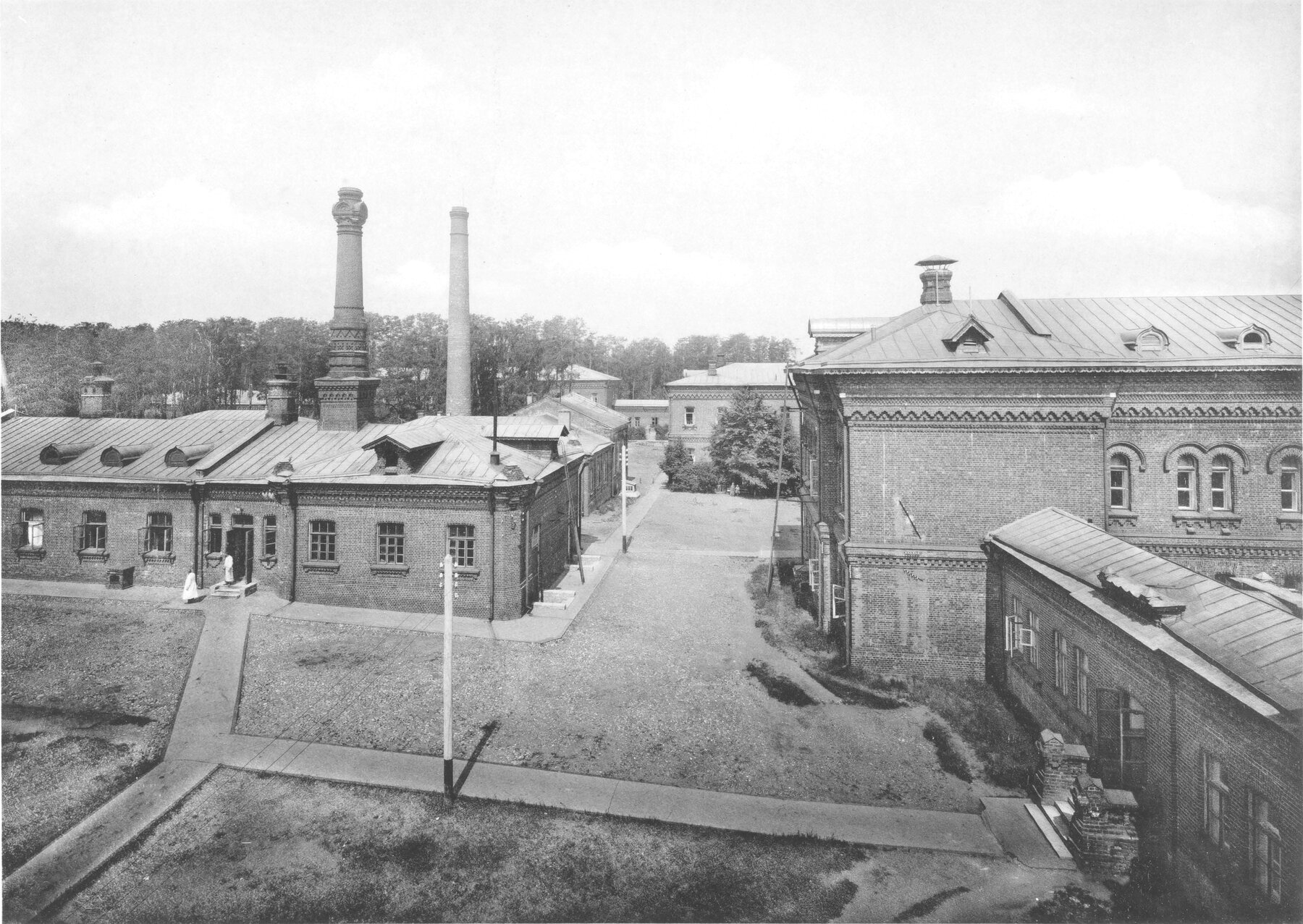
In nineteen hundred and forty-six, in the house where I was then living, a woman was brought to me who held a high position: her only son had gone mad, her husband had perished at the front, and she herself was an unbeliever. She had taken her sick son to Europe, but the famous doctors had been unable to help him. «I have come to you out of desperation, — she said, — I have nowhere else to go». I asked: «If the Lord heals your son, will you believe in God?» She answered: «I do not know how this — to believe — is». Then I asked for water and, in the presence of the unfortunate mother, began to read a prayer aloud over the water. Giving her this water, I told her to go to the Kashchenko psychiatric hospital and there to arrange with the orderlies that they should hold her son firmly when they brought him out, for he would struggle — and that she herself should try to splash this water into his eyes and be sure to get it into his mouth.
Some time later this woman came to me again and thanked me on her knees, saying that her son was well. She had gone to the hospital and done everything as I had told her. Her son struggled and cried out: «Mama, throw away what you have in your pocket, do not torment me!» — and she was struck by how he knew. She quickly splashed the water into his eyes and got it into his mouth; suddenly he grew calm, his eyes became clear, and he said: «How good it is!» Soon afterwards he was discharged.

My last earthly refuge I found at the Moscow Region station of Skhodnya, on Kurgannaya Street, where I settled with a distant relative, having left my room in Starokonyushenny Lane. And here too visitors came in a steady stream with their sorrows; only just before my repose, when I had grown quite weak, did I limit the receptions, but people still came, and I could not refuse help to some of them.
The time of my repose was revealed to me by the Lord three days beforehand, and I made all the necessary arrangements; I asked that I be sung the funeral service in the Church of the Deposition of the Robe on Don Street, and I gave orders that no wreaths or plastic flowers be brought to the funeral. Until my last days I confessed and received Communion from the priests who came to me; in my humility, like ordinary sinful people, I feared death and did not hide this fear from those close to me. Before my death a priest, Father Dimitry, came to confess me; I was very anxious whether I had folded my hands correctly. The priest asked: «Do you really fear death too?» — «I do.»
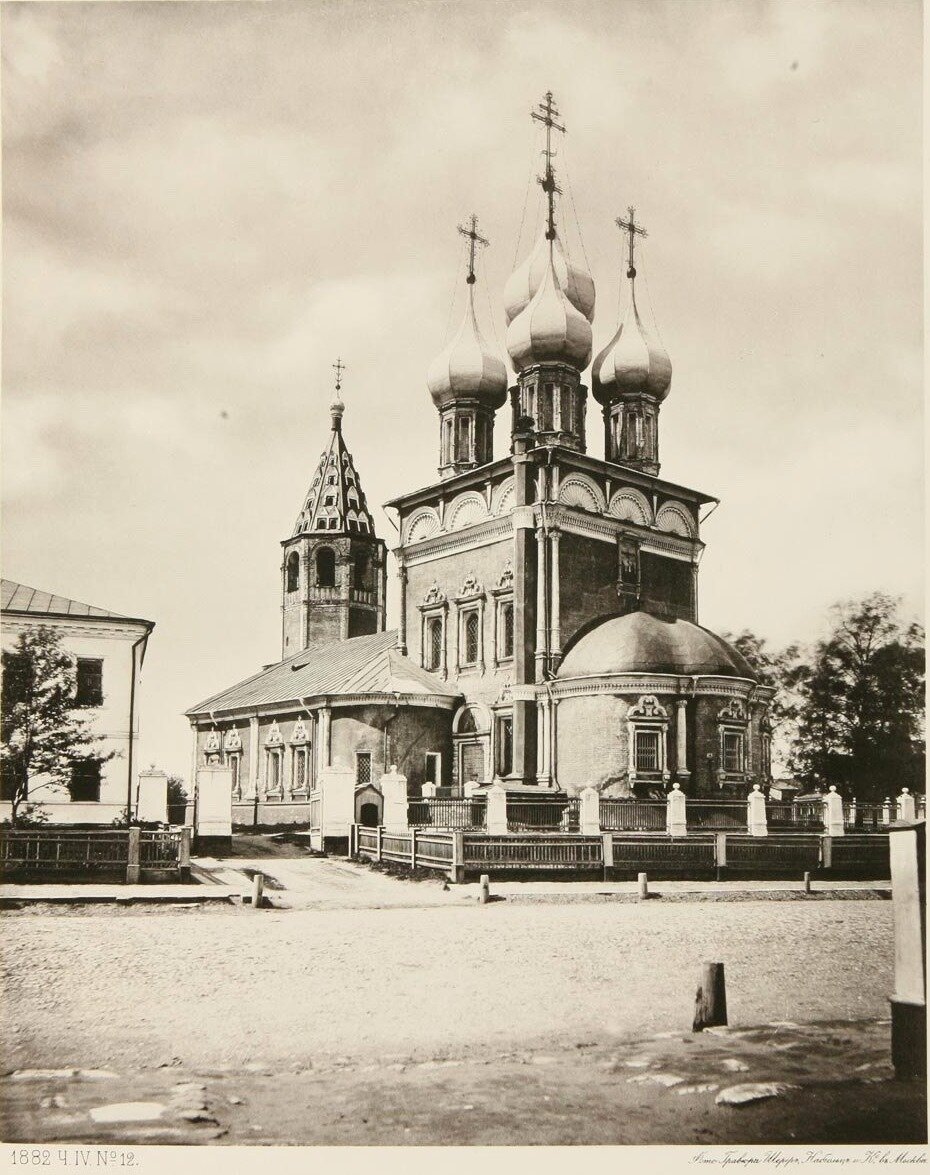
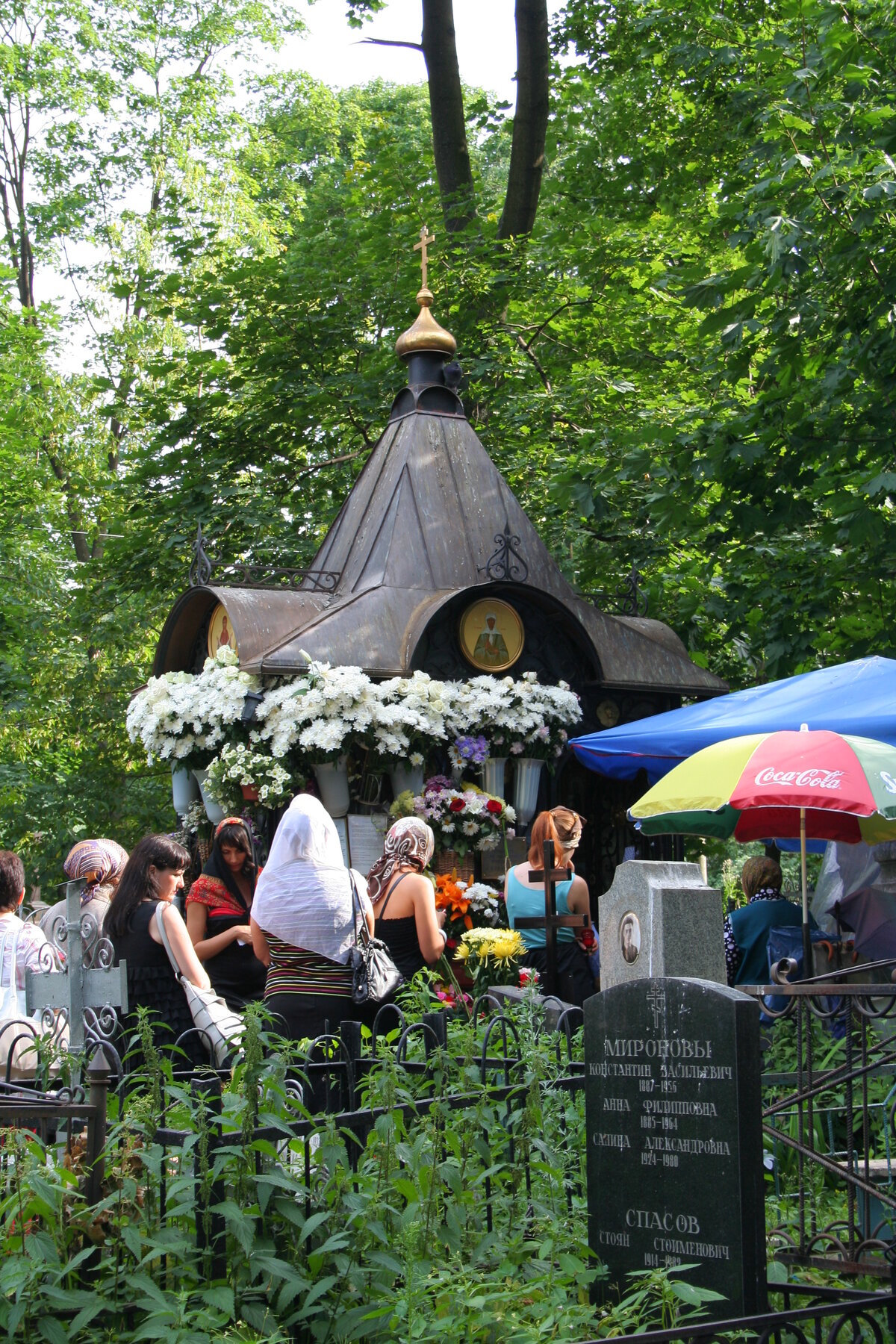
On the second of May, one thousand nine hundred and fifty-two, I reposed. After the funeral service, which was performed by Father Nicholas Golubtsov, all those present came forward and venerated my hands. On the fourth of May, on the Sunday of the Myrrh-bearing Women, with a great gathering of people, my burial took place; according to my wish I was buried at Danilov Cemetery, so that I might «hear the service».

As her Life relates, on the evening of the eighth of March, one thousand nine hundred and ninety-eight, on the Sunday of the Triumph of Orthodoxy, by the blessing of His Holiness Patriarch Alexy II of Moscow and All Russia, the honourable remains of the blessed elder Matrona were found at Danilov Cemetery in Moscow. The commission for the opening of the burial was headed by Archbishop Arseny of Istra; participating in the transfer of the honourable remains were the abbot of the Novospassky Monastery, Bishop Alexy of Orekhovo-Zuyevo, the abbot of the St. Daniel Monastery, Archimandrite Alexy with the brethren, and the rector of the Church of St. Martin the Confessor, Priest Alexander Abramov. The coffin with the honourable remains was brought to the Danilov Monastery and placed in the gate church dedicated to the Venerable Simeon the Stylite.
On the 13th of March the commission completed its work: upon examination of the remains of Elder Matrona, a protrusion in the shape of a cross was discovered on her chest, which is mentioned in her Life.

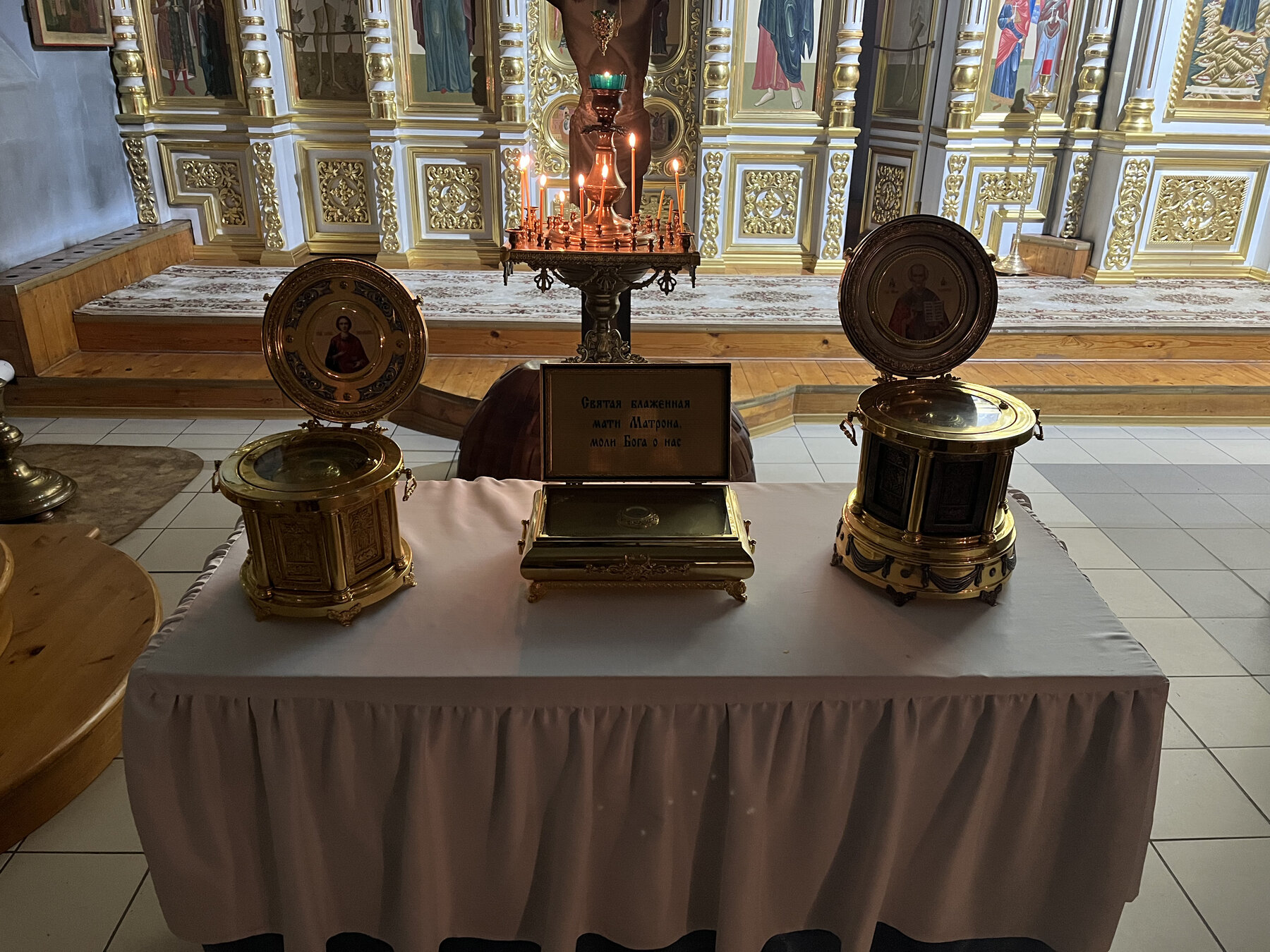
As her Life relates, on the thirtieth of April, one thousand nine hundred and ninety-eight, by the blessing of Patriarch Alexy II, to the solemn singing of the Paschal troparion «Christ is risen from the dead», the honourable remains of Blessed Matrona were transferred to the Church of the Holy Fathers of the Seven Ecumenical Councils, and on the same day to the Moscow Pokrovsky Convent at the Abelmanovskaya Zastava, where they were solemnly met with bell-ringing by Abbess Theophania with the sisters of the convent. Now the honourable remains of the blessed one, venerated by the faithful as holy relics, rest in this monastery, to which an unending stream of people comes for help from the ascetic.
On the second of May, one thousand nine hundred and ninety-nine, during the service of Patriarch Alexy II, the solemn numbering of Elder Matrona among the locally venerated saints took place; people came to venerate her relics all night long, and by morning an immense queue had formed. By a decree of the Patriarch it was prescribed to number among the locally venerated righteous the Elder Matrona of Moscow and to commemorate her on the day of her repose — the 19th of April (2nd of May). The choir sang for the first time the troparion to the holy righteous Blessed Matrona; from that day forward a moleben with an akathist is served daily in the monastery after the Liturgy before the shrine with her honourable relics.
God-wise, blessed old lady Matrona,/ the prosperity of the land of Tula/ and the glorious adornment of the city of Moscow,/ let us praise today, faithful ones./ For this, having not known the light of day,/ Enlightened by the light of Christ/ and enriched with the gift of insight and healing./ The solitary and wanderer who was on earth/ now stands before the Throne of God in the heavenly chambers// and prays for souls ours.