ORTHODOX HOUSENewsCommunityCalendarPrayer BookLives of the Saints
Saint John Chrysostom, Archbishop of Constantinople
Lives of the Saints · the saint tells his own story

Saint John Chrysostom, Archbishop of Constantinople

Commemorated: 13 (26) November · 27 January (9 February) — Translation of the Relics · 30 January (12 February) — Synaxis of the Three Hierarchs · 4th–5th century · Antioch — Constantinople — Comana
«Antioch of Syria nurtured me: I was born in that city around the year 347…»
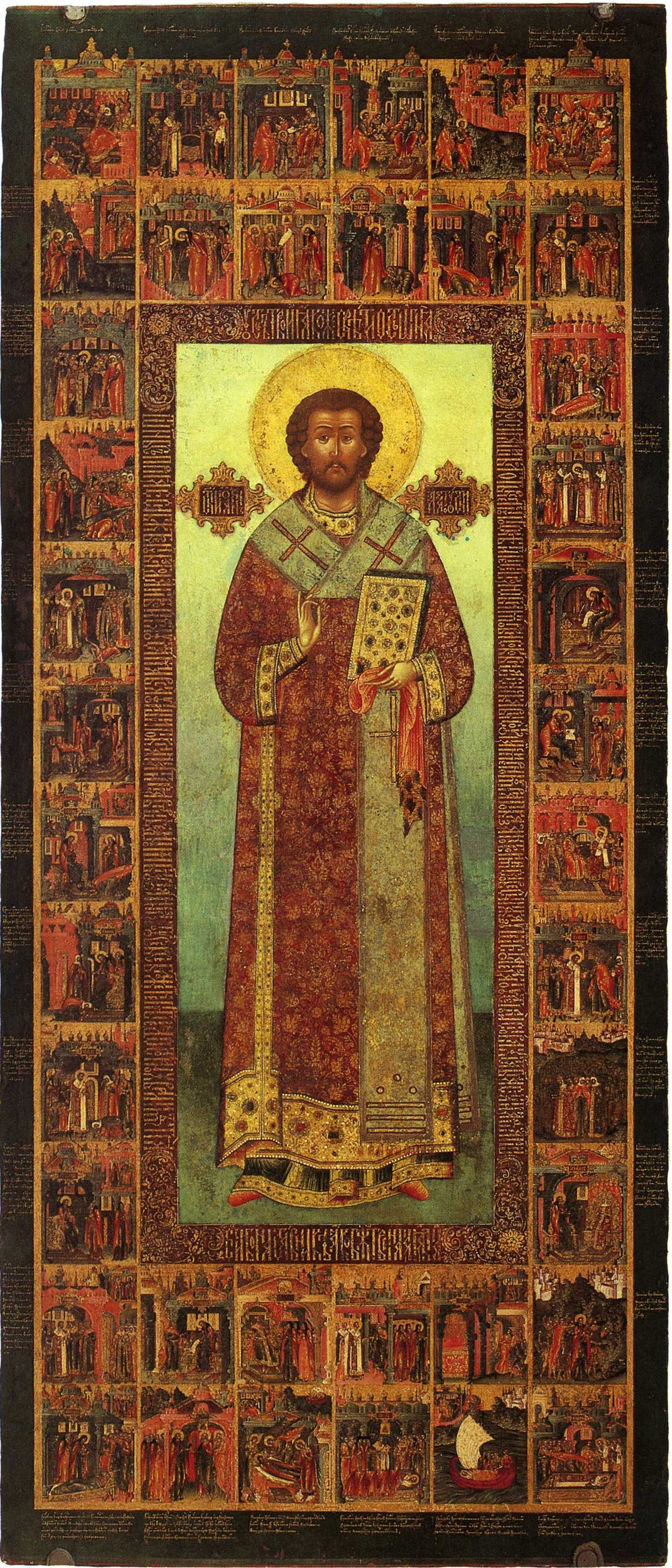
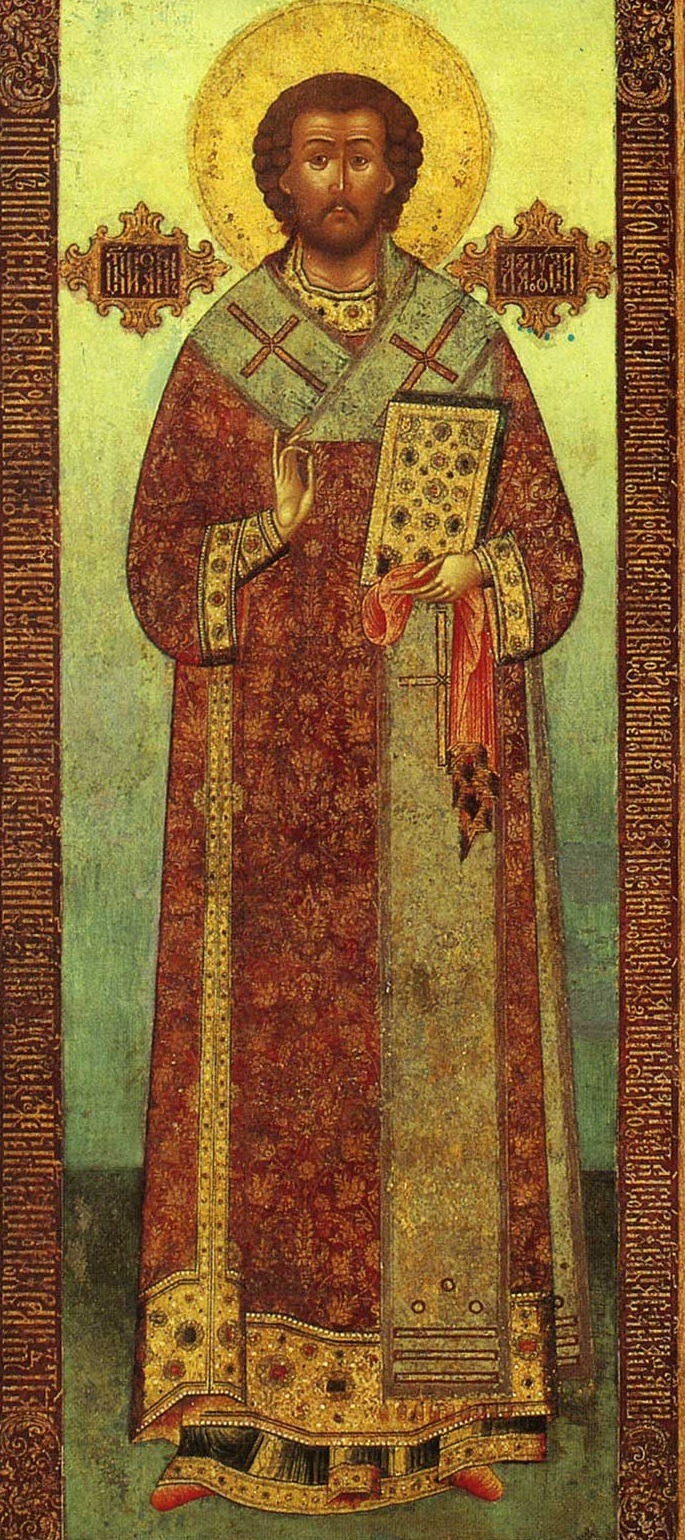
Saint John Chrysostom — the central panel of the hagiographical icon «John Chrysostom with 40 scenes from his life», by Simeon Spiridonov Kholmogorets, 1670s–1680s, from the Church of Saint John Chrysostom in Korovniki (Yaroslavl). Yaroslavl Art Museum, inv. I-886. Public domain.
How this is made. First-person narrative — a close paraphrase of this Life; not a single fact that is not in the source. Beneath each excerpt is the text of Saint Demetrius himself. Source: Saint Demetrius of Rostov. Lives of the Saints. Month of November, day 13 — The Life of our Holy Father John Chrysostom, Patriarch of Constantinople. The face is an authentic icon; the light and breathing make it a “living icon”, with no talking lips. The pictures beside the passages are the border scenes of the icon of his life. There is no voice: the reading is yours.
Saint John Chrysostom
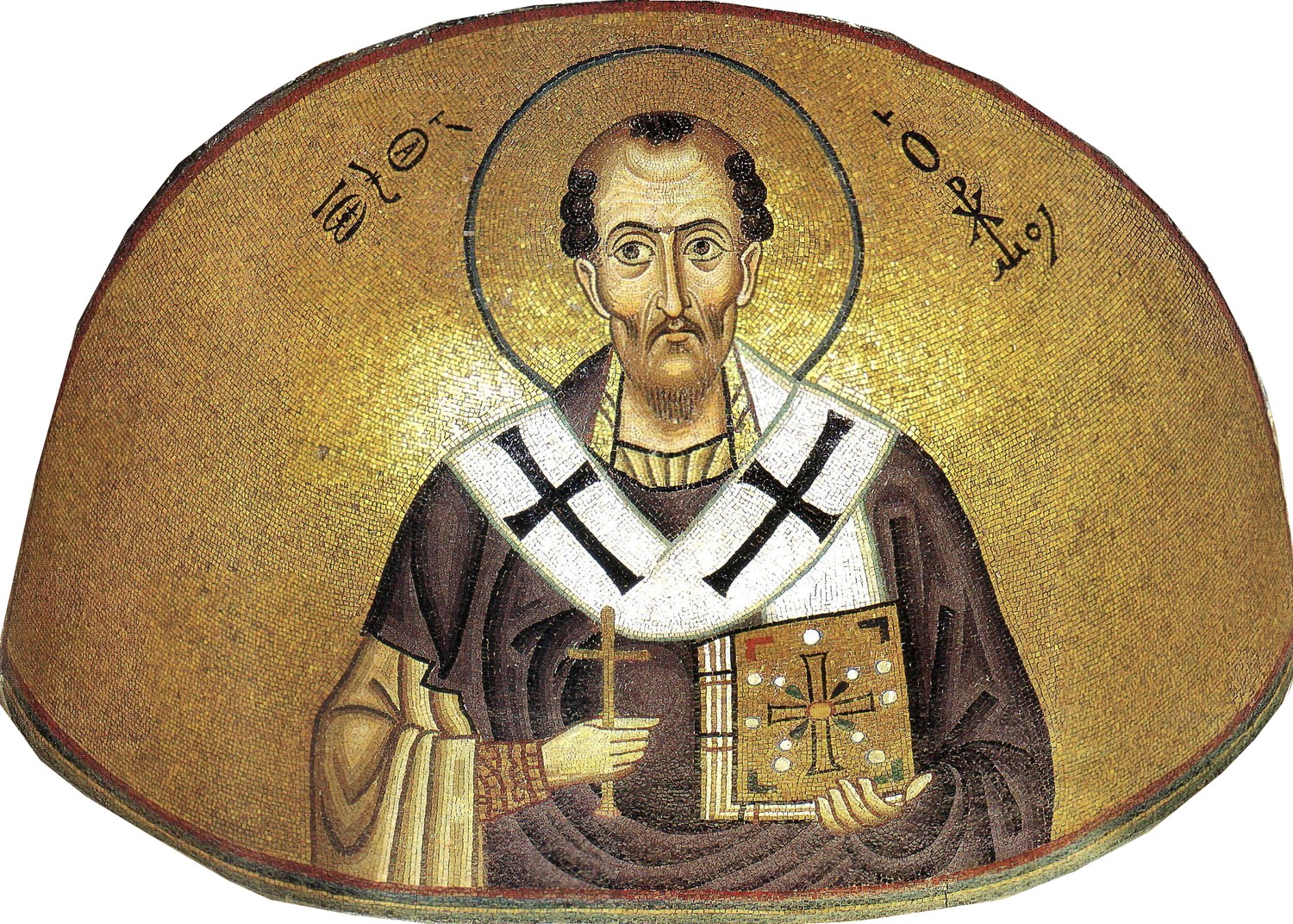
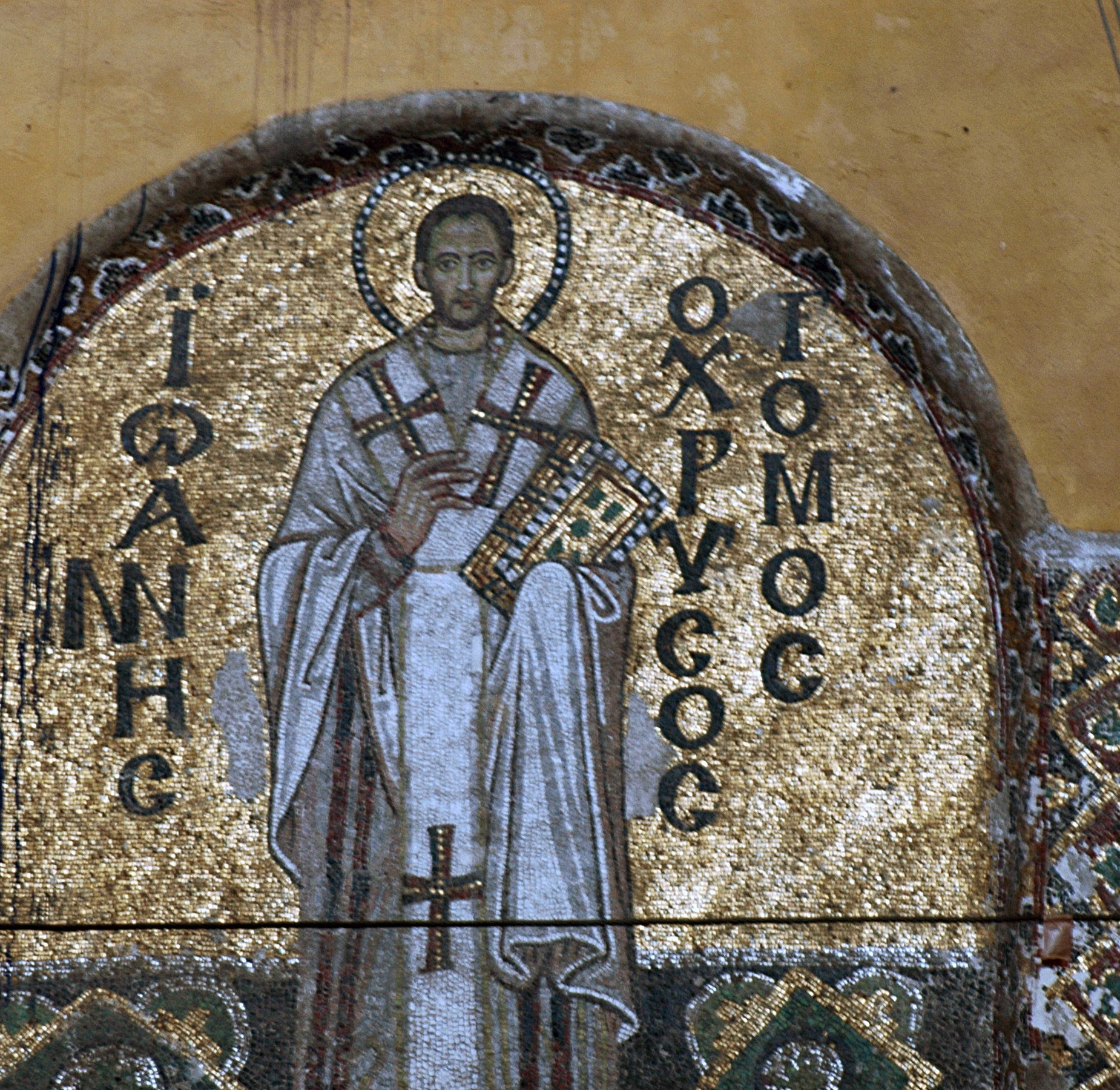
Mosaic: Saint John Chrysostom · mosaic of the Hosios Loukas Cathedral, Greece, 11th c.
1 · Antioch of Syria — Athens

Birth and Education

Antioch of Syria nurtured me: I was born in that city. My parents, Secundus and Anthusa, belonged to the best Antiochian society and confessed the Christian faith. My father Secundus was a military commander and held an honourable post, but he could have no influence on my upbringing, for he died when I was still a young child. All the care fell upon my mother, the pious Anthusa: having lost her husband at the age of twenty, she did not wish to marry a second time, but devoted herself entirely to my upbringing. From her I received my first lessons in the Christian truths and in piety.

Having confirmed me in the faith, my mother gave me over to the sophist Libanius and the philosopher Andragathius for the study of rhetoric and philosophy. When I was eighteen years old, still not enlightened by holy baptism — which by the custom of that time was received in mature age — I was sent to Athens to perfect myself in rhetoric and philosophy. While studying there, I soon surpassed in wisdom my peers and many philosophers, for I studied all the Greek books and sciences and became a wise philosopher and eloquent orator.

Source — St Demetrius of Rostov, “Lives of the Saints”
The holy John Chrysostom, luminary of the world, teacher of the universe, pillar and foundation of the Church, preacher of repentance, came from Antioch of Syria and was born around the year 347. […] His parents, Secundus and Anthusa, belonged to the best Antiochian society and confessed the Christian faith. […] Secundus was a military commander and held an honourable post; but he could have no influence on the upbringing of his son, for he died at the time when John was still a young child. […] Having lost her husband at a very young age (she was then about twenty years old), she did not wish to marry a second time, but devoted herself entirely to the upbringing of her son. […] Having confirmed her son in the Christian faith, Anthusa gave him over to the sophist Libanius and the philosopher Andragathius for the study of rhetoric and philosophy. […] While studying here, John soon surpassed in wisdom his peers and many philosophers, for he studied all the Greek books and sciences and became a wise philosopher and eloquent orator.
Saint John Chrysostom
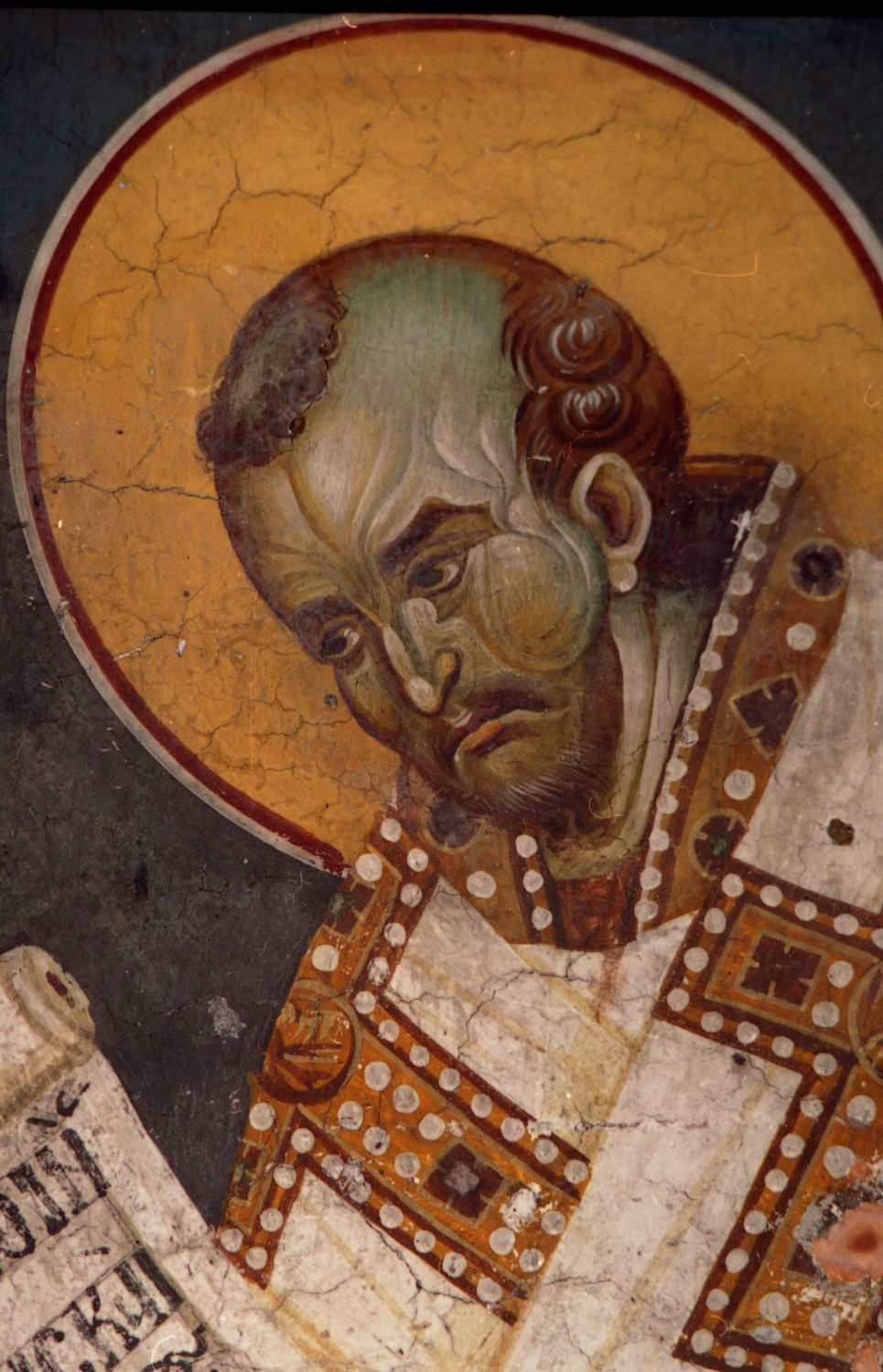
Fresco: Saint John Chrysostom · fresco of the Church of the Theotokos Peribleptos, Ohrid, North Macedonia, 14th c.
2 · Athens

The Miracle in Athens. Flight from Glory

In Athens I had in the person of the philosopher Anthimus a very malicious adversary. Envying my good reputation, he slandered me, stirring up hatred against me in others. But I, with God’s help, put my adversary to shame and at the same time turned many to Christ. It happened in this way: when Anthimus in a dispute with me began to utter blasphemous words against our Lord Jesus Christ, an unclean spirit suddenly seized him and began to torment him. Anthimus fell to the ground, writhing and twisting with his whole body and opening his mouth wide, from which foam flowed. Seeing this, all those present were horrified, and many fled in fear. Those who remained began to beg me to forgive and heal the possessed man.

I answered: «If he does not repent and believe in Christ God, Whom he has blasphemed, he will not be healed.» Anthimus immediately cried out that there is no other God besides Him Whom I confess. When he uttered this, the unclean spirit came out of him, and Anthimus rose up healthy. All the people who had seen this miracle cried out: «Great is the God of the Christians!» Having forbidden Anthimus to blaspheme the Son of God and having taught him the true faith, I sent him to the bishop of the city of Athens, and Anthimus received holy baptism from him together with all his household; together with him many of the honourable citizens also believed and were baptised.

When the bishop learned that through me this conversion of the Hellenes to Christ had taken place, he decided to ordain me to the sacred rank and to keep me in Athens, so that after his death I might receive the archpastoral see. When I understood this, I secretly departed from Athens and came to my native Antioch.

Source — St Demetrius of Rostov, “Lives of the Saints”
In Athens he had in the person of the philosopher Anthimus a very malicious adversary. The latter, envying John’s good reputation, slandered him, stirring up hatred against him in others. […] When Anthimus in a dispute with John began to utter blasphemous words against our Lord Jesus Christ, an unclean spirit suddenly seized him and began to torment him. Anthimus fell to the ground, writhing and twisting with his whole body and opening his mouth wide, from which foam flowed. […] If he does not repent and believe in Christ God, Whom he has blasphemed, he will not be healed. […] I confess that there is no other God in heaven or on earth besides Him Whom John confesses. […] All the people who had seen this miracle cried out: – Great is the God of the Christians! […] Anthimus received holy baptism from him together with all his household. Together with Anthimus many of the honourable citizens also believed and were baptised. […] the bishop decided to ordain John to the sacred rank and to keep him in Athens, so that after the death of the bishop himself (for he was already very old) John might receive the archpastoral see. Blessed John, when he understood this, secretly departed from Athens and came to his native Antioch.
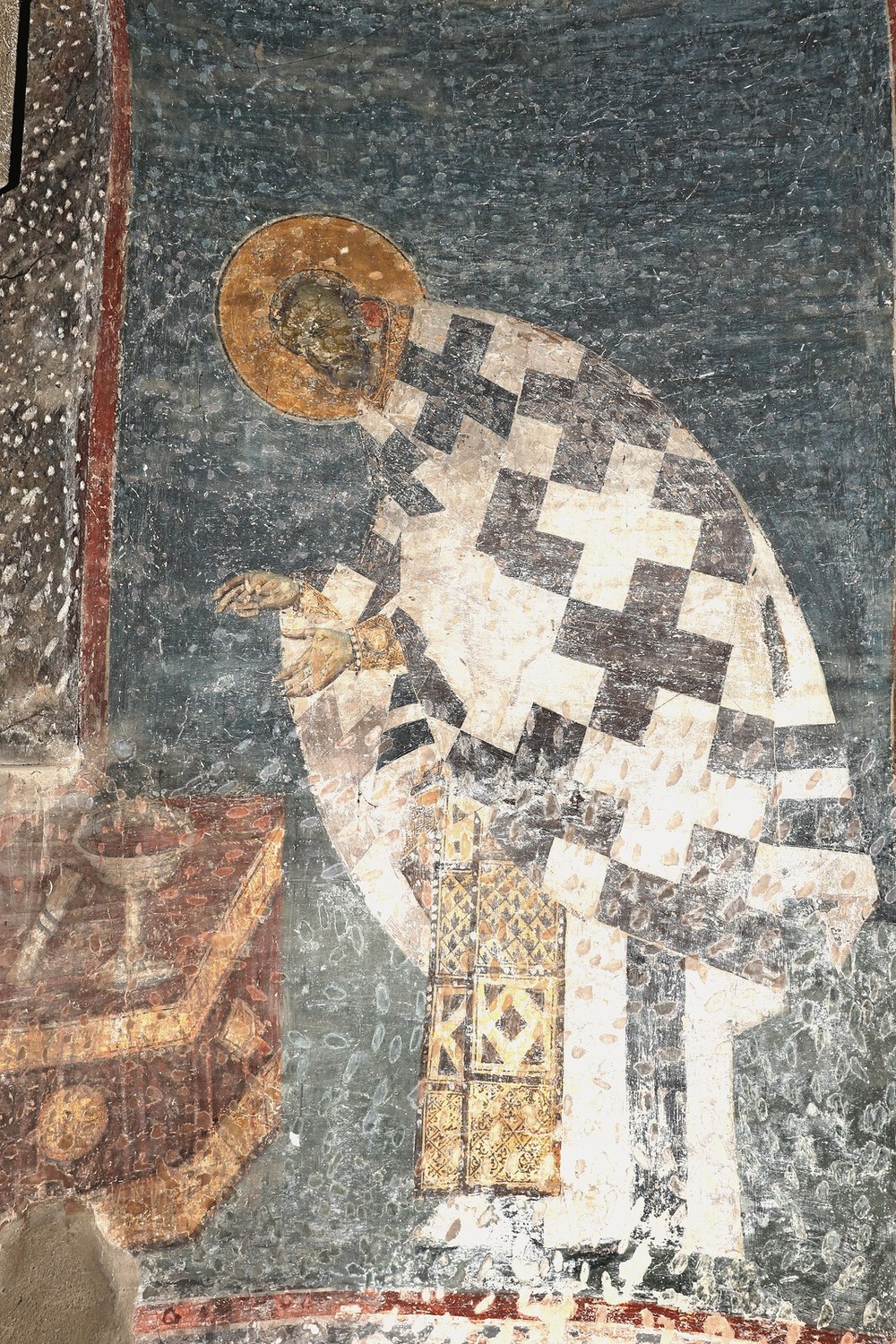
Saint John Chrysostom
Fresco: Saint John Chrysostom · fresco of the Church of the Theotokos Peribleptos, Ohrid, North Macedonia, 14th c.
3 · Antioch

Mother. Rejection of the World

My friend Basil, a native of the same city of Antioch, with whom we had studied under the same teachers, having himself already taken the monastic habit, advised me also to choose the monastic life. Obeying his good counsel, I desired to withdraw to a monastery at once, but was restrained by my mother. When she learned of my intention, she began to speak to me with tears: «Child! For but a short time was I gladdened by life together with thy father; with his death came thy orphanhood and my widowhood. Yet no misfortune could compel me to a second marriage or to introduce another husband into the house of thy father. Therefore I implore thee, child, cast me not into a second widowhood, but await my death. When thou hast buried me beside the bones of thy father, then do as thou wilt».

Under the influence of these entreaties I resolved for the time being not to leave the house; but, remaining at home, I exchanged bright garments for poor ones and began to lead a solitary life, spending my time in prayer and the study of the word of God. At that time I drew close to Meletius, Bishop of Antioch, who persuaded me to receive Baptism without delay; and having baptised me, he ordained me a reader in the church. In that office I remained for three years. At that time my mother reposed. After burying her, I at once distributed all my property to those in need, granted freedom to my menservants and maidservants, and myself settled in a monastery and became a monk.

Source — St Demetrius of Rostov, “Lives of the Saints”
To this the holy John was also urged by his friend Basil, a native of the same city of Antioch. Spending their childhood years together, they studied under the same teachers […] This Basil, having himself first taken the monastic habit, advised his contemporary – the holy John – to choose the monastic life. Obeying his good counsel, John desired to withdraw to a monastery at once and become a monk, but was restrained by his mother. […] Child! For but a short time was I gladdened by life together with thy father; with his death, by the will of God, came thy orphanhood and my widowhood. […] Yet no misfortune could compel me to a second marriage or to introduce another husband into the house of thy father. […] I implore thee, child, cast me not into a second widowhood and do not again awaken by thy departure the grief for thy father that had subsided within me, but await my death, which I expect from day to day. When thou hast buried me beside the bones of thy father, then do as thou wilt. […] he exchanged bright garments for poor ones and began to lead a solitary life, spending his time in prayer and the study of the word of God. At that time John drew close to Meletius, Bishop of Antioch, exalted in his life, who persuaded John to receive Baptism without delay; and having baptised him, he ordained him a reader in the church. In that office John remained for three years. At that time John’s mother reposed. After burying her, John at once distributed all his property to those in need, granted freedom to his menservants and maidservants, and himself settled in a monastery
Saint John Chrysostom
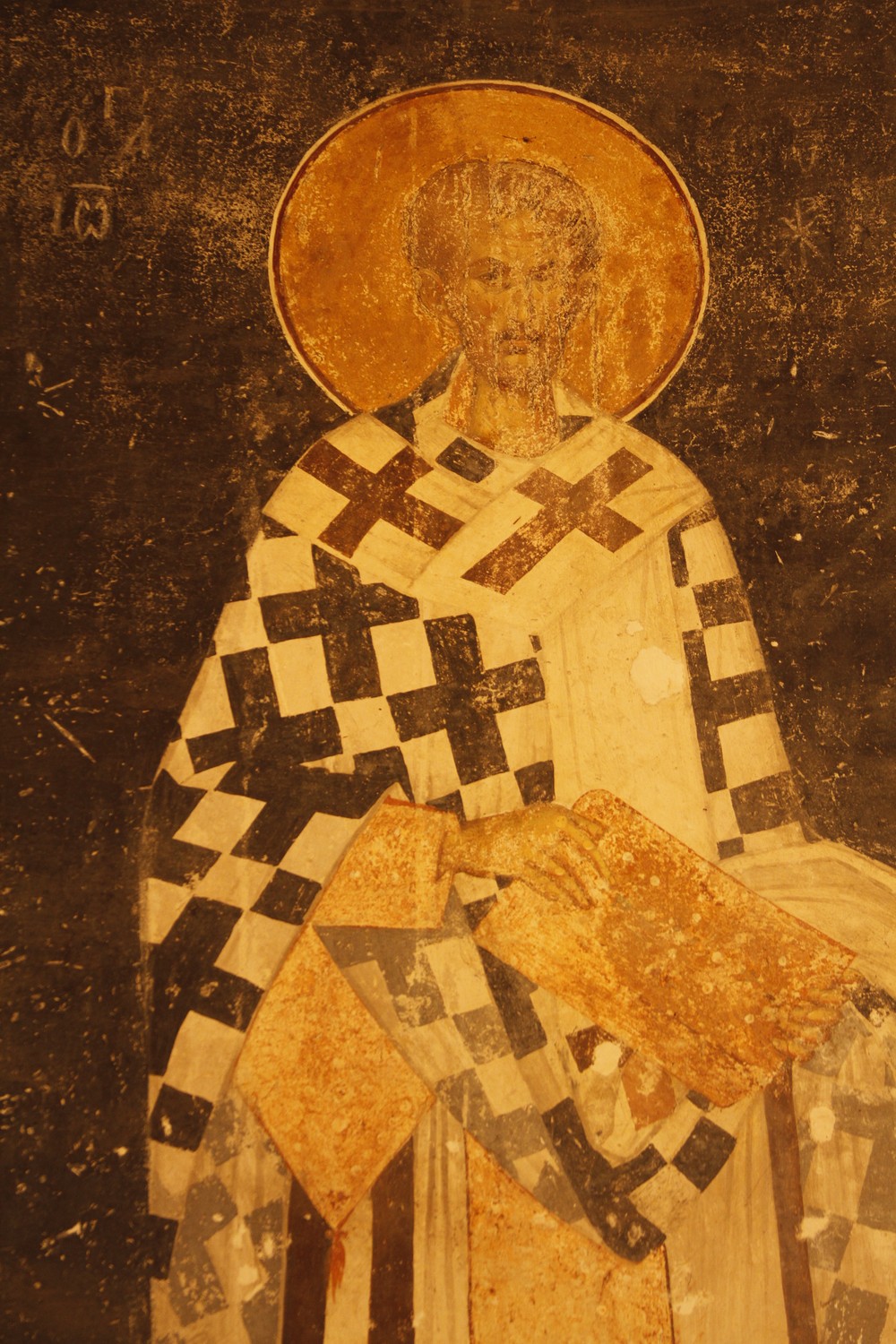
Fresco: Saint John Chrysostom · fresco of the Chora Monastery (Kariye), Constantinople; photo José Luiz, CC BY-SA 3.0
4 · The monastery of Antioch

The vision of Abba Hesychius

The gift of teaching and the grace of the Holy Spirit which I had received from God were revealed to a certain monk named Hesychius who was labouring in our monastery. Advanced in years and perfect in virtue, he possessed the gift of clairvoyance. One night, when he was keeping vigil and praying, he was caught up in mind and saw two handsome men, clothed in white raiment and shining like the sun, descend from heaven and enter where I stood at prayer. One of them held a written scroll, and the other – keys.

Seeing them, I was troubled and hastened to bow down to them to the ground. But they, taking me by the hand, raised me up, saying: «Be of good courage and fear not!» I asked them: «Who are you, my lords?» They answered: «Fear not, O man of desires, new Daniel, in whom, for the purity of thy heart, the Holy Spirit has deigned to dwell! We have been sent to thee by the Great Teacher, our Saviour Jesus Christ». One of them held out the scroll to me, saying: «Take this scroll from my hand! I am John, who leaned upon the breast of the Lord at the Mystical Supper». The other handed me the keys with the words: «Take these keys, for I am Peter, to whom the keys of the Kingdom have been entrusted».

I again knelt, saying: «Who am I, a sinner and the last of all men, that I should take upon myself so great and terrible a ministry?» But they raised me up, saying: «Be manly, be strong, and do that to which our Lord Jesus Christ calleth thee. For the sake of truth thou shalt endure many afflictions and sorrows, but endure them as a hard adamant, for by this path thou shalt inherit the Kingdom of God». Having said this, they signed me with the sign of the Cross and departed.

Source — St Demetrius of Rostov, “Lives of the Saints”
The holy John had from God the gift of teaching and the grace of the Holy Spirit, which was revealed to a certain monk named Hesychius who was labouring in that monastery. Advanced in years and perfect in virtue, Hesychius possessed the gift of clairvoyance. One night, when he was keeping vigil and praying, he was caught up in mind and beheld the following vision. Two handsome men, clothed in white raiment and shining like the sun, who had descended from heaven, entered to the blessed John when he stood at prayer. One of them held a written scroll, and the other keys. […] the men, taking John by the hand, raised him up, saying: – Be of good courage and fear not! John asked them: – Who are you, my lords? They immediately answered him: – Fear not, O man of desires, new Daniel, in whom, for the purity of thy heart, the Holy Spirit has deigned to dwell! We have been sent to thee by the Great Teacher, our Saviour Jesus Christ. […] Take this scroll from my hand! I am John, who leaned upon the breast of the Lord at the Mystical Supper […] Take these keys, for I am Peter, to whom the keys of the Kingdom have been entrusted. […] Who am I, a sinner and the very last of all men, that I should dare to take upon myself and bear so great and terrible a ministry? […] be manly, be strong, and do that to which our Lord Jesus Christ calleth thee […] For the sake of truth thou shalt endure many afflictions and sorrows, but endure them as a hard adamant, for by this path thou shalt inherit the Kingdom of God. Having said this, the men who had appeared signed John with the sign of the Cross and, having given him the kiss in the name of the Lord, departed.
Saint John Chrysostom
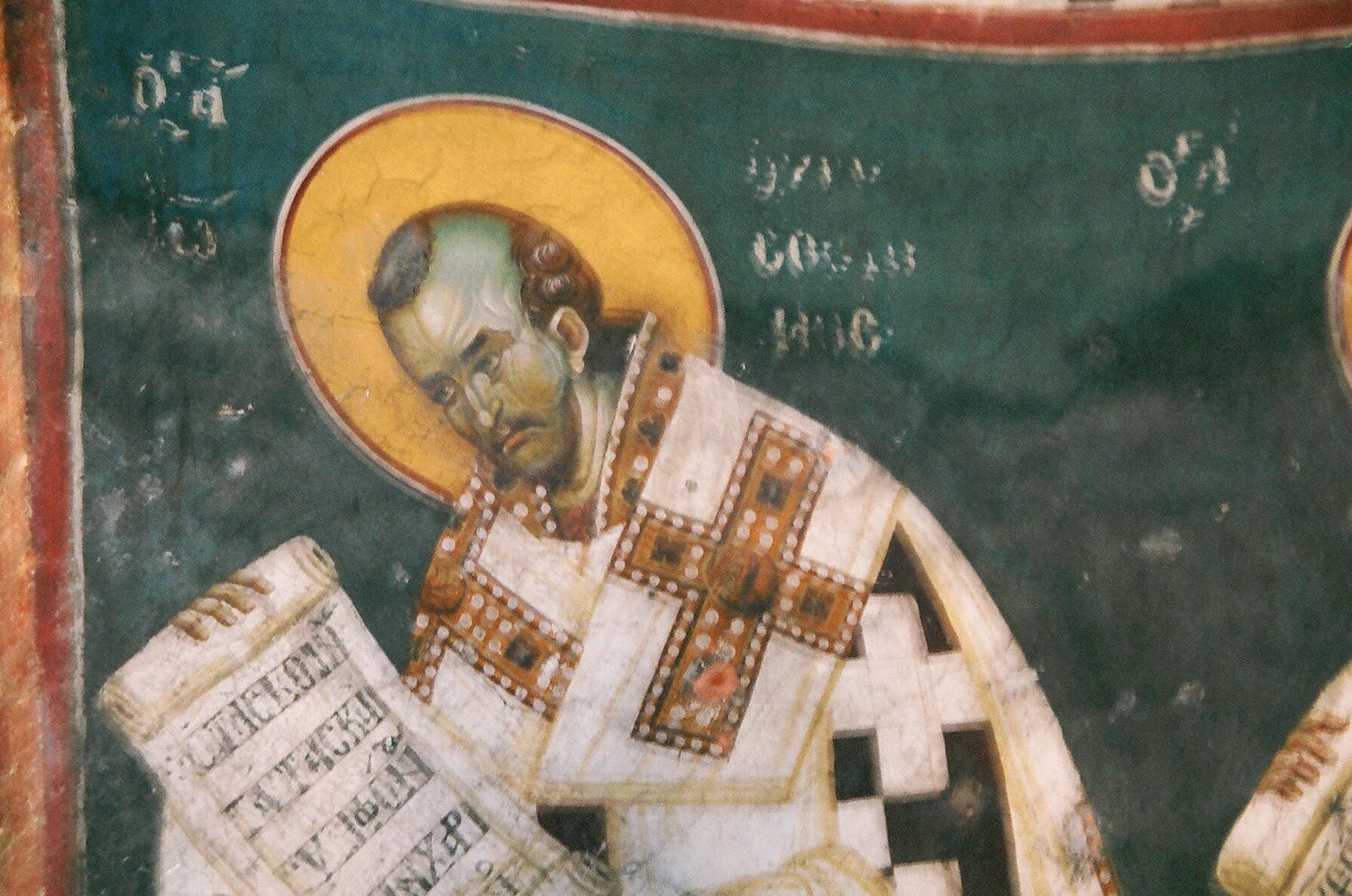
Fresco: Saint John Chrysostom · fresco of the Church of the Theotokos of Leviška, Prizren, Kosovo, 14th c.; © BLAGO Fund, CC BY 4.0
5 · The monastery of Antioch

Miracles in the monastery and the lion in the desert

While laboring for God in the monastery, I worked many miracles at that time. One inhabitant of Antioch, a wealthy man of noble birth, suffered greatly from a headache, so that his right eye had fallen out and was hanging on his cheek. Having given much of his property to physicians without receiving relief, he came to me in the monastery. I said to him: «Such illnesses befall people because of their sins and lack of faith; if you believe with all your soul that Christ is able to heal you, then you will see the glory of God.» He seized my garment and laid it upon his ailing eye — the illness ceased at once.

Likewise a certain Archelaus, an elder of the city, who suffered from leprosy on his face, came to me asking for healing; I commanded him to wash his brow with the water that the brethren in the monastery drink — and he was cleansed of the leprosy and himself became a monk. The monk Euclius, blind in one eye from birth, received his sight as soon as I pronounced over him: «May God heal you, brother.» I healed the woman with an issue of blood, Christina, through her husband, commanding her to cease her cruelty toward the servants, to give alms, and to keep herself pure in fasting and prayer.

At that time a fierce lion appeared not far from our monastery, devouring people and cattle; no weapon could overcome it. I gave the local villagers a wooden cross, commanding them to set it up at the place from which the beast emerged — and after several days they found the lion dead beside the cross.

Source — St Demetrius of Rostov, “Lives of the Saints”
One inhabitant of Antioch, a wealthy man of illustrious birth, suffered greatly from a headache, so that his right eye had fallen out and was hanging on his cheek. […] Such illnesses befall people because of their sins and lack of faith. Therefore, if you believe with all your soul that Christ is able to heal you, and you turn away from your sins, then you will see the glory of God. […] he seized the garment of blessed John and laid it upon his head and upon the ailing eye. The illness ceased immediately […] Archelaus, an elder of the city of Antioch, who suffered from leprosy on his face, came to holy John asking for healing. After instructing him in the truths of the faith, John commanded him to wash his brow with the water that the brethren in the monastery drink. Having done this, the sick man was cleansed of the leprosy and, forsaking the world, became a monk. […] John said to him: – May God heal you, brother […] A woman named Christina, suffering from an issue of blood, begged her husband to take her to holy John. […] a fierce lion appeared, which, roaming the roads, devoured people and cattle. […] John gave those who asked a wooden cross, commanding them to set it up at the place from which the beast emerged. They did so, and after several days they noticed that the beast no longer appeared. Then the villagers went to the cross and saw there the corpse of the lion.
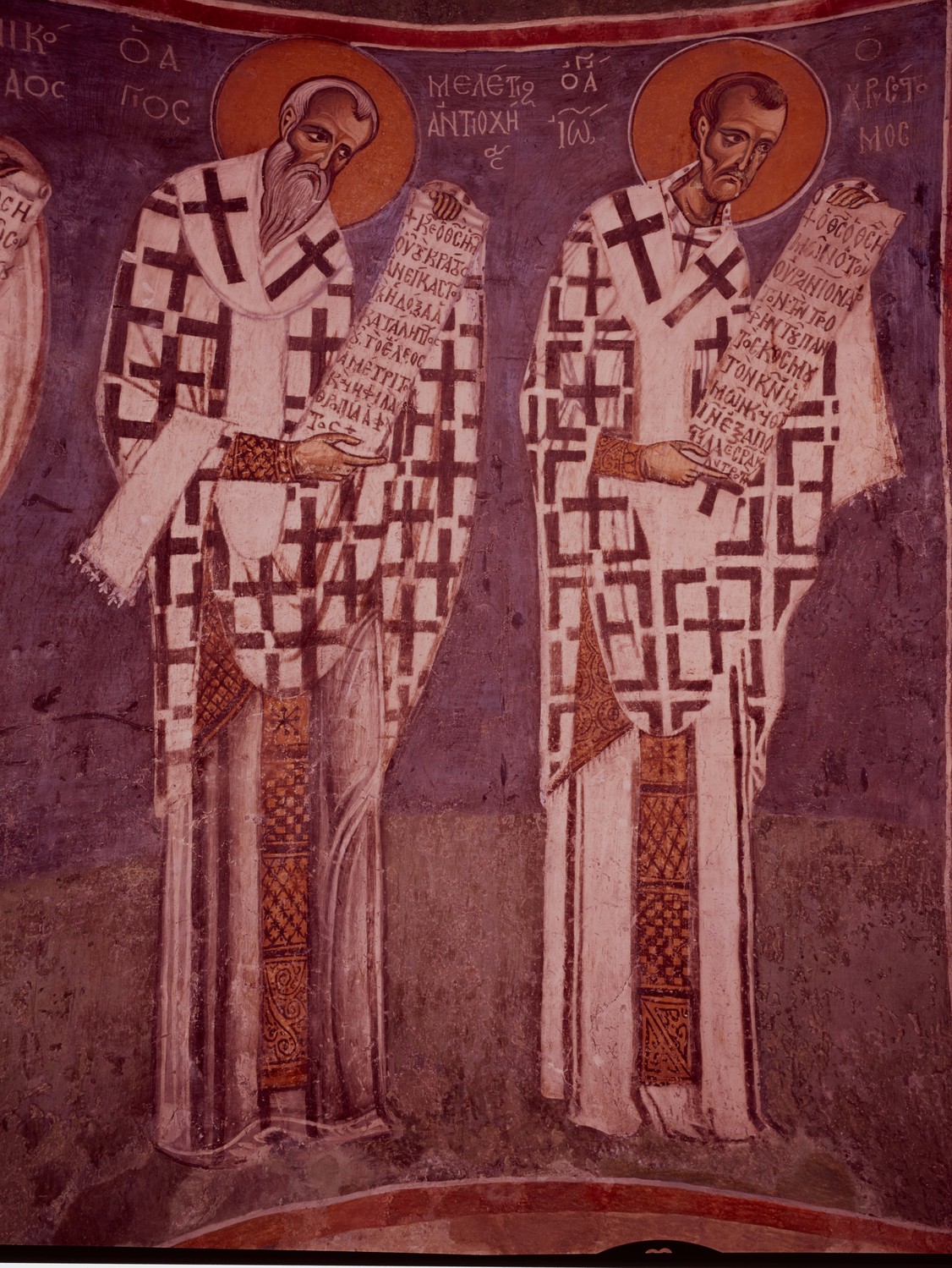
Hierarchs Meletius of Antioch and John Chrysostom
Fresco: Hierarchs Meletius of Antioch and John Chrysostom · fresco of the monastery of Panagia tou Arakos, Lagoudera, Cyprus, 1192; photo Dumbarton Oaks
6 · The desert near Antioch

The desert, illness, return

I remained in the monastery for four years. Then, desiring greater solitude, I secretly withdrew into the desert, found a cave there and remained in it for two years, living alone. Worn out by many laborious struggles and suffering from the cold, I fell so ill that I could no longer care for myself, and therefore was compelled to return to Antioch. The most holy Patriarch Meletius received me with joy, gave me lodging and shortly thereafter ordained me to the rank of deacon. In this ministry I lived for six years, adorning the Church of God with a virtuous life and writings profitable to the soul: the «Book on Virginity», the discourse «To a Young Widow» and the apologetic discourse on blessed Babylas.

At that time Meletius had to go to Constantinople for the enthronement of Saint Gregory the Theologian as patriarch; soon after arriving there he fell asleep in the Lord. Upon hearing of the death of my patriarch, I again withdrew to the monastery in which I had dwelt before, and, pleasing God in silence, I remained there three years. The throne of the Church of Antioch was at that time occupied by Flavian.

Source — St Demetrius of Rostov, “Lives of the Saints”
John remained in that monastery for four years. Then, desiring greater solitude, he secretly withdrew from there into the desert, found a cave there and remained in it for two years, living alone. After two years, worn out by many laborious struggles and suffering from the cold, John fell ill, so that he could no longer care for himself. Therefore he was compelled to leave the desert and return to Antioch. […] the most holy Patriarch Meletius received him with joy, gave him lodging, commanded him to dwell with him and shortly thereafter ordained him to the rank of deacon. In this ministry he lived for six years […] During his diaconate the following works were written by holy John: the «Book on Virginity», «To a Young Widow» and in defense of the faith: the «Discourse on Blessed Babylas, and also against Julian, and to the pagans». […] it was necessary for holy Meletius to go to Constantinople for the enthronement of Saint Gregory the Theologian as patriarch. Soon after arriving there holy Meletius fell asleep in the Lord. Upon hearing of the death of his patriarch, John again left Antioch and withdrew to the monastery in which he had first dwelt. […] Pleasing God in silence, John remained there three years. The throne of the Church of Antioch was occupied by Flavian.
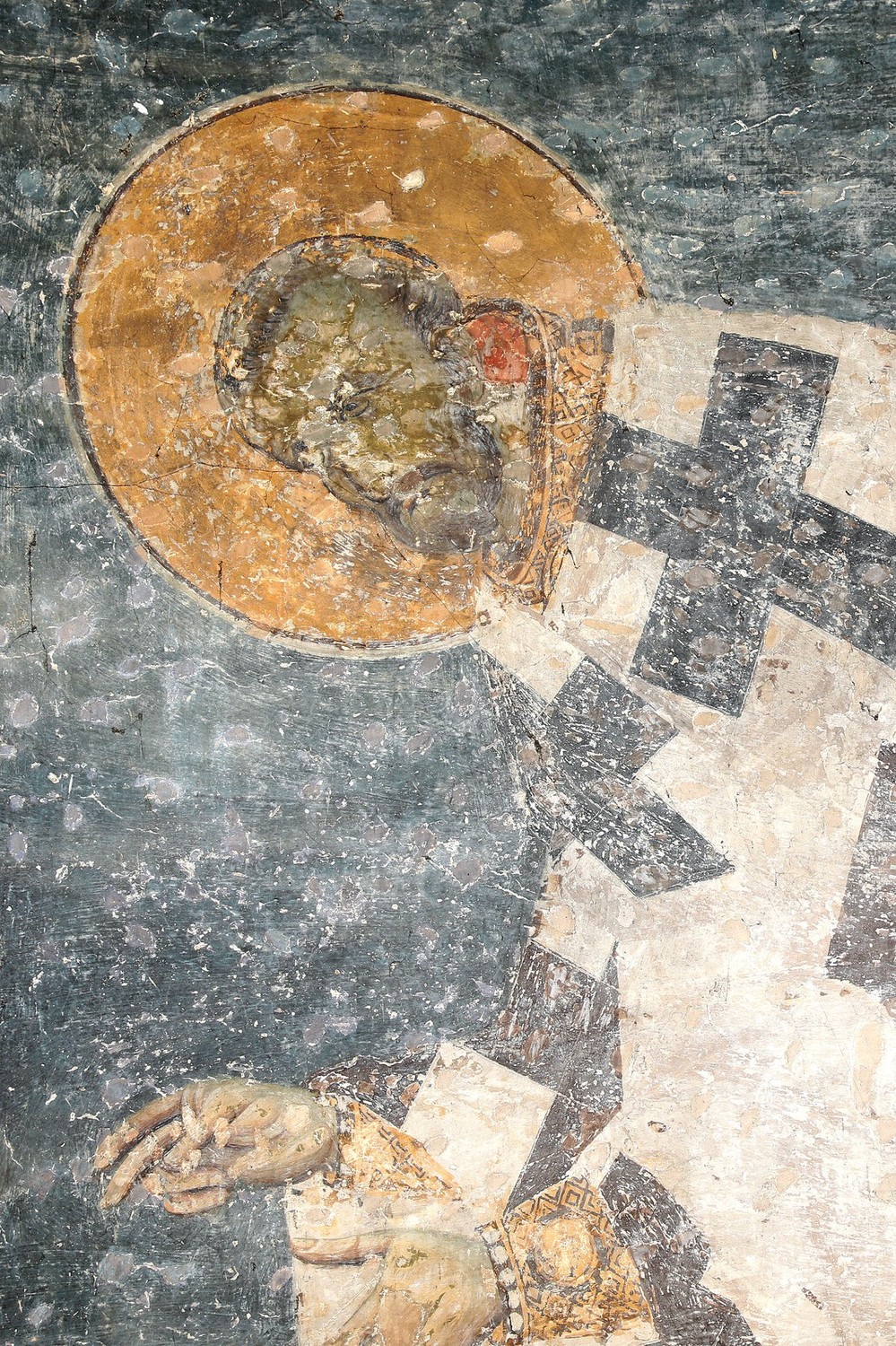
Saint John Chrysostom
Fresco: Saint John Chrysostom · fresco of the Church of the Theotokos of Leviška, Prizren, Kosovo, 14th c.; © BLAGO Fund, CC BY 4.0
7 · Antioch

Ordination to the priesthood. The name «Chrysostom»

Once when Flavian was standing at prayer during the night, an Angel of the Lord appeared to him and commanded him to go in the morning to the monastery where I was staying and ordain me to the priesthood, for I was a chosen vessel of God. At the same time the Angel appeared also to me while I was performing my nightly prayers, and commanded me to go with Flavian into the city and receive ordination from him. The next day my ordination was performed; when the patriarch laid his hand upon my head, a white, radiant dove suddenly appeared, flying above my head. The patriarch and all who were in the church marveled for a long time at this sign, and word of it spread throughout all Antioch and Syria.

In the rank of presbyter I cared for the salvation of human souls with even greater zeal: once or twice a week, and sometimes every day, I instructed the people in church, delivering sermons from the ambo. I often spoke my sermons extemporaneously, without a book or notebook, at which the inhabitants of Antioch greatly marveled, for until that time no one had preached the Word of God without a book. Many stenographers recorded my instructions on parchment and passed them on to others.

Once a certain woman, listening and not understanding what I had said, raised her voice among the people and said: «Spiritual teacher, or rather I shall call you — John Chrysostom, the well of your holy teaching is deep, but the ropes of our mind are short and cannot reach its depth.» Then many of the people said: «God Himself through the mouth of a woman gave this name to John.» From that time until the present the Church has preserved this name for me.

Source — St Demetrius of Rostov, “Lives of the Saints”
An Angel of the Lord appeared to him and said: – Tomorrow go to the monastery where the servant of God John is staying, bring him from there to the city and ordain him presbyter, for he is a chosen vessel of God […] At the same time the Angel appeared also to Saint John, when, according to his custom, he was performing his nightly prayers in his cell, and commanded him to go with Flavian to the city and receive ordination from him. […] when the patriarch laid his hand upon his head, suddenly there appeared a white, shining dove, which flew above the head of Saint John. Patriarch Flavian and all who were in the church were struck with awe and marvelled for a long time. The report of this miracle spread throughout all Antioch, Syria and the surrounding cities […] Once or twice a week, and sometimes even every day, he instructed the people in church, delivering sermons from the ambo. […] Saint John Chrysostom often delivered his sermons extemporaneously, at which all the inhabitants of Antioch greatly marvelled […] until that time no one had preached the Word of God without a book or notebook […] many stenographers recorded the sermons of John on scrolls and, copying them, passed them on to others. […] Spiritual teacher, or rather I shall call him – John Chrysostom, the well of thy holy teaching is deep, but the ropes of our mind are short and cannot reach its depth. […] God Himself through the mouth of a woman gave this name to John; let him from this time forth be called Chrysostom. Indeed, from that time until the present day the Church has preserved this name for John.
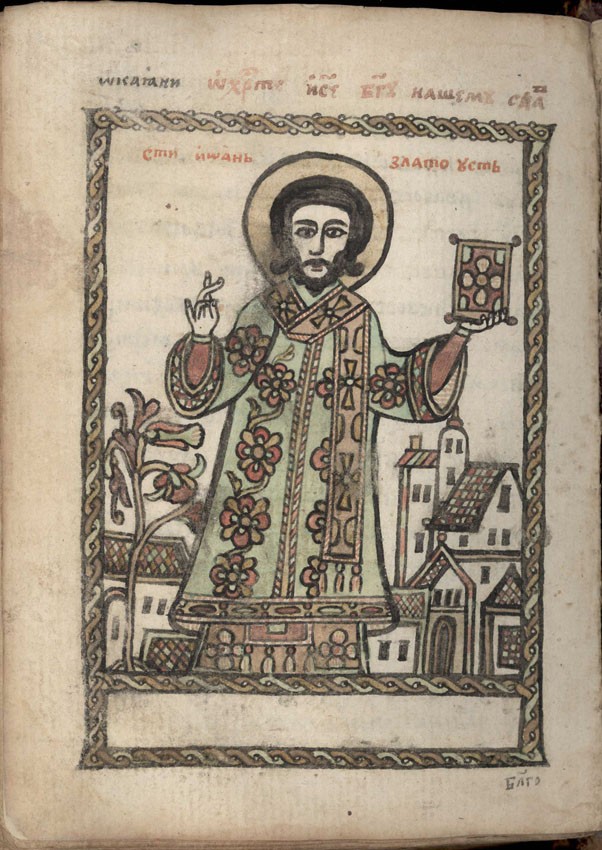
Saint John Chrysostom
Miniature: Saint John Chrysostom · miniature from the Bulgarian Puncov Collection, Ss. Cyril and Methodius National Library, Sofia
8 · Antioch

The Consolation of Antioch and New Miracles

While teaching the inhabitants of Antioch the faith and Christian life, I was for them a comforter also in the days of public calamities. Once in the city, on account of the imposition of a heavy tax, a popular uprising occurred: the enraged mob threw down and smashed the statues of the emperor and members of his family. The Antiochians began to await the imperial wrath in terror. Flavian set out to the emperor to intercede for the city, and left me to comfort and heal the suffering souls. Great Lent arrived, and every day I ascended the ambo and addressed the people with words of comfort and edification, rebuking the vices of my fellow citizens. News of the pardon was brought by Flavian right on the day of Pascha, and on the first day of the feast I announced the good tidings to the people, saying: «Rejoice with spiritual joy, thank God not only for the cessation of the calamities, but also for the fact that He sent them».

At this time I also worked other miracles. A certain woman, named Euklia, had an only son who fell ill with a fever and was at the point of death; taking water, I made the sign of the Cross over it three times in the name of the Holy Trinity and sprinkled the sick boy — the fever immediately ceased. The wife of a certain commander of a fortress, an adherent of the Marcionite heresy, suffered from a severe illness; when the husband and wife joined the Orthodox Church, I ordered her to be poured with water over which Flavian had made the sign of the Cross — and she immediately rose up healthy.

Source — St Demetrius of Rostov, “Lives of the Saints”
In Antioch, on account of the imposition of a tax heavy for the poor inhabitants of the city, a popular uprising occurred. The enraged mob threw down the statues of the emperor and members of his family that stood in the city and smashed them to pieces. […] Flavian set out to the emperor to intercede for the offending city; Saint John he left in the city to comfort and heal the suffering souls. Great Lent arrived […] Every day the lamp of God, John, ascended the church ambo and addressed the people with a powerful word of comfort and edification […] News of the pardon was brought by Flavian right on the day of Pascha. On the very first day of the feast Saint John announced the good tidings to the people and in conclusion said: – Rejoice with spiritual joy, thank God not only for the cessation of the calamities, but also for the fact that He sent them. […] A certain woman, named Euklia, had an only son who fell ill with a fever and was already at the point of death. […] John, taking water, made the sign of the holy Cross over it three times, in the name of the Holy Trinity, and sprinkled the sick boy. The fever immediately ceased […] His wife was afflicted with a severe illness […] When they had done this, John ordered water to be brought and asked Flavian to make the sign of the Cross over the water. Flavian fulfilled the saint’s request. John commanded the sick woman to be poured with this water, and she immediately rose up healthy.
Saint John Chrysostom
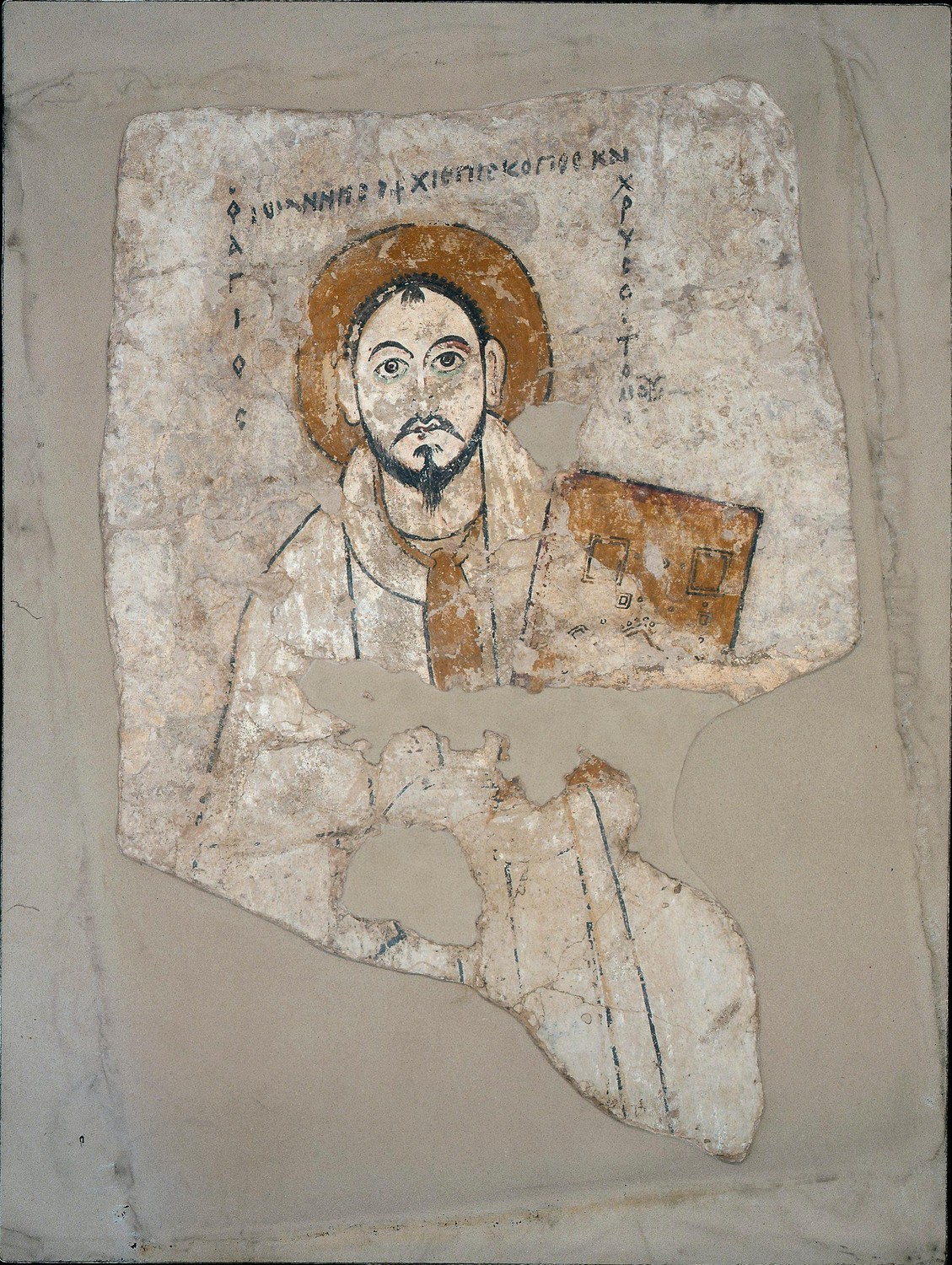
Fresco: Saint John Chrysostom · fragment of a wall painting, second half of the 9th cent.; National Museum, Warsaw
9 · Constantinople

Enthronement in Constantinople

After the death of Patriarch Nectarius of Constantinople they could not for a long time find a man worthy of the throne. Then they informed Emperor Arcadius about me, for my fame had spread everywhere, and the emperor sent a letter to Flavian ordering him to release me to Constantinople. When the people of Antioch learned of this, they gathered at the church and did not wish to be deprived of their teacher; nor did I myself wish to go, considering myself unworthy of the patriarchal rank. Then the emperor ordered Asterius, the governor of the East, to secretly convey me from Antioch, which was done. When I was approaching Constantinople, the whole city came out to meet me; the emperor together with the council of hierarchs and the people met me with honour, and all rejoiced at my elevation to the patriarchal throne. I was enthroned on the twenty-sixth of February.

The emperor and all the nobles came to me, desiring to receive a blessing. Having offered a prayer for the emperor and the people, I gave them a soul-profiting instruction, saying to him: «Let your piety know that I shall not fear, when the need arises, to offer admonitions and rebukes for the benefit of your soul, just as the prophet Nathan did not fear to rebuke the sins of King David». When after this I was conversing with my flock, a demon-possessed man appeared among the people, who in a fit threw himself to the ground; I ordered him to be brought forward, made the sign of the Cross over him and, casting out the unclean spirit, restored him to health. The emperor and all the people rejoiced and glorified God.

Source — St Demetrius of Rostov, “Lives of the Saints”
After the death of the Patriarch of Constantinople, Nectarius, the successor of Gregory the Theologian, they could not for a long time find a man worthy of the patriarchal throne. Then they informed Emperor Arcadius about John (for his fame had spread everywhere). The emperor immediately sent a letter to Flavian commanding that the saint be released to Constantinople. The people of Antioch, learning of this and burning with love for John, gathered at the church. […] The man of God himself did not wish to go to Constantinople; in his humility he had decided that he was unworthy of the patriarchal rank. […] He ordered Asterius, the governor of the East, to secretly convey John from Antioch, which was done. When John drew near to Constantinople, the whole city came out to meet him […] The emperor, together with the Sacred Council of hierarchs and the people, met Saint John with honour, and all rejoiced at the elevation to the patriarchal throne of this luminary of the Church. […] The blessed one was elevated to the patriarchal throne on 26 February 398. […] Let your piety know that I shall not fear, when the need arises, to offer admonitions and rebukes for the benefit of your soul, just as the Prophet Nathan did not fear to rebuke the sins of King David. […] Among the people there was one possessed who in a fit threw himself to the ground and cried out in a terrible voice […] The blessed John ordered him to be brought to him, made the sign of the Cross over him and, having driven out the unclean spirit, restored the possessed man to health. Seeing this, the emperor and all the people rejoiced and glorified God.
Mosaic of the Cathedral of Holy Wisdom in Constantinople, 9th century
Mosaic: Mosaic of the Cathedral of Holy Wisdom in Constantinople, 9th century · Hagia Sophia, 9th c.
10 · Constantinople

Mercy, the struggle against heresy, the vision of the Apostle Paul

Having accepted the government of the Church, I began zealously to pasture the rational flock of Christ, uprooting evil customs and planting purity of morals, love and mercy. Having care for the infirm and the poor, I established many hospitals for strangers and the sick, supplying them with all necessities. I also sent experienced clergy to strengthen Orthodoxy by preaching: I utterly destroyed the pagan temples in Phoenicia and turned to the faith the Celtic people infected with Arianism, ordering the priests to learn their language.

In Constantinople there still remained many Arians. I said to the emperor: «If anyone were to set a simple, dark stone into your crown, would he not dishonour the whole crown? So too is this city dishonoured, having among its inhabitants the unfaithful Arians.» The emperor ordered them to be expelled from the city; then, for the first time, crosses on poles were made for solemn processions against the Arian blasphemies; these were carried through the city together with the holy icons — thus processions with the Cross arose. The general Gainas, a barbarian by birth who held to the heresy of Arius, asked the emperor for a church for the Arians; I reminded him of what he had been before and what he had become by the emperor’s mercy — and he asked no more for a church.

In my hours of solitude, as I continued to interpret the Epistles of the Apostle Paul, I doubted whether my understanding of the Scripture was pleasing to God. And then Proclus, who served me, saw three times by night that a certain elder, resembling the image of the Apostle Paul on the icon in my cell, stood behind me and quietly spoke into my ear. Realising that this was the Apostle Paul himself, I fell to the ground and prayed for a long time, thanking God.

Source — St Demetrius of Rostov, “Lives of the Saints”
Having accepted the government of the Church, the most holy Patriarch John began zealously to pasture the rational flock of Christ, uprooting in people of every rank […] In particular John had care for the infirm and the poor, feeding the hungry, clothing the naked, providing for orphans and widows. For the comfort of the sick and of strangers who had nowhere to lay their heads, he established many hospitals […] He utterly destroyed the pagan temples that had stood for many centuries in Phoenicia. He wisely turned to the Orthodox faith the Celtic people infected with Arianism, ordering the priests and deacons chosen for this to learn the Celtic language […] Pious emperor! If anyone were to set into your crown, alongside the precious stones therein, a simple stone, dark and unclean, would he not dishonour the whole crown? […] So too is this city dishonoured, which, being Orthodox, yet has among its inhabitants the unfaithful Arians. […] For these processions silver crosses on poles were made, which were solemnly carried through the city together with the holy icons […] Thus processions with the Cross arose for the first time. […] If you, Gainas, wish to pray in church, then enter whichever you wish and pray, for all the churches in the city are open to you. […] You should consider what you were before and what you are now. […] Who knows whether this is pleasing to God? Have I understood the power of this Holy Scripture or not? […] Proclus looked through the keyhole to see what the patriarch was doing. He saw him sitting and writing, while a certain venerable old man stood behind him, leaned toward the patriarch’s ear and quietly spoke to him. This man in all things resembled the depiction of Saint Paul on the icon that hung before John on the wall of his cell. […] Then John understood that Proclus had seen the holy Apostle Paul himself, and he was assured that his labour was pleasing to the Lord. He fell to the ground and prayed for a long time, thanking God.
Refusal to Empress Eudoxia at the church doors
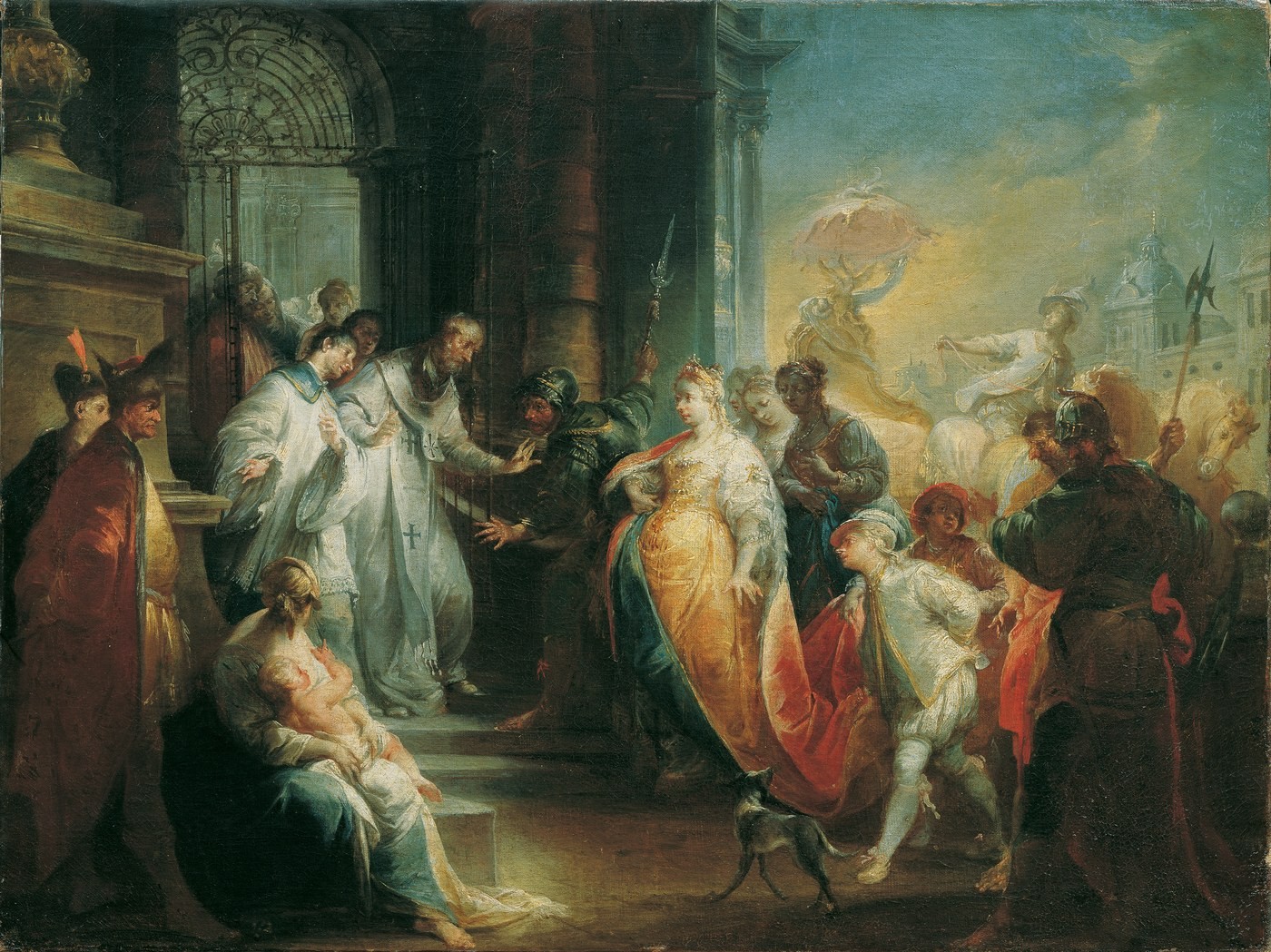
Painting: Refusal to Empress Eudoxia at the church doors · I. W. Baumgartner, 18th c.
11 · Constantinople

The wrath of Empress Eudoxia: the widows and the vineyard

Many people came to hate me for rebuking unrighteousness, and among them was the empress Eudoxia herself, for she was exceedingly avaricious. In Constantinople there lived a nobleman named Theodoric; the empress, wishing to appropriate his property, ordered him to lend part of his wealth to the treasury. I wrote to the empress, begging her not to wrong him; Theodoric, instructed by me concerning almsgiving, himself donated his wealth to the church hospice. The empress grew angry, supposing that I had seized this property for myself, and I replied to her in a letter that I had voluntarily renounced the wealth of my parents and had taken nothing from Theodoric.

The widow Callitrope was wronged by the governor Paulicius, who had taken from her five hundred gold pieces, and later by the empress herself, who returned to her only a small part of what had been taken. Coming to me, she told me of her trouble; I summoned Paulicius to the church and ordered him to return everything to her down to the last gold coin. When the empress sent soldiers to remove him by force, an Angel of the Lord with a drawn sword appeared to them in the church doors; one of the soldiers who had raised his hand against the door immediately withered in his arm and was healed only after washing it in the church washbasin. Paulicius returned the gold to the widow.

Later the empress seized the vineyard of the widow Theognosta; I begged her to return what she had taken, calling her a second Jezebel if she would not cease from unrighteousness — and she drove me from the palace with dishonour. On the feast of the Exaltation of the Honourable Cross I ordered the church doors to be shut before the empress, and she returned humiliated, burning with anger.

Source — St Demetrius of Rostov, “Lives of the Saints”
the empress took it to herself and thought that John was rebuking and insulting her alone; for she was exceedingly covetous […]. At that time there was in Constantinople a certain nobleman named Theodoric, who possessed great wealth. […] lend to the imperial treasury part of your property […]. John immediately sent the empress a letter, exhorting her with kind and gentle words not to wrong Theodoric. […] all the rest of his great fortune he donated to the church hospice for the sustenance of strangers, the poor, and the sick. […] and you have seized his property for your own enrichment! […] But know that Theodoric gave me nothing; and even if he had given, I would not have taken it from him. […] on account of the following matter […]. Callitrope […]. Paulicius […] ordered the widow to be seized and forced her to pay him five hundred gold coins. […] We have summoned you so that you might return the five hundred gold pieces to her whom you have unjustly wronged. […] suddenly there appeared to them standing in the doorway an Angel of the Lord, who held a drawn sword in his hand and barred the entrance with it. […] one of those who had come with her drew a sword and swung it, wishing to strike the door; and behold, his hand suddenly withered and became motionless […]. The saint ordered him to wash it in the altar lavabo, and the hand was immediately healed. […] Eudoxia ordered that Theognostus’ vineyard be added to the imperial vineyards […] lest I call you a second Jezebel and you be subjected to a curse like that impious queen of Israel. […] And she ordered the holy John to be forcibly removed from the imperial chamber. […] Tell the church doorkeepers that when the empress approaches the church they are to shut the doors before her and not allow her or any who come with her to enter the church […]. When the feast of the Exaltation of the Honourable Cross arrived […]. Filled with shame and malice, the empress said: – Look, all of you, what insult this obstinate man causes me!
John is led into exile under the guard of soldiers
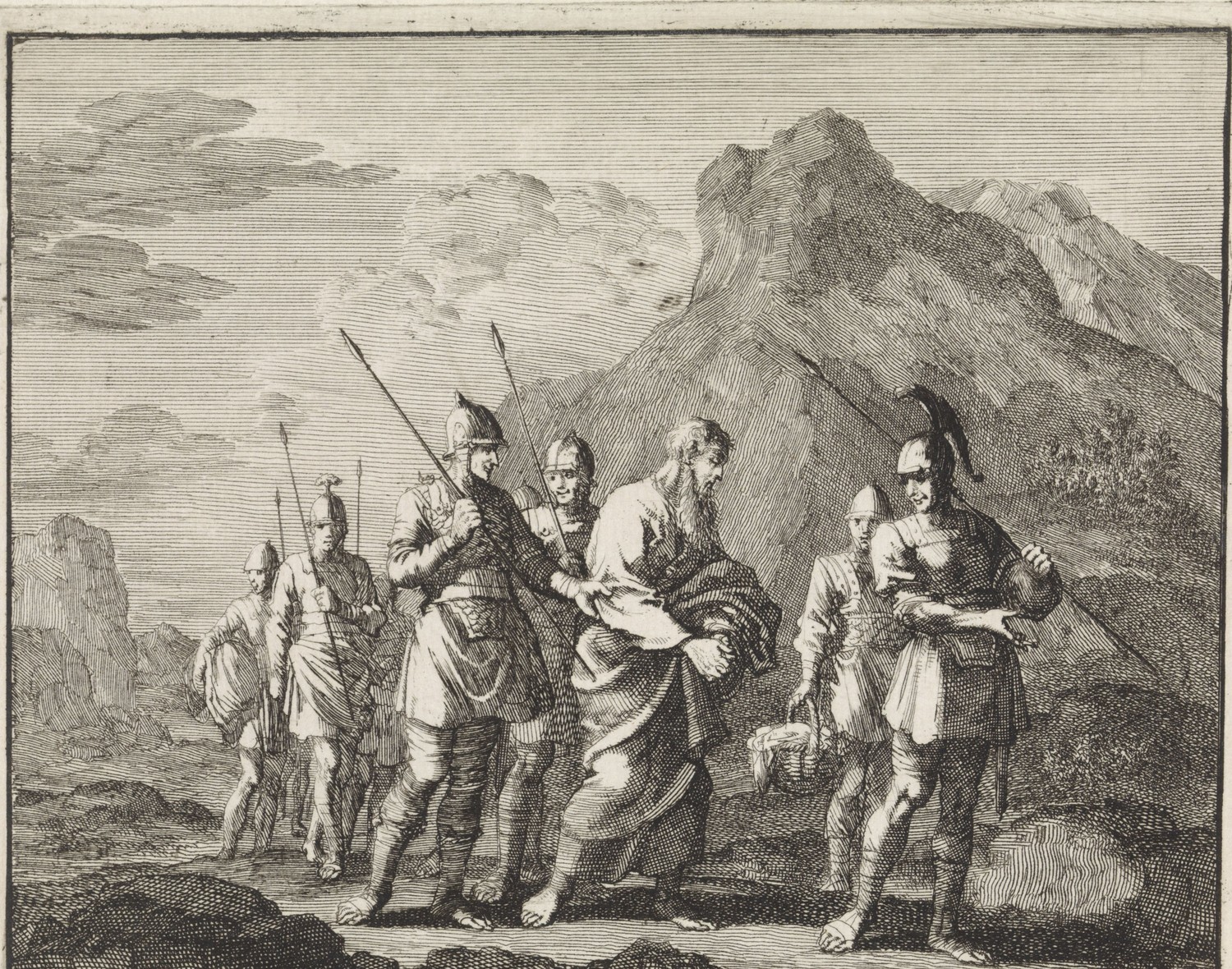
Engraving: John is led into exile under the guard of soldiers · engraving by J. Luyken, Netherlands, 1701; Rijksmuseum, Amsterdam
12 · Chalcedon — Prenetus — Constantinople

The Council at the Oak. The First Exile

The Patriarch of Alexandria, Theophilus, who had long envied my glory, found an occasion to accuse me: I had taken under my protection monks whom he had expelled from Egypt without cause, and I had not refused them communion until I should examine the matter in council. Theophilus, having secured the favour of the empress, arrived in Constantinople with many bishops and convened a council against me in the Chalcedonian suburb. I replied to those sent from that gathering: «I cannot go to my manifest enemies», and I sent bishops in my stead, but I was not heard; the council condemned me without seeing my face or hearing my voice.

The emperor, believing the unrighteous council, ordered me to be expelled from the church; fearing to give occasion for further accusation, I secretly gave myself into the hands of the soldiers, and they conveyed me in a small boat to Prenetus, which lies opposite Nicomedia. The people raised a great tumult; many were killed and wounded; Theophilus in fear fled to Alexandria. That same night a violent earthquake occurred, and the empress’s palace was shaken; terrified, she implored the emperor to recall me. Yielding to her entreaties, I returned to Constantinople: the whole city came out to meet me with lighted candles, and I again sat upon my throne, imparting peace to the people.

Source — St Demetrius of Rostov, “Lives of the Saints”
Theophilus, instructed by Satan, zealously strove to depose John from the throne […]. The expelled monks, gathering together and coming to Alexandria to the patriarch, begged him to tell them why they had been condemned and driven from the places of their dwelling. […] The blessed John held them in high esteem and did not forbid them to visit the church, although he did not admit them to holy Communion until he himself had thoroughly clarified the cause of their excommunication from the Church and reconciled them with Theophilus. […] The Patriarch of Alexandria, Theophilus, immediately arrived in Constantinople, having in his retinue many bishops […]. The place appointed for the council was in the Chalcedonian suburb […]. The holy John on his part said to the envoys: – I cannot go to my manifest enemies. And he did not go. […] he sent in his stead three bishops with two presbyters to speak for him. […] Theophilus with the council of his bishops condemned the holy John as worthy of deposition from the rank and deprived him of his see, without seeing his face or hearing his voice. […] he unhesitatingly believed the words of the unrighteous council and ordered John to be immediately expelled from the church […]. he secretly went out and gave himself into the hands of the soldiers sent to seize him. The soldiers led him to the sea gulf and sailed with him to Prenetus, which lay opposite Nicomedia. […] Learning of this, Theophilus secretly fled from the city and at once sailed to Alexandria. […] a violent earthquake occurred, and all were in great fear; especially was the empress seized with terror, because her palace was shaken more than the other buildings […]. The emperor feared God’s punishment and the people’s uprising […]. Learning of this, all the citizens with lighted candles rode out to meet him […] with honour, to the singing of psalms and sacred hymns, he was led into the church.
Saint John Chrysostom is sent into exile
Miniature: Saint John Chrysostom is sent into exile · Menologion of Basil II, c. 985
13 · Constantinople — Cucusus

The Second Exile

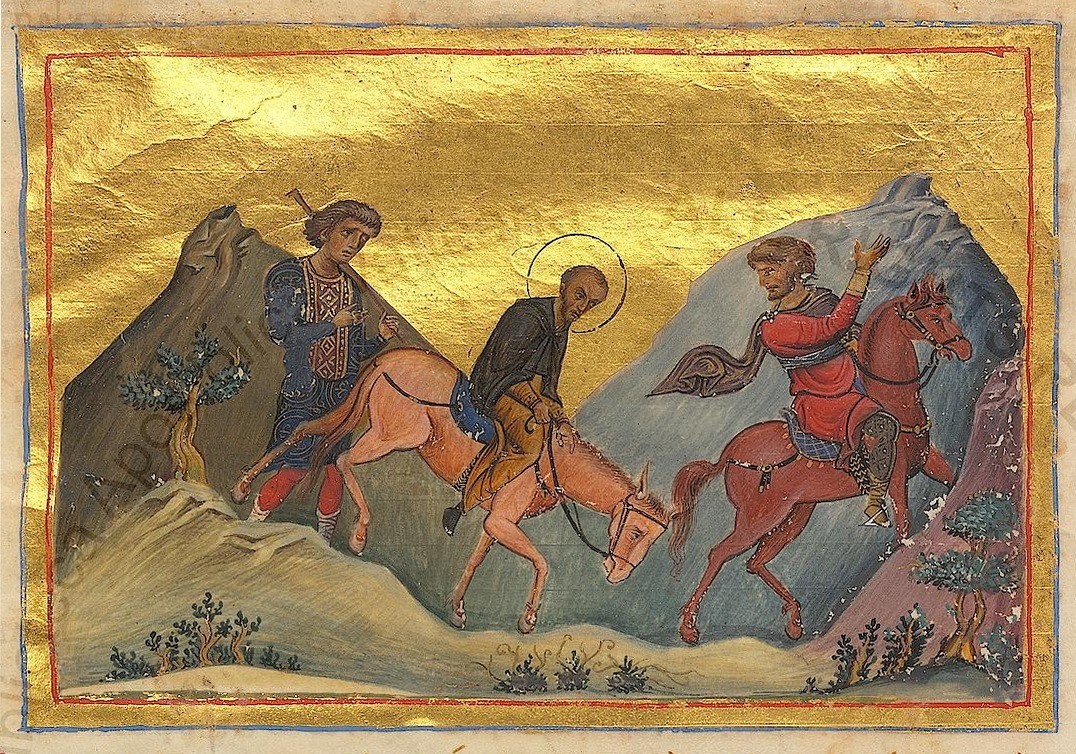
Not two months had passed before a new storm arose against me. The empress set up her pillar near the church of Holy Wisdom, and around it there were disorderly rejoicings that drowned out the church singing. Zealous for the honour of the sanctuary, I said in church: «Again Herodias raves, again she is troubled, again she leaps and dances, again she seeks the head of John!» My enemies reported to the empress that by these words I had compared her to Herodias, and she again persuaded the emperor to convene a council. The assembled bishops, finding no other accusations, condemned me on the basis of the old Arian decrees because, having been deposed, I had of my own accord ascended the throne before a new council.

When the feast of Pascha arrived, the emperor, at the instigation of the bishops, ordered me to depart from the church. I was left under guard in the patriarchal house, and at the arrival of Pentecost I was led into exile. The soldiers, who had been ordered to wear me out, seated me on an unsaddled donkey and drove the animal swiftly, allowing me neither rest nor food; nowhere did they permit me to enter a church. From Cucusus, where I was at last brought, I wrote to Bishop Cyriacus: «We have suffered much distress on the journey, but we are not grieved by anything; whole companies of fathers and monks came out to meet us and wept, saying to one another: it would have been better for the sun to hide its rays than for the mouth of John to fall silent.» From there the empress ordered me to be sent still farther — to the deserted Pityus on the shore of the Pontic Sea.

Source — St Demetrius of Rostov, “Lives of the Saints”
Again Herodias rages, again she is agitated, again she leaps and dances, again she seeks the head of John! […] Informers and enemies of John hastened to report this to the empress with malicious joy, interpreting his words in such a sense as though in them she was being compared to Herodias. […] again royal letters were sent to all the bishops inviting them to assemble in Constantinople and to pass judgment on John. […] On the basis of those unrighteous heretical canons the blessed one was condemned, for no other accusations against him could be found. […] the great feast of holy Pascha arrived; the emperor, at the instigation of the bishops, sent word to John: «Depart from the Church» […] he dispatched to him the official Marinus, who administered the estates of the empress, so that he might forcibly drag the glorious teacher of the Church from the temple […] he remained here for two months, until the imperial decree concerning his exile into confinement was issued. […] With the arrival of Pentecost the imperial command came that John should depart into exile. […] they would seat him upon an unsaddled donkey and drive the animal swiftly […] They allowed him nowhere to enter a church […] We endured much grief on the journey, but we are not crushed by anything. When we were passing through Cappadocia and Taurocilicia, whole assemblies of fathers, holy men, and numerous crowds of monks and virgins came out to meet us and shed abundant tears. Looking upon our procession into exile, they wept and said to one another: it would have been better for the sun to hide its rays than for the mouth of John to fall silent. […] in Cucusus there came from the empress a command to send John to a desert place called Pithyus, situated on the shore of the Pontic Sea.
The Repose of Saint John Chrysostom
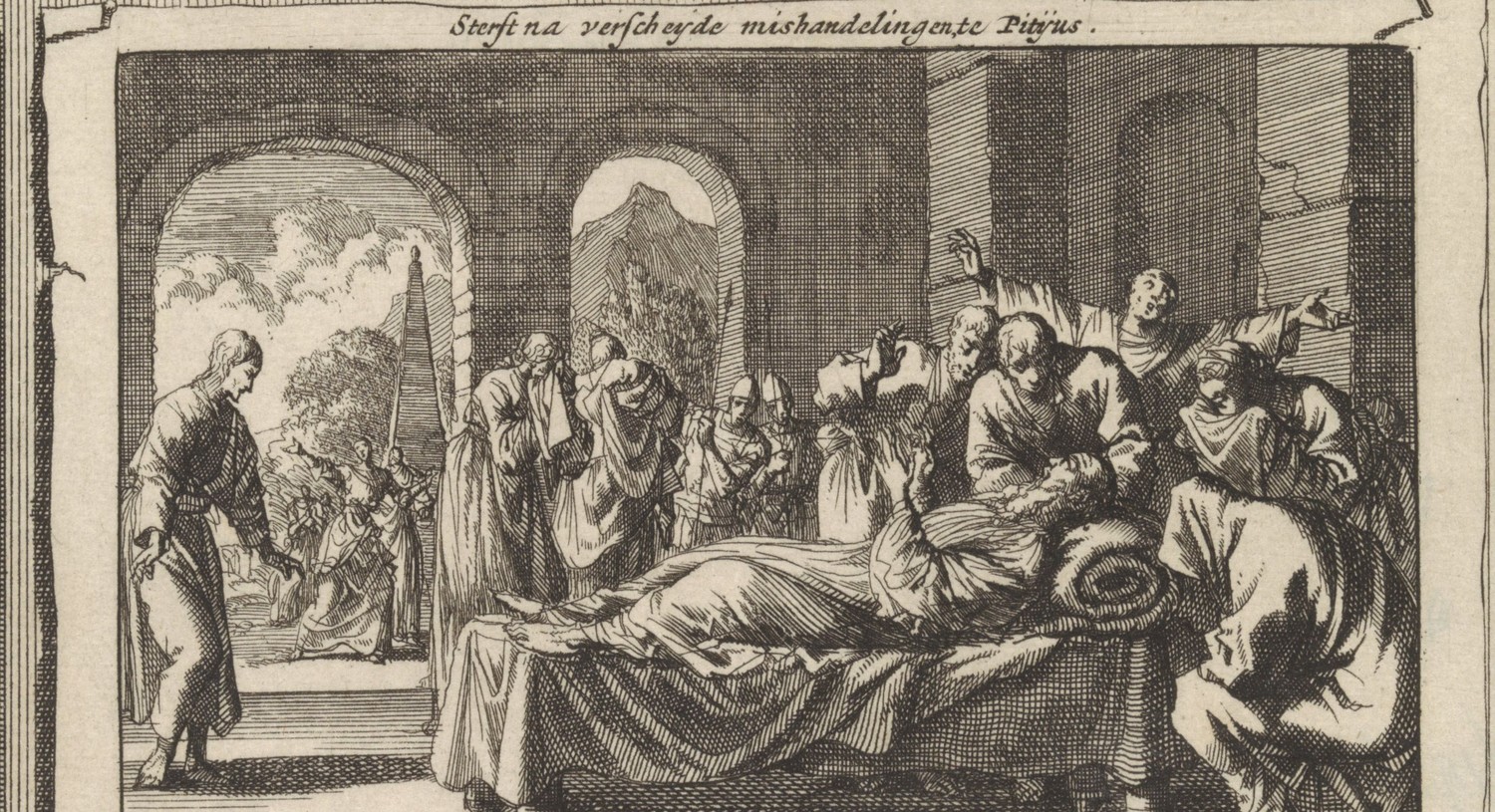
Engraving: The Repose of Saint John Chrysostom · engraving by J. Luyken, Netherlands, 1698; Rijksmuseum, Amsterdam
14 · Comana — Constantinople

Repose in Comana and the Translation of the Relics

During this last journey, enduring the cruel treatment of the soldiers, I also reposed. Shortly before my repose, while I was standing at prayer by night according to custom, the holy apostles Peter and John appeared to me and said: «Rejoice, good shepherd, steadfast passion-bearer; after a few days thou shalt depart to the Lord and shalt eternally rejoice with us in the Kingdom of Heaven». Having reached Comana, where there is a church of the holy martyr Basiliscus, on the night before the feast of the Exaltation of the Honorable Cross I beheld in a vision the martyr himself, who said to me: «Brother John, take courage! For tomorrow we shall be together». I entreated the soldiers to remain longer by that church, but after they had sailed away they miraculously came to shore again at the same place; then I entered the church, partook of the Immaculate Mysteries, and after giving my companions the last kiss, with the words «Glory be to God for all things» I gave up my spirit to the Lord. This was on the very day of the Exaltation of the Honorable Cross of the Lord.

They laid me in the same church near the tomb of the martyr Basiliscus. The Lord took vengeance on my persecutors still on earth: they died in grievous illnesses, while the empress Eudoxia, eaten by worms, perished in that disease. After her death her tomb shook for thirty-two years, until the translation of my honorable relics from Comana to Constantinople took place. Thus was extinguished the lamp of the Church, thus fell silent the voice that was called not only most eloquent but also Chrysostom.

Source — St Demetrius of Rostov, “Lives of the Saints”
the holy Apostles Peter and John came to him, who had appeared to him before […] Rejoice, good shepherd of the rational sheep of Christ, steadfast passion-bearer. […] after a few days thou shalt depart to the Lord thy God and shalt eternally rejoice with us in the Kingdom of Heaven. […] the exiles reached Comana; near that city there was a church of the holy great-martyr Basiliscus […] on the night before the feast the blessed John beheld the holy martyr Basiliscus. «Brother John, take courage! For tomorrow we shall be together». […] John entreated the soldiers to remain in Comana at the church of the holy Basiliscus until the fifth hour, but they did not hearken to him […] they again came to shore near the church of the holy Basiliscus, at which they were greatly amazed. […] vested in the church garments he celebrated the Liturgy and partook of the Immaculate and Life-giving Mysteries of the Body and Blood of Christ; then, having blessed all those present and given them the last kiss, he lay down with the words: «Glory be to God for all things». And immediately after that he gave up his spirit into the hands of God. This was on the very day of the Exaltation of the Honorable Cross of the Lord. […] He was laid in the same church where he had died, not far from the tomb of the holy martyr Basiliscus. […] The terrible judgment of God also overtook the ill-fated empress Eudoxia […] her flesh swarmed with worms […] and in that disease she died. […] the tomb in which she was laid shook constantly for thirty-two years, and this continued until the time of the translation of the honorable
The Church sings

Troparion to Saint John Chrysostom, Tone 8

From your lips, like the brightness of fire, grace has shone forth,/ enlightened the universe:/ you have not won the treasures of the world through the love of money,/ show us the height of humbleness of mind./ But punishing with your words, father John Chrysostom, // pray to the Word of Christ God to save our souls.

The life in the border scenes of the icon
Saint John Chrysostom с клеймами жития
Icon «John Chrysostom with 40 scenes from his life», by Simeon Spiridonov Kholmogorets, 1670s–1680s. Yaroslavl Art Museum, inv. I-886. Public domain.
Prayers to Saint John ChrysostomSt Dimitry of Rostov, “Lives of the Saints”, in our libraryAll lives