ORTHODOX HOUSENewsCommunityCalendarPrayer BookLives of the Saints
Great-Martyr Catherine of Alexandria
Lives of the Saints · the saint tells his own story

Great-Martyr Catherine of Alexandria

Commemorated: 24 November (7 December) · early 4th century · Alexandria, Egypt
«During the reign of the impious Roman emperor Maximin, I lived in the city of Alexandria, being of royal descent…»
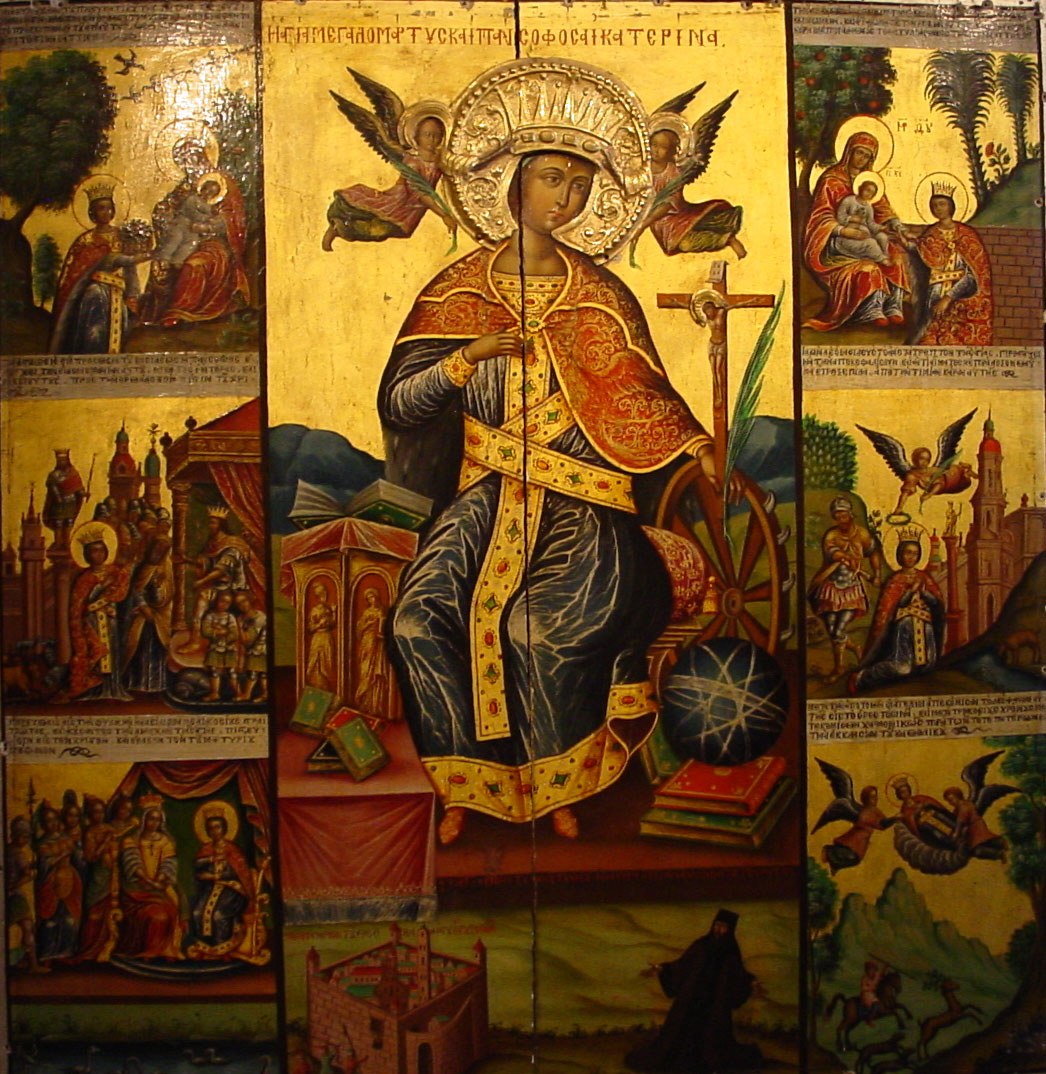
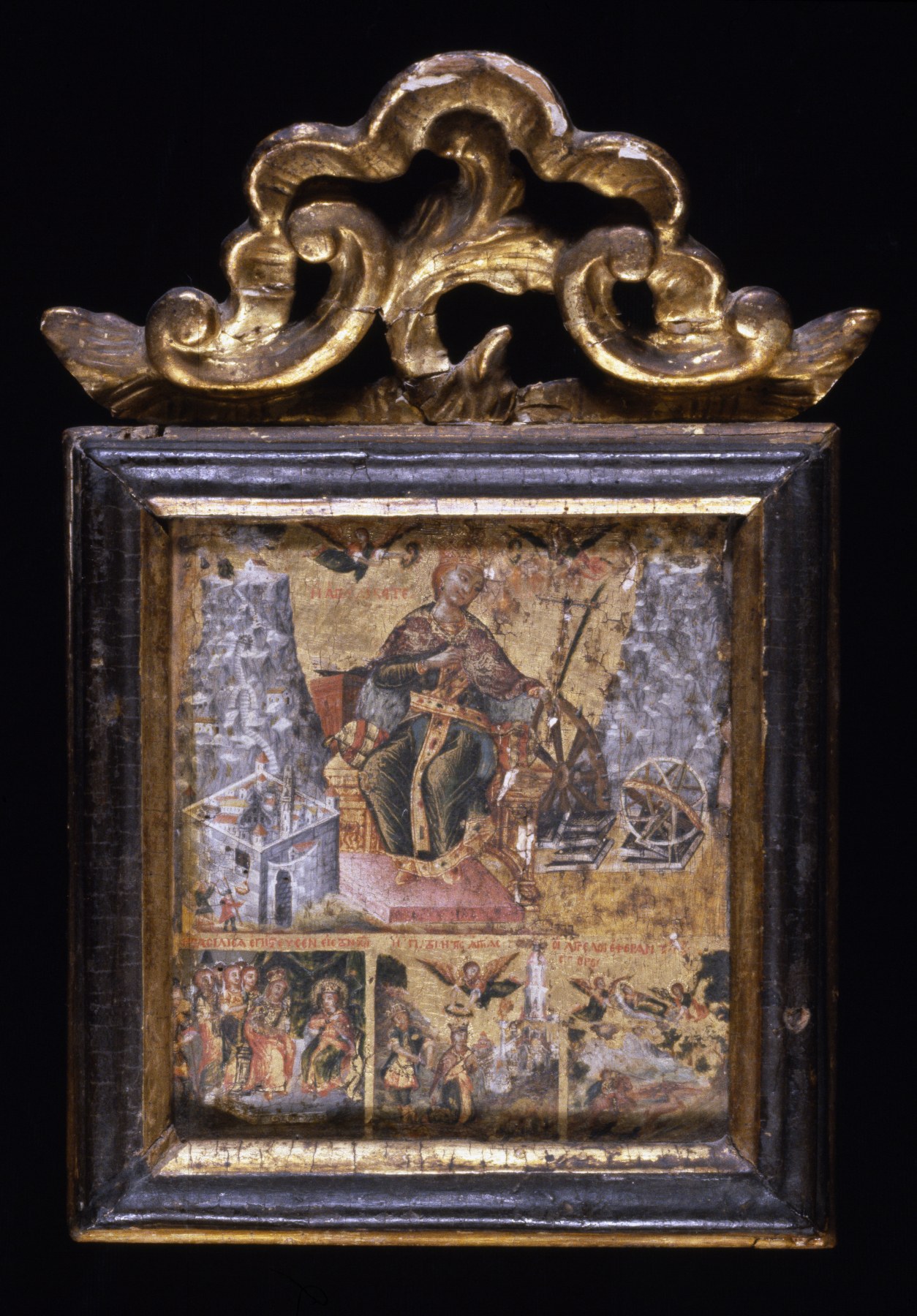
Icon “Great-Martyr Catherine of Alexandria, with scenes from her Life”. Greece. Walters Art Museum (Baltimore), inv. 372753. Public domain.
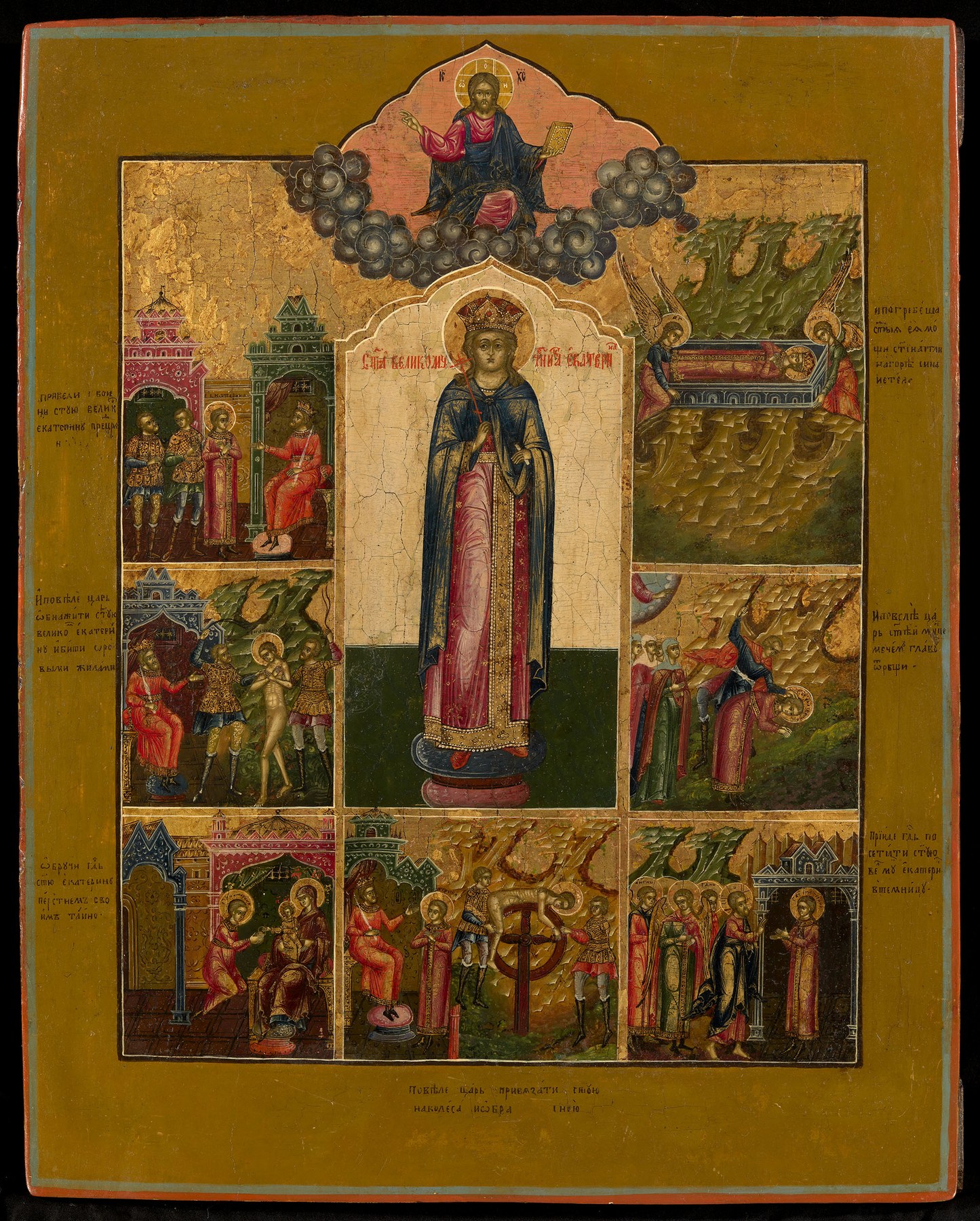
How this is made. The account is told in the first person — a close paraphrase of this Life; not a single fact that is absent from the source. Beneath each excerpt is the text of St Dimitry himself. The event after her repose (the translation of the relics to Sinai) is marked «as the Life relates». Source: St Dimitry of Rostov. Lives of the Saints. Month of November, day 24 — The Life and Passion of the Holy Great-Martyr Catherine. The face is an authentic icon; the light and breathing make it a “living icon”, with no talking lips. The pictures beside the passages are the border scenes of the icon of his life. There is no voice: the reading is yours.
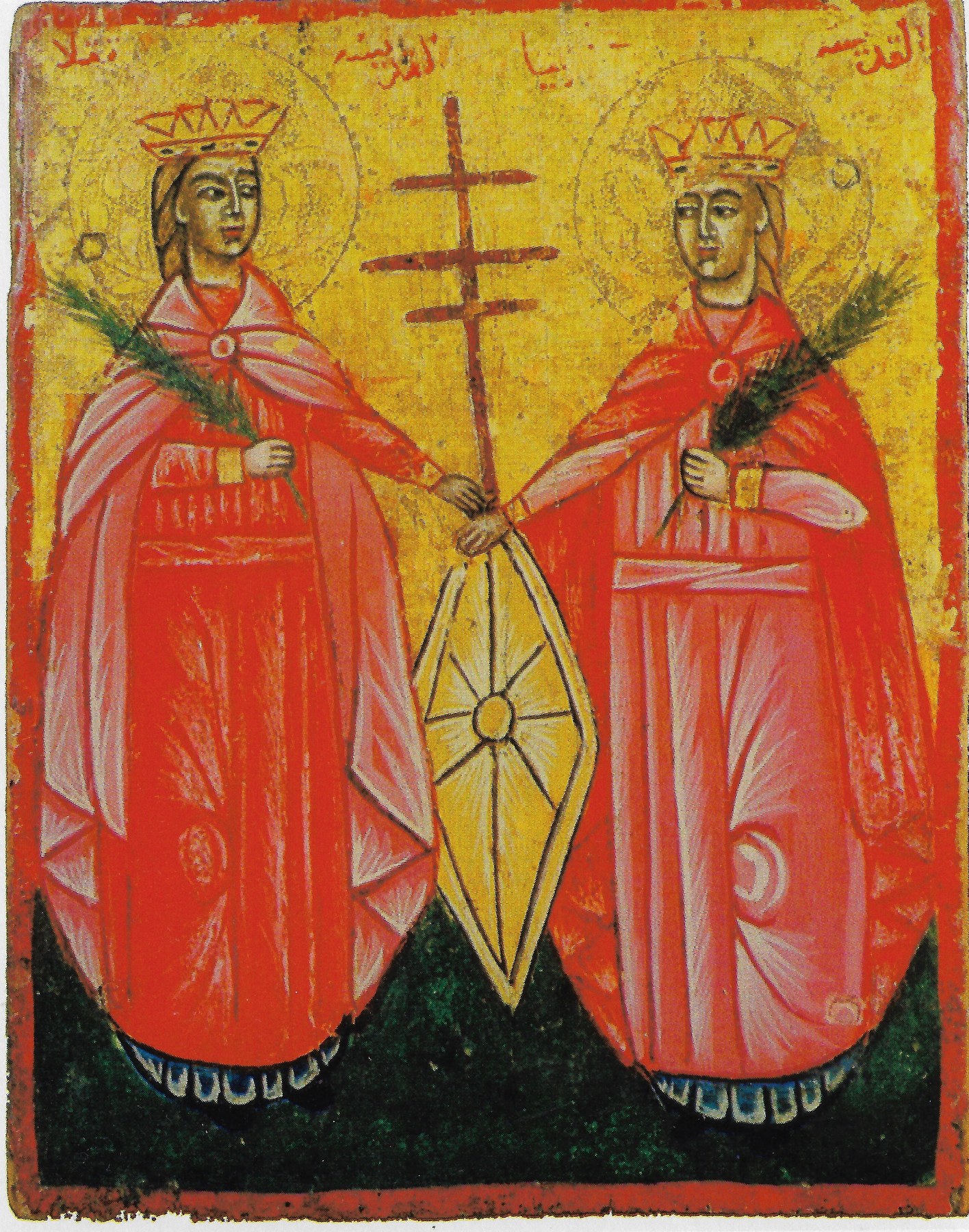
Holy Thecla and Catherine
Icon: Holy Thecla and Catherine · Syria, public domain
1 · Alexandria

Alexandria. Wisdom and the vow of virginity

During the reign of the impious Roman emperor Maximin I lived in the city of Alexandria, being of royal descent. I was beautiful in appearance and renowned for my wisdom. Being only eighteen years of age, I had studied perfectly the works of all the pagan writers, the ancient poets and philosophers — Homer, Virgil, Aristotle, Plato and others; I had also studied the writings of the most famous physicians — Asclepius, Hippocrates and Galen; moreover, I had learned all the rhetorical and dialectical arts and knew many languages and dialects, so that all marvelled at my learning and knowledge.

Many rich and noble men sought my hand in marriage and for this purpose came to my mother, a secret Christian who concealed her faith because of the cruel persecution. My relatives and my mother often advised me to marry, so that my father’s royal inheritance would not pass into strange hands. But I, as a wise maiden, had firmly resolved in my heart to preserve the purity of virginity all my life and had no desire at all to marry.

When my relatives began earnestly to urge me to enter into marriage, I said to them: “If you wish me to marry, then find me such a youth as would possess those four gifts in which I surpass all other maidens; but I do not wish to marry a man who in any respect would be worse and lower than I.” My household, seeing that it was impossible to find such a youth, said that royal sons could become yet more noble and rich if they entered into marriage with me, but that in beauty and in wisdom no one could compare with me. I answered them: “I wish to have as my bridegroom none other than one equal to me in learning.”

Source — St Demetrius of Rostov, “Lives of the Saints”
During the reign of the impious Roman emperor Maximin there lived in the city of Alexandria a maiden named Catherine, who was of royal descent. […] Being only eighteen years of age, Catherine had studied perfectly the works of all the pagan writers and all the ancient poets and philosophers, such as: Homer, Virgil, Aristotle, Plato and others. […] she had also studied the writings of the most famous physicians, such as: Asclepius, Hippocrates and Galen; moreover, she had learned all the rhetorical and dialectical arts and knew also many languages and dialects, so that all marvelled at her learning and knowledge. […] Many rich and noble men sought her hand in marriage and for this purpose came to her mother, a secret Christian who concealed her faith because of the cruel persecution […] But Catherine, as a wise maiden, had firmly resolved in her heart to preserve the purity of virginity all her life and had no desire at all to marry. […] If you wish me to marry, then find me such a youth as would possess those four gifts in which I, as you know, surpass all other maidens; and then I will agree to choose him as my husband; but I do not wish to marry a man who in any respect would be worse and lower than I. […] I wish to have as my bridegroom none other than one equal to me in learning.
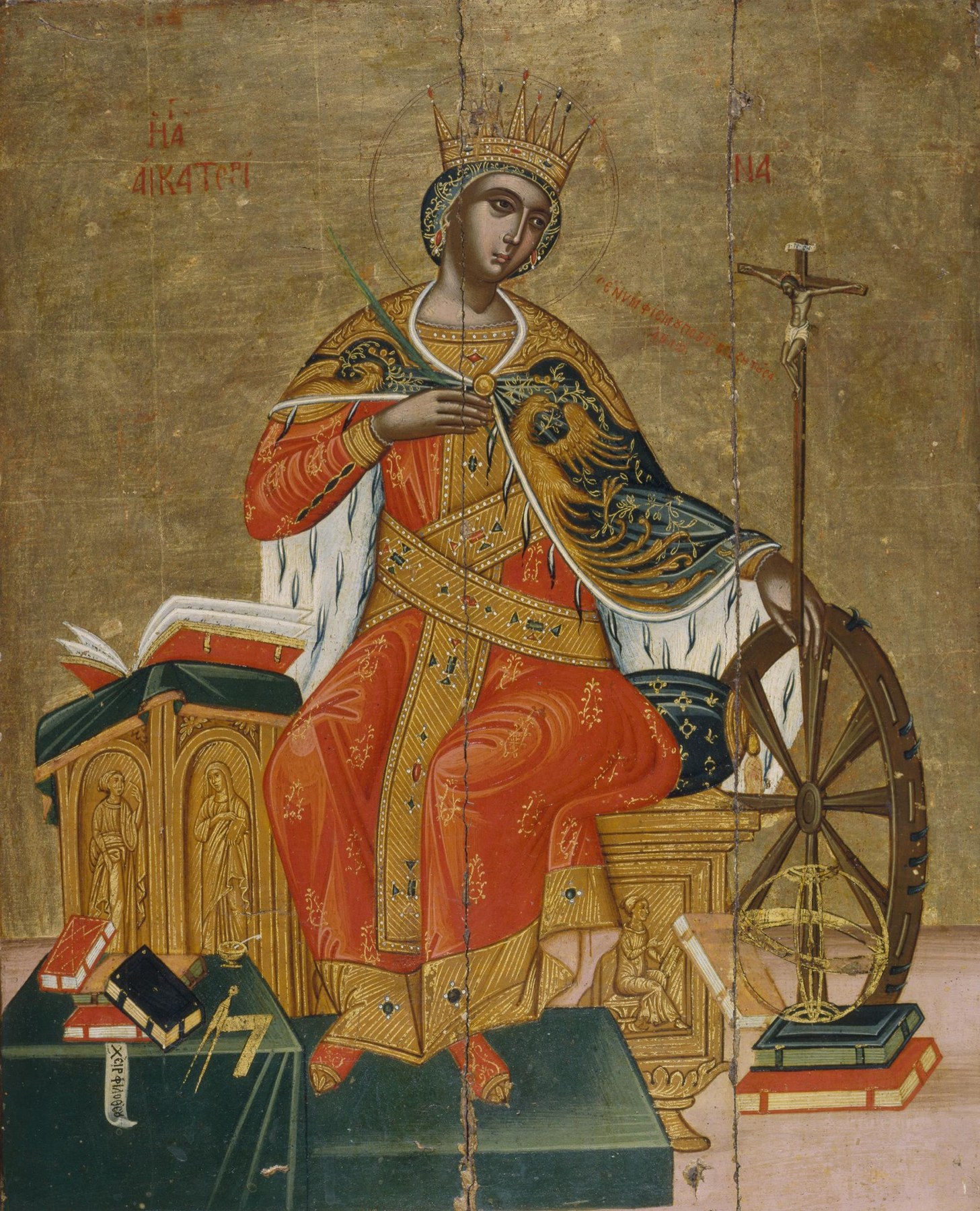
Great-Martyr Catherine
Icon: Great-Martyr Catherine · Cretan school, 17th c.
2 · the hermit’s cell outside the city

The counsel of the elder-hermit

Seeing my unyielding resolve, my mother decided to try another means. She turned for counsel to her spiritual father, a pious and holy man who lived in a hidden place outside the city, and led me to that righteous man. He, seeing me, conceived the intention of teaching me the knowledge of Christ, the Heavenly King.

“I know,” he said to me, “one marvellous Youth Who incomparably surpasses you in all your gifts. His beauty is brighter than the light of the sun; His wisdom governs all created things; the wealth of His treasures is spread throughout the whole world and never diminishes.” Thinking that he was speaking of some earthly prince, I was troubled and asked whether this was true. He answered that it was true.

I asked: “Whose son is this Youth?” The elder replied: “He has no father on earth, but was born ineffably of one most noble in lineage, the All-Holy and All-Pure Virgin. She remains immortal in soul and body and is exalted above the heavens, where all the holy Angels worship Her as Queen of all creation.” I asked: “Is it possible for me to see that Youth?” — “If you do what I tell you,” the elder answered, “you will be counted worthy to behold His most radiant Face.” I said: “I believe that you speak the truth; I am ready to do everything, only that I might see Him Whom you so greatly praise.”

The elder gave me an icon of the Most-Holy Theotokos holding the Divine Infant in Her arms, and said: “This is the image of the Virgin and Mother of Him of Whom I have told you so many wondrous things. Take this image home and, shutting the doors of your room, offer fervent prayer to this Virgin, Whose name is Mary; beseech Her that She would deign to show you Her Son.”

Source — St Demetrius of Rostov, “Lives of the Saints”
Seeing the unyielding resolve of her daughter, the mother decided to try yet another means. She turned for counsel to her spiritual father, a pious and holy man who lived in a hidden place, outside the city. […] He, seeing the beautiful maiden and hearing her wise, though modest, words, conceived the intention of teaching her the knowledge of Christ, the Heavenly King. […] I know, – he said to her, – one marvellous Youth Who incomparably surpasses you in all your gifts. His beauty is brighter than the light of the sun; His wisdom governs all sensible and spiritual created things; the wealth of His treasures is spread throughout the whole world and never diminishes […] He has no father on earth, but was born ineffably and supernaturally of one most noble in lineage, the All-Holy and All-Pure Virgin. […] She remains immortal in soul and body and is exalted above the heavens, where all the holy Angels worship Her as Queen of all creation. […] Then the elder gave her an icon of the Most-Holy Theotokos holding the Divine Infant in Her arms, and said to her: – This is the image of the Virgin and Mother of Him of Whom I have told you so many wondrous things. […] beseech Her that She would deign to show you Her Son
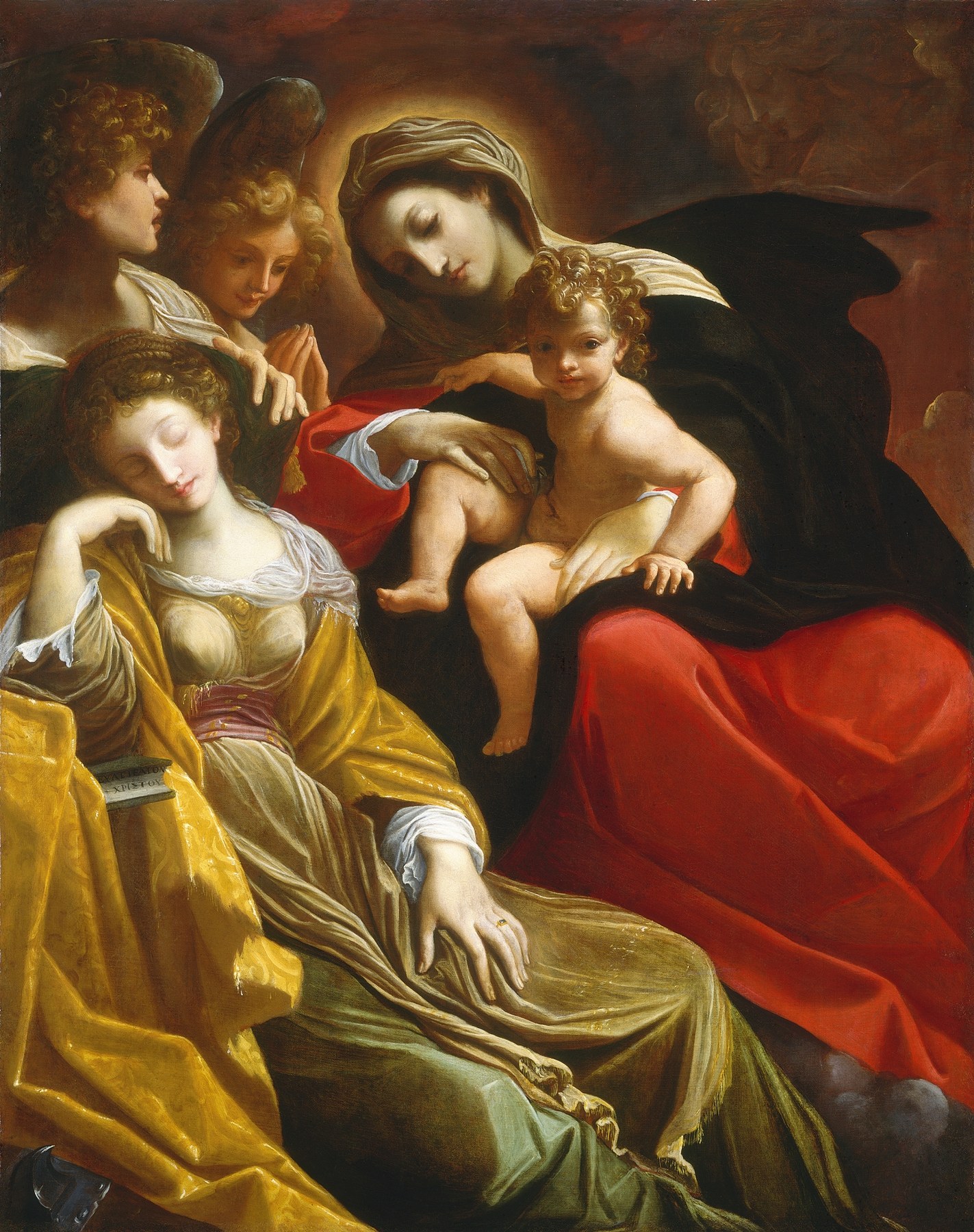
The dream of Saint Catherine
Painting: The dream of Saint Catherine · L. Carracci, 1593
3 · Catherine’s house, night

The first vision: the Bridegroom does not recognise her

Taking the holy icon, I returned home and at night, having secluded myself in my room, I began to pray as the elder had taught me. During my prolonged prayer I fell asleep from weariness and saw in a vision the Queen of Heaven in the form in which She was depicted on the icon, together with the holy Child surrounded by radiant light. I could not see His face, for He turned it away from me and toward His Mother. Trying to see Him, I went to the other side, but Christ turned His face away from me there as well. This happened three times.

After that I heard the Mother of God say to Her Son: «Look, My Child, upon Thy handmaiden Catherine, how beautiful and good she is». And the Divine Child answered Her: «No, this maiden is greatly darkened and so disfigured that I cannot look upon her». The Theotokos objected: «Is not this maiden wiser than all the philosophers, does she not surpass all maidens in wealth and lineage?» But Christ answered: «This maiden is foolish, poor, and of low birth, and I will not look upon her until she abandons her impiety». To this the Most Blessed Mother said: «I beseech Thee, My sweetest Child, do not despise Thy creation, but enlighten her and teach her what she must do». Then Christ answered: «Let her go to that elder who gave her the icon, and let her do what he commands her, and then she will see Me and find grace before Me».

Awakening, I marvelled at this vision. In the morning I went with a few of my servants to the elder’s cell and, falling with tears at his feet, I told him of my vision and begged him to tell me what I must do to see the Bridegroom Christ whom I desired.

Source — St Demetrius of Rostov, “Lives of the Saints”
Then the maiden Catherine, taking the holy icon, returned home and at night, having secluded herself in her room, began to pray as the elder had taught her. […] During her prolonged prayer Catherine fell asleep from weariness and beheld in a vision the Queen of Heaven in the form in which She was depicted on the icon together with the holy Child, surrounded by radiant light. […] Catherine could not see His face, for He turned it away from her and toward His Mother. […] Look, My Child, upon Thy handmaiden Catherine, how beautiful and good she is. […] No, this maiden is greatly darkened and so disfigured that I cannot look upon her. […] Again I say to Thee, My Mother, that this maiden is foolish, poor, and of low birth, and I will not look upon her until she abandons her impiety. […] Let her go to that elder who gave her the icon, and let her do what he commands her, and then she will see Me and find grace before Me. […] When morning came, she went with a few of her servants to the cell of the holy elder and, falling with tears at his feet, she told him of her vision.
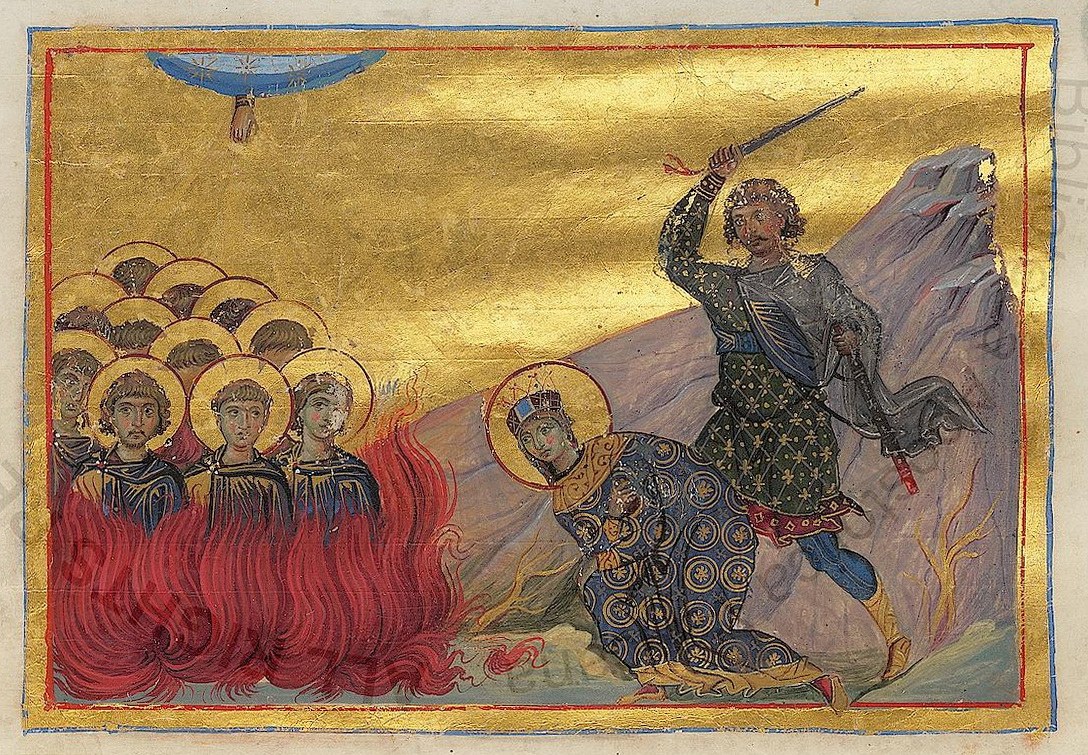
Great-Martyr Catherine
Miniature: Great-Martyr Catherine · Menologion of Basil II, c. 985
4 · the elder’s cell

Instruction in the Faith and Baptism

The venerable elder taught me in detail all the mysteries of the true Christian faith, from the creation of the world and the making of our forefather Adam to the Second Coming to earth of the Lord Christ; he also told me of the ineffable glory of paradise prepared for the righteous and of the grievous, endless torments of sinners. Thirsting for truth and salvation, I soon understood all Christian doctrine, believed with all my heart in Jesus Christ, and received holy baptism from that same elder.

After this the elder commanded me to pray again with great fervour to the Most Pure Theotokos, that She might appear to me once more as on the first night. Thus, having put off the old man and put on the garment of the renewal of the spirit, I returned to my house and spent the whole night in tearful prayer, remaining without food until I fell asleep.

Source — St Demetrius of Rostov, “Lives of the Saints”
The venerable elder taught her in detail all the mysteries of the true Christian faith, from the creation of the world and the making of our forefather Adam to the Second Coming to earth of the Lord Christ; he also told her of the ineffable glory of paradise prepared for the righteous and of the grievous, endless torments of sinners. […] Catherine soon understood all Christian doctrine, believed with all her heart in Jesus Christ, and received holy baptism from that same elder. […] the elder commanded her to pray again with great fervour to the Most Pure Theotokos, that She might appear to her once more as on the first night. […] man and put on the garment of the renewal of the spirit, Catherine returned to her house and spent the whole night in tearful prayer, remaining without food until she fell asleep.
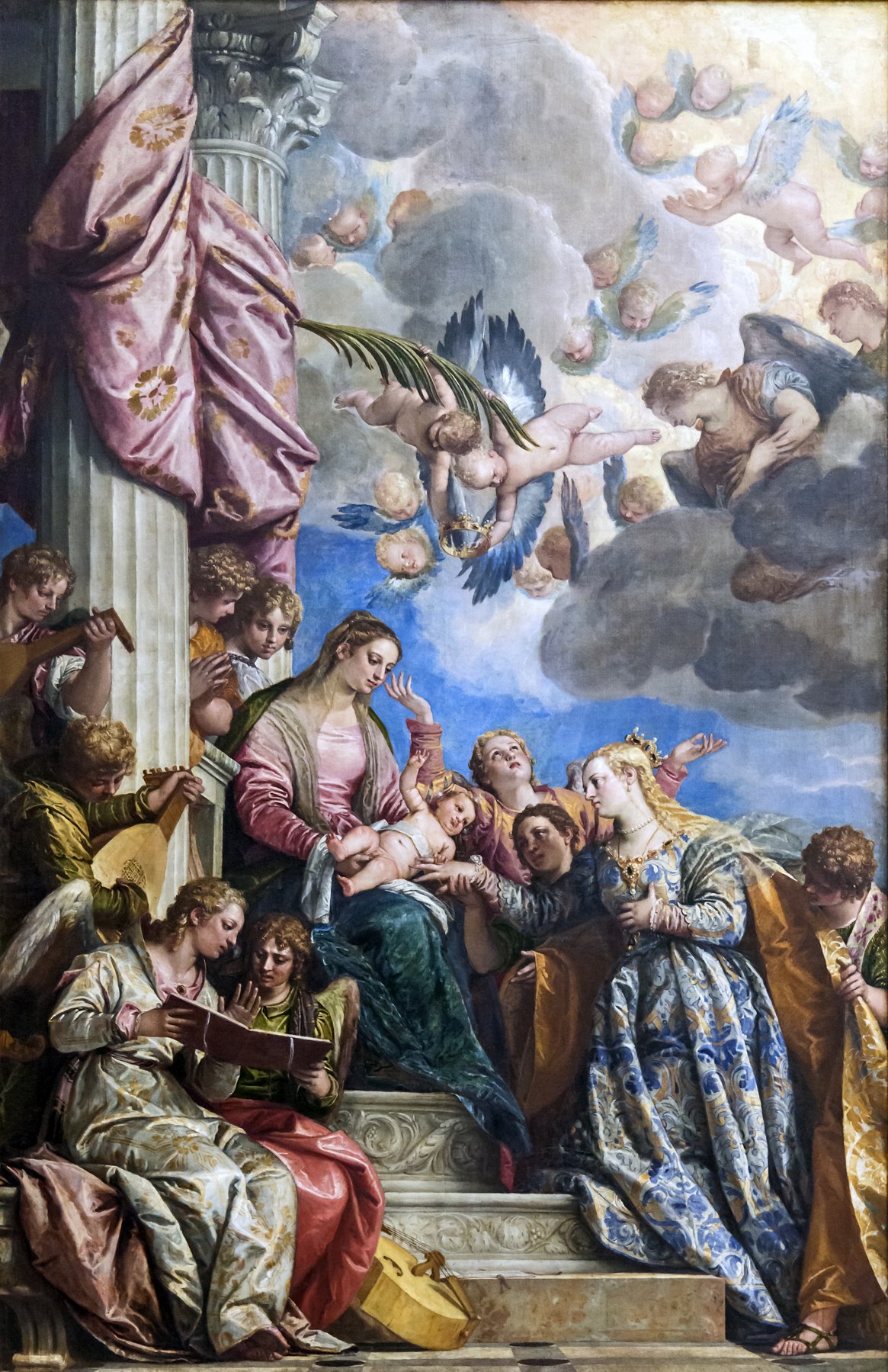
The Mystical Betrothal of Saint Catherine
Painting: The Mystical Betrothal of Saint Catherine · P. Veronese, c. 1575
5 · Catherine’s house, night

Betrothal: the Ring of Christ

And again I saw the Queen of Heaven with the Divine Child in Her arms. The Child looked upon me with great kindness and meekness. The Mother of God asked Her Son: «Is this maiden pleasing to Thee, My Son?» The Lord answered: «She is very pleasing, for now she is beautiful and glorious, and not disfigured and dishonoured as before; now she is rich and most wise, and not poor as she was at first; now I have loved her, and she is so pleasing to Me that I desire to betroth her to Myself as an incorrupt bride».

Then I fell to the ground and cried out: «I am unworthy, O most glorious Master, to behold Thy Kingdom, but grant that I may be even among Thy servants». At that moment the Most Holy Theotokos took my right hand and said to Her Son: «Give her, My Child, a betrothal ring as a sign of Thy betrothal to her; espouse her to Thyself, that Thou mayest make her worthy of Thy Kingdom». Then the Lord Christ gave me a most beautiful ring and said: «Behold, I now choose thee as My bride, incorrupt and eternal. Therefore preserve this union with great care inviolate and by no means choose for thyself any earthly bridegroom».

After these words of Christ the Lord the vision ended. I awoke and clearly saw on my right hand the wondrous ring. I felt in my heart such gladness and such joy that from that hour my heart was wholly given over to divine love, and I thought no more of anything earthly, but only continually by day and by night meditated upon my beloved Bridegroom.

Source — St Demetrius of Rostov, “Lives of the Saints”
And now again she sees the Queen of Heaven with the Divine Child in Her arms. The Child looked upon Catherine with great kindness and meekness. […] She is very pleasing, for now she is beautiful and glorious, and not ugly and dishonourable as before; now she is rich and most wise, and not poor as she was at first; now I have loved her, and she is so pleasing to Me that I desire to betroth her to Myself as an incorrupt bride. […] I am unworthy, O most glorious Master, to behold Thy Kingdom, but vouchsafe me to be even with Thy servants. […] Give her, My Child, a betrothal ring as a sign of Thy betrothal to her, espouse her to Thyself, that Thou mayest vouchsafe her Thy Kingdom. […] Behold, I now choose thee as My bride, incorrupt and eternal. Therefore, preserve this union with great care inviolate and by no means choose for thyself any earthly bridegroom. […] The maiden awoke and clearly saw on her right hand a wondrous ring. She felt in her heart such gladness and such joy that from that hour her heart was wholly given over to divine love. […] she no longer thought of anything earthly, but only unceasingly by day and by night meditated on her beloved Bridegroom
Catherine before the emperor
Fresco: Catherine before the emperor · Masolino, c. 1430
6 · temple in Alexandria

Feast of the idols. Reproving the emperor

Soon after I had turned to Christianity, the impious Emperor Maximin came to Alexandria, having zeal not according to knowledge for his soulless gods. Desiring to arrange a solemn feast in honour of these gods, he sent orders throughout the surrounding lands and cities that all his subjects should gather to offer sacrifices. When the day of the abominable celebration arrived, the emperor slew in sacrifice one hundred and thirty bullocks; the whole city was filled with the cries of the slaughtered animals and the stench of the offered sacrifices.

At the sight of such a pernicious temptation for human souls I was cruelly wounded in my heart, grieving over their destruction. Burning with divine zeal, I took with me several servants and went to the temple where the madmen were offering sacrifices. When I stood in the doorway, all fixed their eyes upon me. I ordered the emperor to be informed that I had a most necessary word to say to him. The emperor commanded me to approach him. Standing before the emperor, I bowed to him, rendering due honour, and said: «Emperor, recognise the temptation into which you have been led by the demons. You honour as gods idols that are perishable and insensible and serve them. Come to know the One True God, Who is eternal, without beginning and immortal, Who in the latter days took upon Himself human flesh for our salvation. This all-powerful and all-good God does not require sacrifices like yours, but only requires that we keep His commandments firmly and unwaveringly».

Hearing this, the emperor was inflamed with great anger and for a long time kept silence, and then, unable to answer my words, said: «Leave us these days to perform the sacrifices, and afterwards we will listen to your speeches».

Source — St Demetrius of Rostov, “Lives of the Saints”
Soon after Catherine had turned to Christianity, the impious Emperor Maximin came to Alexandria, having zeal not according to knowledge for his soulless gods […] When the day of the abominable celebration arrived, the emperor slew in sacrifice one hundred and thirty bullocks […] The whole city was filled with the cries of the slaughtered animals and the stench of the offered sacrifices […] Burning with divine zeal, she took with her several servants and went to the temple where the madmen were offering sacrifices. […] Emperor, recognise the temptation into which you have been led by the demons. You honour as gods idols that are perishable and insensible and serve them. […] Come to know the One True God, Who is eternal, without beginning and immortal, Who in the latter days took upon Himself human flesh for our salvation. […] does not require sacrifices like yours, nor is He pleased with the slaughter of innocent victims, but only requires that we keep His commandments firmly and unwaveringly. […] the emperor was inflamed with great anger and at first kept silence for a long time. Then, being unable to answer her words, he said: – Leave us these days to perform the sacrifices, and afterwards we will listen to your speeches.
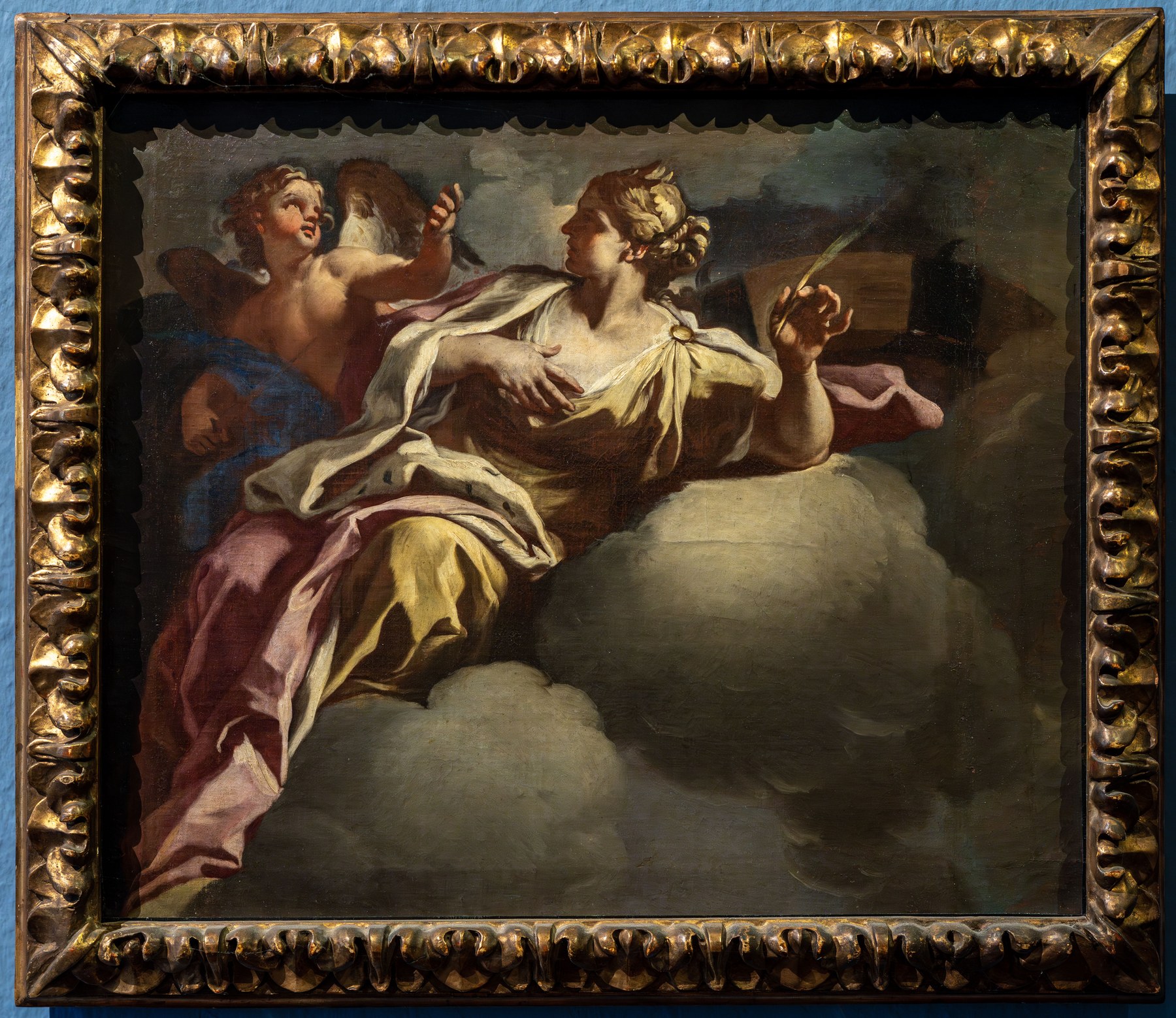
Catherine and the angel
Painting: Catherine and the angel · F. Solimena
7 · imperial chambers, Alexandria

«I am a king’s daughter». The fifty philosophers

Having finished his impious celebration, the emperor ordered me to be brought into his chambers and asked who I was. I answered that I was a king’s daughter, called Catherine; that now I despise all earthly things and have become the bride of the Master Christ, Who through His Prophet Isaiah said: «The wisdom of his wise men shall perish, and the understanding of his prudent men shall be hid» (Is. 29:14).

The emperor, marvelling at my beauty, began to speak seductive words to me. But I answered: «The demons, whom you honour as gods, deceive you and draw you into senseless lusts; I consider myself earth and dust; God created me in His image and after His likeness». Fearing to be put to shame by my words, the emperor said: «It is unseemly for a king to converse with women; I will gather the wisest philosophers for a discussion with thee» — and he commanded that I be guarded with all strictness, sending out instructions to the subject cities.

There gathered fifty chosen and most wise orators. The emperor said to them: «If you prevail — you will receive great gifts; but if you are defeated — you will suffer a painful death». One of them answered presumptuously: «As a woman, she cannot possess wisdom in full perfection; command her to appear before us». He immediately commanded that I be brought to them, and a multitude of people gathered. But before the messengers came to me, the Archangel Michael appeared to me from heaven and said: «Fear not, maiden of the Lord! Thy Lord will add yet more wisdom to thy wisdom, and thou shalt prevail in debate against those fifty orators; and many others will believe through thee and receive the martyr’s crown».

Source — St Demetrius of Rostov, “Lives of the Saints”
the emperor ordered Saint Catherine to be brought into his imperial chambers and said to her: – Tell us, maiden, who thou art, and repeat what thou didst say to us before? […] I am a king’s daughter, – answered the saint, – I am called Catherine. […] now I despise all this as a vain and useless pursuit, and have become the bride of the Master Christ, Who through His Prophet Isaiah said: – «The wisdom of his wise men shall perish, and the understanding of his prudent men shall be hid» […] The demons, whom you honour as gods, deceive you and draw you into senseless lusts; but I consider myself earth and dust; God created me in His image and after His likeness […] It is unseemly for a king to converse with women. But I will gather the wisest philosophers for a discussion with thee […] And so there gathered, in the number of fifty men, chosen and most wise orators […] If you prevail, then I will reward you with great gifts; but if you are defeated, then great shame will be yours, and instead of gifts you will suffer a painful death. […] as a woman, she cannot possess wisdom in full perfection, nor be fully skilled in eloquence; only command her to appear before us […] the Archangel Michael appeared to her from heaven and said: – Fear not, maiden of the Lord! Thy Lord will add yet more wisdom to thy wisdom, and thou shalt prevail in debate against those fifty orators. […] many others will believe through thee and receive the martyr’s crown
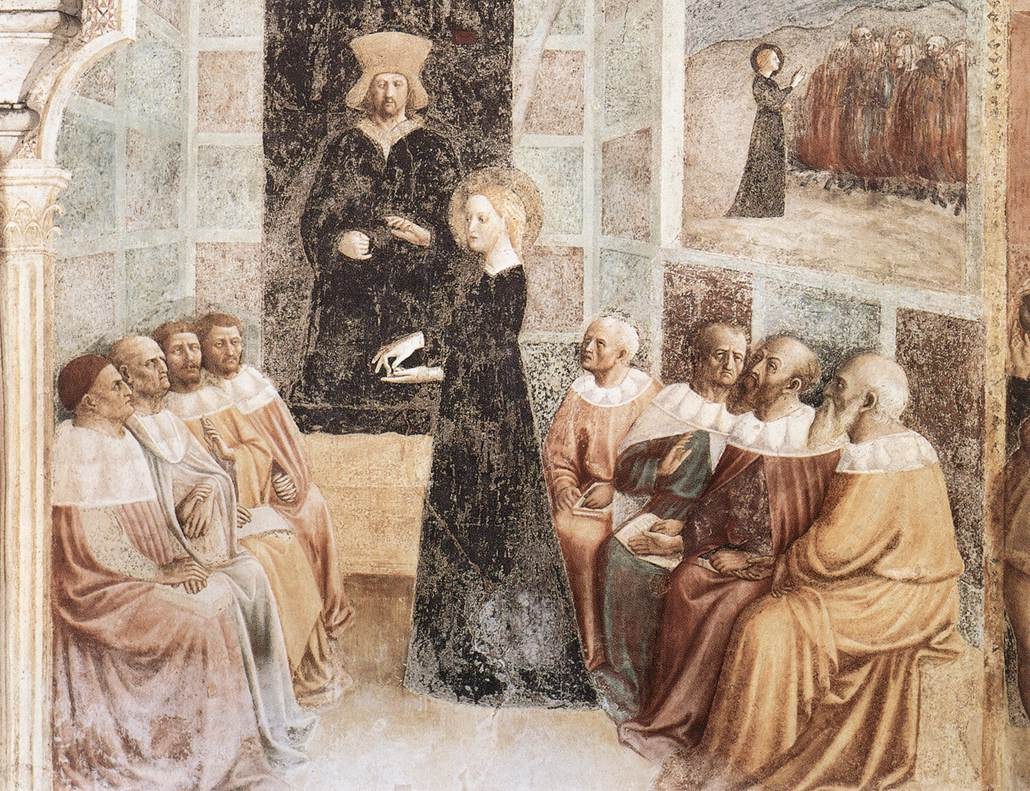
Catherine and the Alexandrian Philosophers
Fresco: Catherine and the Alexandrian Philosophers · Masolino, c. 1430
8 · tribunal of Maximin, Alexandria

Disputation with the philosophers

The king’s envoys brought me to him and to the philosophers for a spectacle before all. And immediately that presumptuous philosopher who had earlier so boasted turned to me with pride: «Is it you who with such audacity revile our gods?» — «It is I, — I meekly replied, — yet not with audacity, but with meekness and for love of the truth I say that your gods are nothing». The philosopher retorted: «Great poets call them the highest gods; how then do you utter blasphemy against those from whom you yourself received wisdom?» — «I received wisdom not from your gods, — I answered, — but from my One True God. He Himself is Wisdom and Life».

The sage replied that Homer, addressing a prayer to Zeus, says: «Most glorious Zeus, greatest god, and you other immortal gods», while Orpheus, addressing Apollo, says: «O son of Leto, far-shooting!» — and that I too should not err by worshipping the Crucified as God, for none of the ancient sages acknowledged Him as God. But I said that the same Homer speaks of Zeus as a crafty and lying deceiver, and I cited the testimony of their Sibyl concerning the Divine Incarnation and Crucifixion: «In latter times One shall come to this earth and take upon Himself flesh without sin» — and the word of their sage Apollonius, who confesses Christ as God: «He is the thrice-radiant light; the God Who suffered is».

Thus I spoke, and the philosopher remained speechless, having no strength to say anything in reply. The king, seeing him defeated, ordered the rest to begin discourse with me. But they refused, saying: «We cannot withstand the truth, for if the most learned among us is vanquished, what shall we say?»

Source — St Demetrius of Rostov, “Lives of the Saints”
And immediately that presumptuous philosopher who had earlier so boasted turned to the holy Catherine with pride: «Is it you who with such audacity and madness revile our gods?» […] «not with audacity and not with madness, as you said, but with meekness and for love of the truth I say that your gods are nothing». […] «I received wisdom not from your gods, — Catherine answered, — but from my One True God. He Himself is Wisdom and Life» […] the sage replied, addressing a prayer to Zeus, first says thus: «Most glorious Zeus, greatest god, and you other immortal gods». […] And the renowned Orpheus, addressing Apollo with gratitude, says thus: «O son of Leto, far-shooting!» […] «but the same Homer of yours in another place concerning your great god Zeus says that he was a crafty and lying deceiver» […] «Hear what your most wise Sibyl says of Him, testifying to His Divine Incarnation and salvific Crucifixion: «In latter times One shall come to this earth and take upon Himself flesh without sin». […] «He is the thrice-radiant light; the God Who suffered is, yet the Godhead Itself did not suffer» […] he remained speechless, having no strength to say anything in reply to her. […] «We cannot withstand the truth, for if the most learned among us is silent, vanquished, what shall we say?»
Great-Martyr Catherine
Icon: Great-Martyr Catherine · Monastery of St. Catherine, Sinai
9 · Alexandria

The Burning of the Sages

Then the enraged king ordered a most fierce fire to be kindled in the midst of the city and all the philosophers to be burned. Hearing such a sentence, they fell at my feet, begging me to pray for them to the One True God that He might forgive them all that they had done in ignorance and grant them holy Baptism. Filled with joy, I said to them: «Truly blessed and happy are you, for, having left darkness, you have come to know the true light and have drawn near to the Immortal Heavenly One; firmly hope in His mercy and believe that the fire with which the impious threaten you will serve you as baptism and a ladder leading to heaven. In this fire you will be cleansed of every defilement of flesh and spirit and will stand before the King of glory bright and pure as the stars».

Having said this, I signed each of them with the sign of the Cross, and they went joyfully to their torment. The soldiers cast them into the fire, and thus they received a martyr’s death. In the evening pious people came to bury the remains of the martyrs, but they found their bodies completely whole, so that the fire had not touched even their hair. Through this miracle many of the pagans turned to the knowledge of the truth, and the relics of the holy martyrs were buried with due honour.

Source — St Demetrius of Rostov, “Lives of the Saints”
Then the enraged king ordered a most fierce fire to be kindled in the midst of the city and all the philosophers and orators to be burned. […] Hearing such a sentence and the king’s command, they fell at the feet of Catherine, begging her to pray for them to the One True God that He might forgive them all that they had done in ignorance and grant them holy Baptism. […] «Truly blessed and happy are you, for, having left darkness, you have come to know the true light and, having despised the mortal earthly king, have drawn near to the Immortal Heavenly One; firmly hope in His mercy and believe that the fire with which the impious threaten you will serve you as baptism and a ladder leading to heaven». […] «In this fire you will be cleansed of every defilement of flesh and spirit and will stand before the King of glory bright and pure as the stars». […] the holy Catherine signed each of them with the sign of the Cross and they went joyfully to their torment. The soldiers cast them into the fire, and thus they received a martyr’s death. […] they found their bodies completely whole, so that the fire had not touched even their hair. Through this miracle many of the pagans turned to the knowledge of the truth, and the relics of the holy martyrs were buried with due honour.
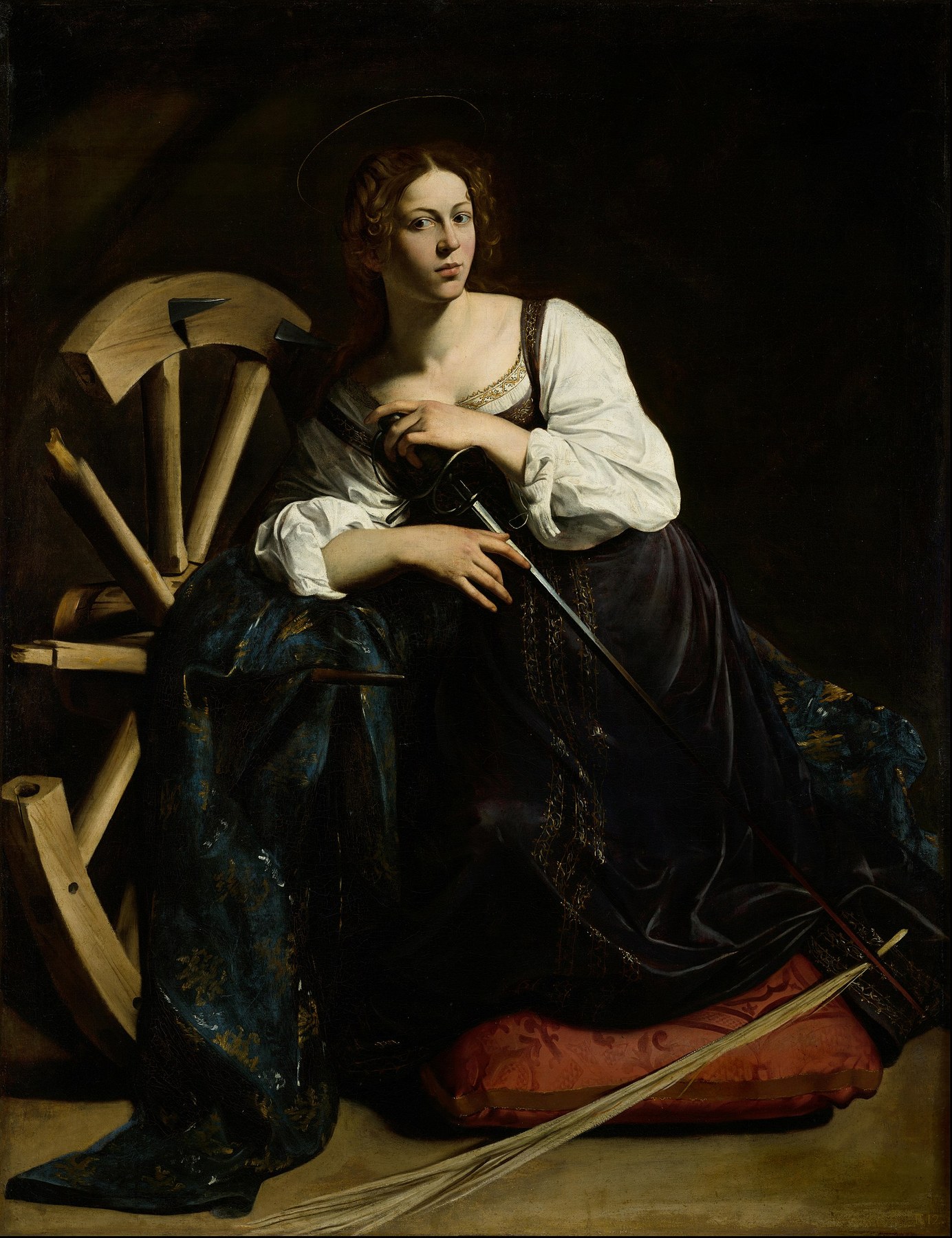
Holy Catherine of Alexandria
Painting: Holy Catherine of Alexandria · Caravaggio, 1598–1599
10 · Alexandria, prison

Scourging and Imprisonment

Having failed to succeed through philosophical disputes, Maximin began with flattery and cunning to tempt me. Calling me, he said: «Listen to me, good daughter; as a loving father I advise you to worship the great gods; if you fulfil my proposal, I will share my kingdom with you». But I, seeing his cunning and flattery, said to him: «Cease, O king, your guile, and do not be like a fox. I have resolutely and once for all told you that I am a Christian and am betrothed to Christ; do not entice me with the royal purple — I prefer to it the garments of martyrdom». Then the king said: «You compel me, though against my will, to dishonour your dignity and to cover your beautiful body with many wounds». — «Do what you will, — I answered, — through temporal dishonour you will gain for me eternal glory».

Then the greatly enraged king ordered my purple robe to be removed and my bared body to be mercilessly beaten with ox sinews. The servants beat me cruelly for two hours on the shoulders and belly, so that my whole body was covered with wounds and disfigured; blood flowed in streams and reddened the ground. Yet all these torments I endured with such courage that those who looked upon me were struck with great amazement. After this the cruel king ordered me to be confined in prison and given neither food nor drink until he should devise new torments to destroy me.

Source — St Demetrius of Rostov, “Lives of the Saints”
Having failed to succeed through philosophical disputes, he began with flattery and cunning to tempt her. […] Listen to me, good daughter; as a loving father I counsel you to worship the great gods […] if you fulfil my proposal, I will share my kingdom with you […] Abandon, O king, your cunning, and do not be like a fox. I have told you once and for all that I am a Christian and am betrothed to Christ. […] do not entice me with the royal purple […] I prefer to it the garments of martyrdom. […] You compel me, though against my will, to dishonour your dignity and to cover your fair body with many wounds. […] through temporal dishonour you will acquire for me eternal glory […] the king ordered the porphyry to be removed from Catherine and her to be stripped and mercilessly beaten with ox sinews. The servants beat the martyr cruelly for two hours on the shoulders and belly, so that her whole body was covered with wounds and disfigured; blood flowed in streams and reddened the ground. […] he ordered Catherine to be shut up in prison and given neither food nor drink until he should devise new torments to destroy her.
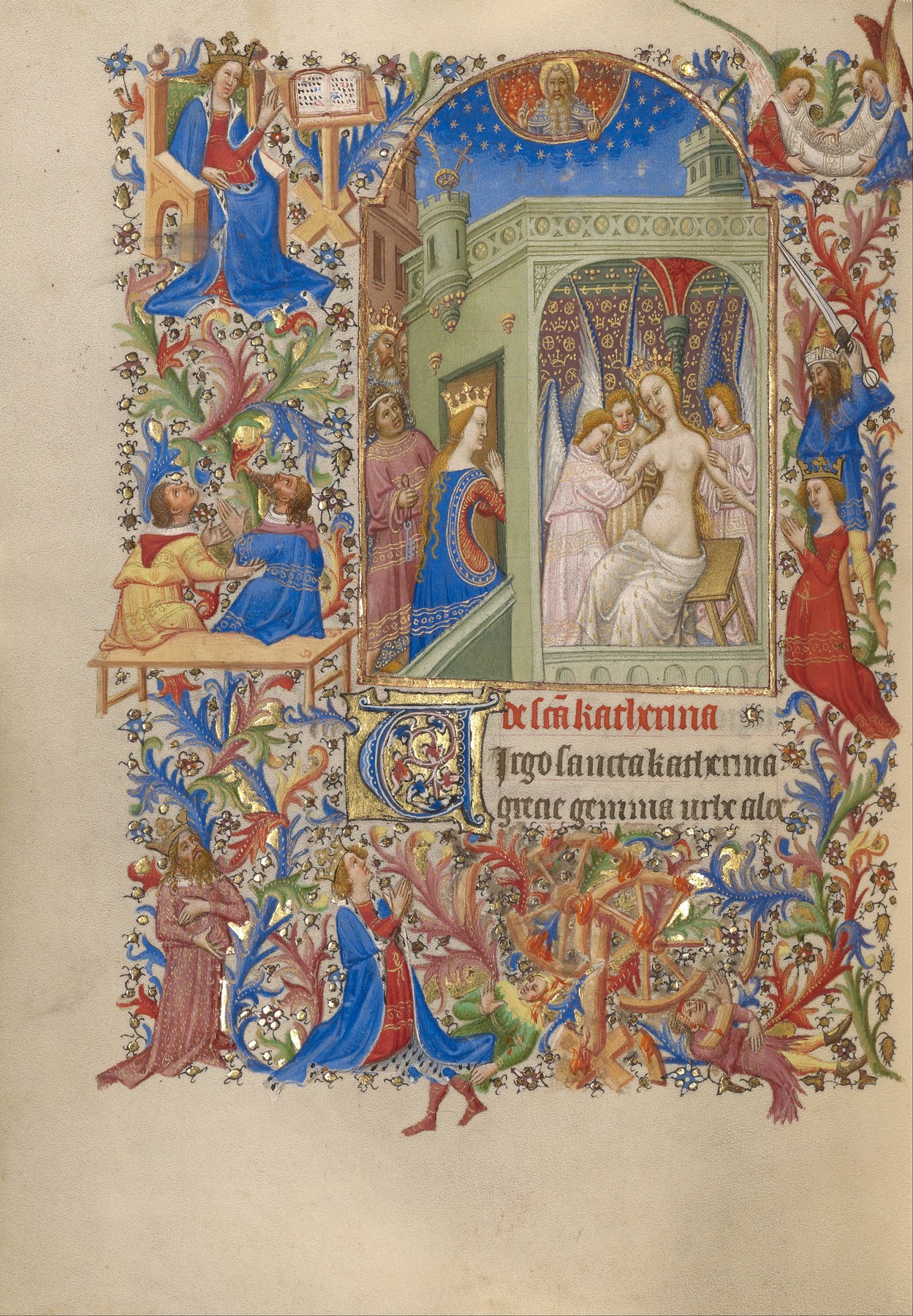
The empress visits Catherine in the prison
Miniature: The empress visits Catherine in the prison · Master of Spitz, c. 1420
11 · prison, night

Empress Augusta and Porphyrius in the prison

Empress Augusta, the king’s wife, greatly desired to see me face to face. There was at the court a military commander named Porphyrius; the empress told him of her desire: one night she had seen in a dream Catherine seated in the midst of many young men and maidens in white robes, and from her face there shone such radiance that the empress could not look upon her; she placed a golden crown on her head and said: “The Lord Christ sends you this crown.” The empress asked him to arrange for her to see me in secret. “I will fulfil your desire, O empress,” Porphyrius replied.

When night came, Porphyrius took two hundred soldiers and went with the empress to the prison. Seeing me, the empress was struck by the radiance from my face and, falling at my feet, exclaimed with tears: “Now I count myself happy, for I have been granted to see you.” I answered her: “Blessed are you also, O empress, for I see a crown above your head, held on high by the hands of Angels; in three days you shall receive it for the few sufferings you will endure for Christ.” The empress said: “I fear the torments, and still more my husband, who is very cruel.” — “Fear not,” I said, “Christ Himself will be your helper; He will strengthen your heart, and no torment shall touch your soul.”

Then Porphyrius asked me: “What does Christ grant to those who believe in Him? For I too desire to be His soldier.” I answered: “Have you never read anything from the Christian Scriptures?” — “From my youth,” he replied, “I have been occupied only with military affairs.” Then Porphyrius, filled with boundless joy, believed in Christ, and with him the two hundred soldiers and the empress — and all, having reverently taken leave of me, departed.

Source — St Demetrius of Rostov, “Lives of the Saints”
Empress Augusta, the king’s wife, greatly desired to see the holy Great-martyr Catherine face to face. […] There was then at the court a certain nobleman, a faithful friend of the king, a military commander by rank, named Porphyrius […] I saw in a dream Catherine, who was seated in the midst of many beautiful young men and maidens, clothed in white robes. From her face there shone such radiance that I could not look upon her. […] she placed a golden crown on my head and said: “The Lord Christ sends you this crown.” […] When night came, Porphyrius took two hundred soldiers and went with the empress to the prison […] Now I count myself happy and blessed, for I have been granted to see you. […] Blessed are you also, O empress, for I see a crown above your head, held on high by the hands of Angels; in three days you shall receive it for the few sufferings you will endure for Christ […] Fear not, said the saint to her, Christ Himself will be your helper; He will strengthen your heart, and no torment shall touch your soul […] What does Christ grant to those who believe in Him? For I too desire to believe in Him and to be His soldier. […] Porphyrius, filled with boundless joy, believed in Christ and with him the two hundred soldiers and the empress — and all, having reverently taken leave of the martyr, departed.
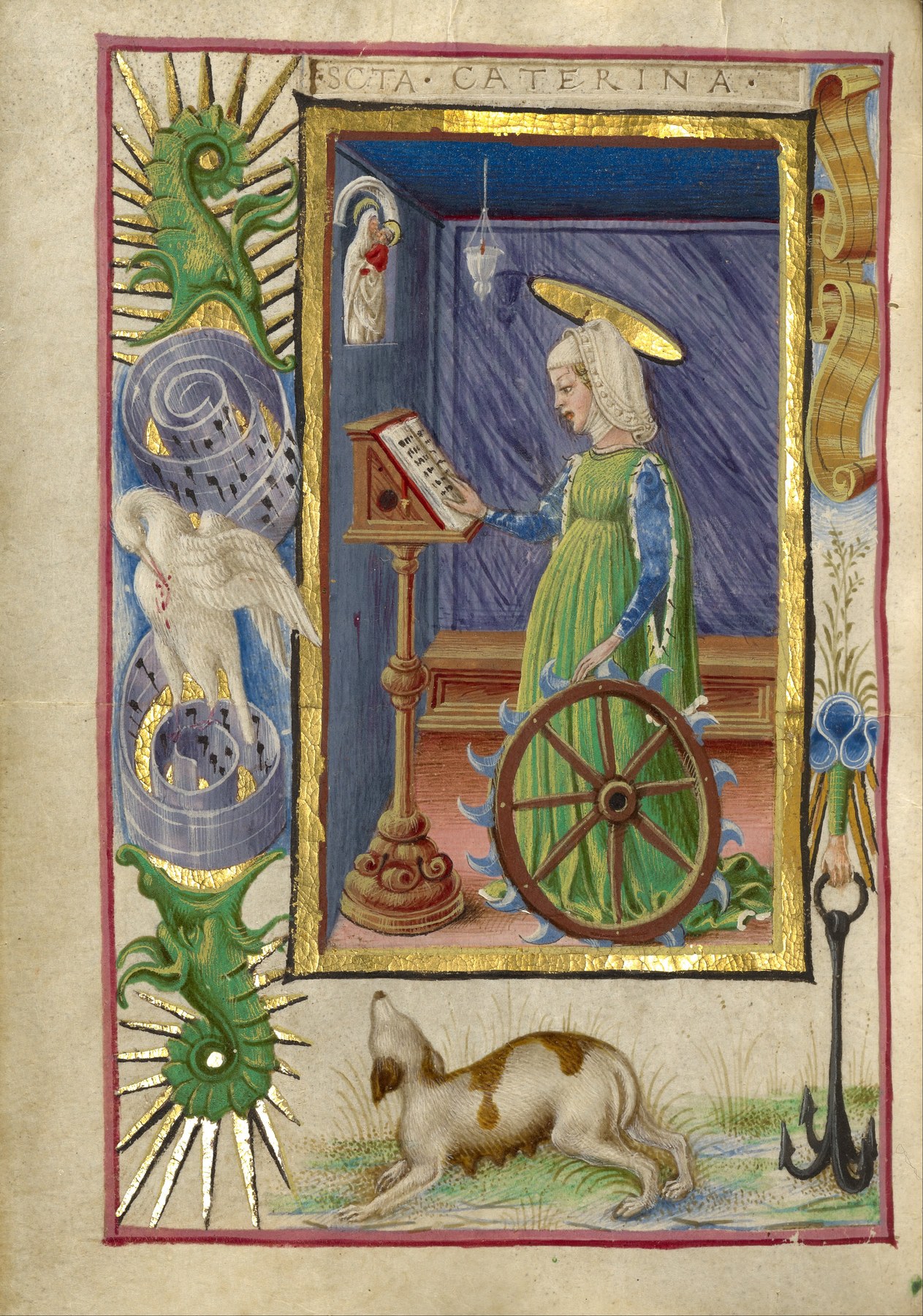
Great-martyr Catherine
Miniature: Great-martyr Catherine · T. Crivelli, c. 1460
12 · prison

The dove and the appearance of Christ

Christ did not leave His bride without care. Every day a dove flew in to me through the window and brought food. At last our Lord Jesus Christ Himself visited me, surrounded by great glory and all the heavenly hosts, and strengthened me yet more in courage: “Fear not, My beloved bride,” He said to me, “I am always with you, and no torment shall touch you; by your patience you will turn many to Me and for this you will be granted many incorruptible crowns.” Having comforted me with these words, the Lord became invisible.

In the morning the king, seated in the judgment hall, ordered me to be brought. I entered to him, shining with spiritual grace, so that those standing near were illumined by the radiance from my face. The king was greatly astonished, thinking that someone had given me food in prison, but I told him the whole truth: “Know, O king, that no human hand gave me food, but my Lord Christ, Who invisibly cares for His servants, fed me.” The king, marvelling at my beauty, again wished to influence me by flattery and said: “You, O maiden with the face of the sun, surpass even Artemis in beauty; come, worship and offer sacrifice to our gods.” But I answered: “I am earth and dust. All beauty, like a flower, withers and, like a dream, vanishes from the slightest illness or from old age, and after death is given over to utter corruption; therefore, O king, do not concern yourself with my beauty.”

Source — St Demetrius of Rostov, “Lives of the Saints”
The merciful and man-loving Christ did not leave His holy bride without care, but, like a loving father, provided for her. Every day a dove flew in to her through the window and brought food. […] Fear not, My beloved bride, He said to her — I am always with you and no torment shall touch you; by your patience you will turn many to Me, and for this you will be granted many incorruptible crowns. […] In the morning the king, seated in the judgment hall, ordered Catherine to be brought. She entered to the king, shining with spiritual grace and a kind of blessed radiance, so that those standing near were illumined by the radiance from her beauty. […] Know, O king, that no human hand gave me food, but my Lord Christ, Who invisibly cares for His servants, fed me. […] You, O maiden with the face of the sun, surpass even Artemis herself in beauty; you were born to rule, my daughter. […] I am earth and dust, the saint answered. All beauty, like a flower, withers, and, like a dream, vanishes from the slightest illness, or from old age, and after death is given over to utter corruption
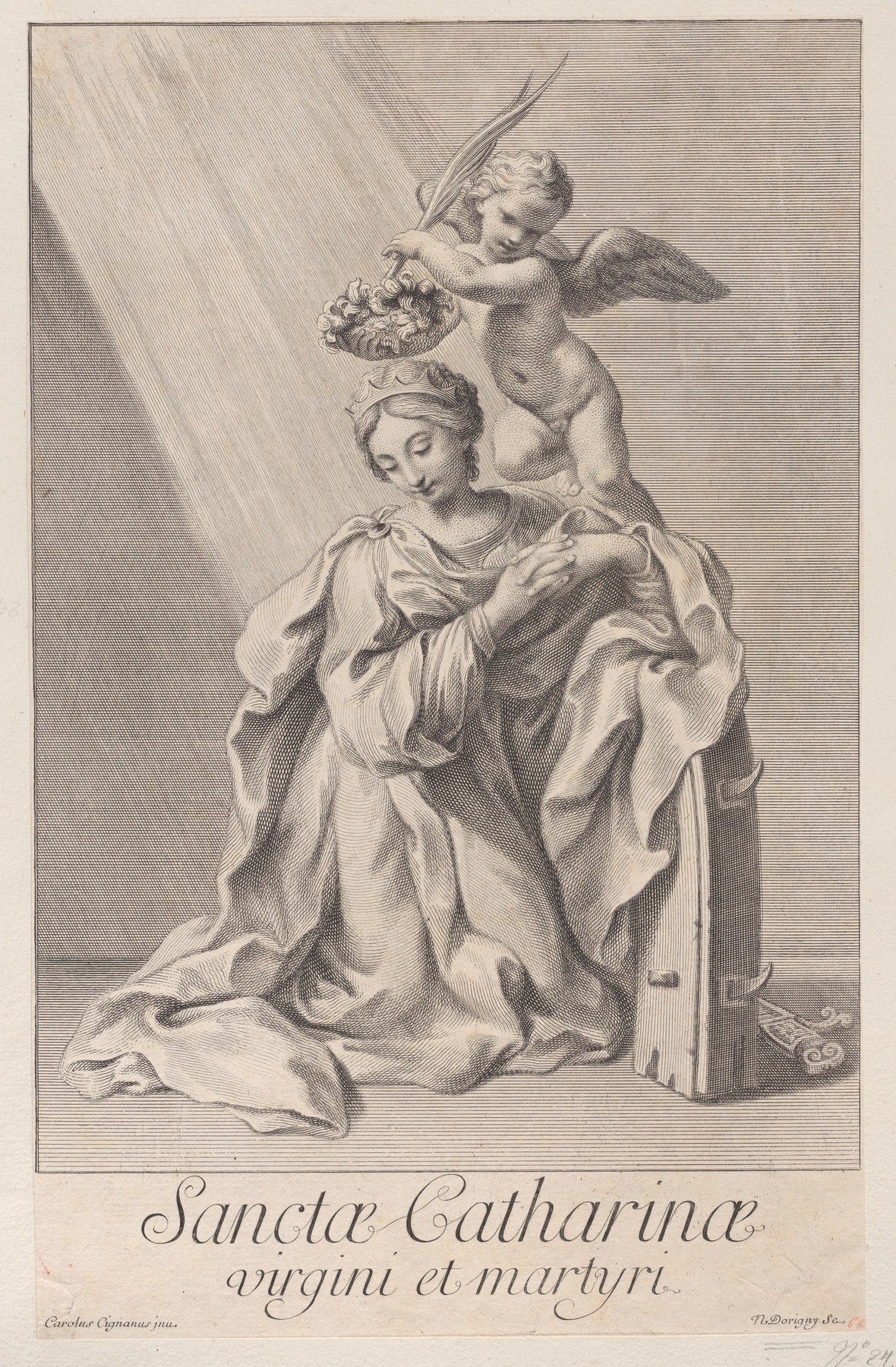
Catherine at the wheel, crowned by an angel
Painting: Catherine at the wheel, crowned by an angel · N. Dorigny, early 18th cent.
13 · place of execution outside Alexandria

The breaking on the wheel. The miracle. The martyrdom of Augusta and Porphyrius

One nobleman, by the name of Chursaden, advised the emperor to have four wooden wheels fitted on one axle, studded with iron spikes, so that by rotating they would crush my body. The emperor liked this advice. When the wheels were ready, I was brought to the place of torment, and the torturer said: «Do you see what torments have been prepared for you!» But I answered: «Many times already have I declared my resolve to remain a Christian; do not waste time in vain, but do what you will.» I was bound to the wheels and they began to rotate them, but suddenly an Angel descended from heaven, freed me from my bonds, and shattered the wheels into pieces; the broken wheels flew in all directions, striking many unbelievers dead. Seeing the miracle, the people cried out: «Great is the God of the Christians!»

Empress Augusta, having heard of the miracle, came out of the palace and began to rebuke the emperor: «Truly you are bold and mad, for you dare to contend with the Living God.» The emperor turned all his fury upon his wife: he ordered a large chest to be filled with lead, nails to be driven into its lid, and, clamping her breasts between the chest and the lid, to squeeze them until they were torn off with terrible pain. The torturer did not spare his wife and ordered her head to be cut off with a sword. She, having heard the sentence with joy, said to me: «Servant of the True God, pray for me!» — «Go in peace,» I answered, «to reign with Christ forever.» The empress was beheaded outside the city. Porphyrius, taking her body at night, committed it to burial; in the morning Porphyrius himself with the soldiers who had come to believe stood before the emperor and said: «We too are Christians, soldiers of the great God.» The emperor exclaimed: «Alas, I am undone, for I have lost the wondrous Porphyrius!» — and ordered all their heads to be cut off. Thus they ended their lives.

Source — St Demetrius of Rostov, “Lives of the Saints”
I, O emperor, have devised such a torment by which you will overcome this maiden. Order four wooden wheels to be fitted on one axle, and around them to have various iron spikes driven in […] and in their midst let the maiden be bound, and the rotating wheels will crush her body. […] Do you see what torments have been prepared for you! And you will suffer in them a most terrible death if you do not worship the gods. […] Many times already have I declared my resolve to remain a Christian; therefore, O emperor, do not waste time in vain, but do what you will. […] suddenly an Angel descended from heaven, freed the holy one from her bonds, and shattered the wheels into pieces; whereupon the wheels, broken with force, flew aside and struck many unbelievers dead. […] all the people cried out: – Great is the God of the Christians! […] Truly, – she said, – you are bold and mad, for you dare to contend with the Living God, and unjustly to torment His servant. […] he ordered a large chest to be brought and filled with lead, so that it would be immovable, nails to be driven into the lid of the chest, and, clamping his wife’s breasts between the chest and the lid, to squeeze them. […] the torturers, inflicting inexpressible sufferings on the holy one, squeezed her breasts until they were torn off with terrible pain. […] the merciless torturer did not spare his own wife, and ordered her head to be cut off with a sword. […] Servant of the True God, pray for me! – Go in peace, – the holy virgin answered her, – to reign with Christ forever. […] The governor Porphyrius, taking her body at night, with honour committed it to burial. […] We too are Christians, soldiers of the great God. […] Alas, I am undone, for I have lost the wondrous Porphyrius […] he ordered all their heads to be cut off. Thus they ended their lives.
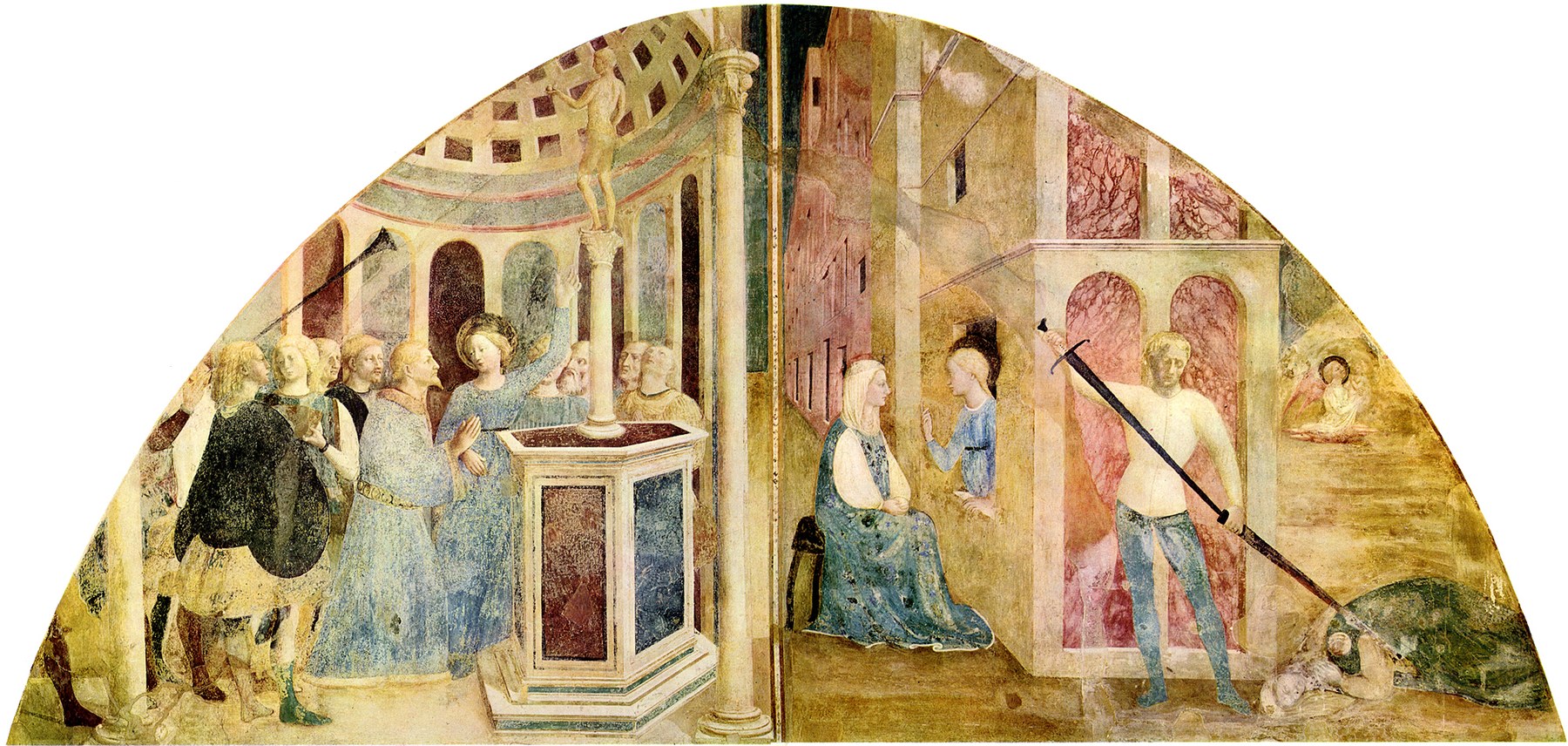
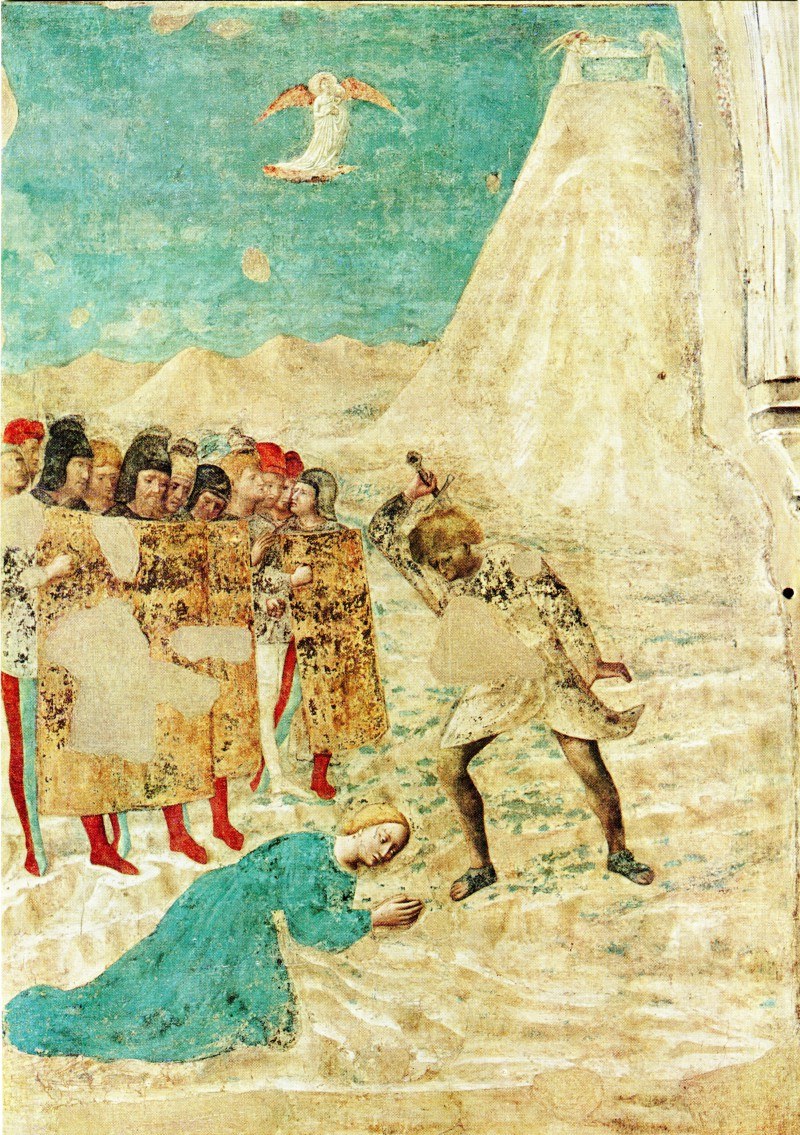
The Beheading of Saint Catherine
Fresco: The Beheading of Saint Catherine · Masolino, c. 1430
14 · the place of beheading outside Alexandria

My repose. The relics on Sinai

On the next day the torturer, bringing me to the judgment hall, said: «Great sorrow have you caused me; but I forgive you, for I do not wish to destroy you, a maiden so beautiful and wise. Offer sacrifice to the gods, and I will make you my empress.» Much flattering speech did he utter, but he could not separate me from Christ. Seeing that by no means could he sway me, he decreed that my head be cut off with a sword outside the city.

The soldiers led me to the place of beheading. Many people — men and women — accompanied me; all were weeping that so beautiful and wise a maiden was perishing. Some said with tears: «Would it not be better to obey the emperor and to enjoy the good things of this life than to die such a shameful death?» But I answered: «Cease your useless weeping, but rather rejoice that I now see my beloved Bridegroom, Jesus Christ. He is calling me to the bliss of paradise. With Him I shall reign through endless ages».

Coming to the place of beheading, I offered a prayer: «O Lord Jesus Christ, my God! I thank Thee that Thou hast set my feet upon the rock of patience and directed my steps. Now stretch forth Thy most pure hands, once wounded on the Cross, and receive my soul, which is offered to Thee in sacrifice for love of Thee. Look down from Thy height also upon these people standing here.» Having finished the prayer, I said to the executioner: «Carry out what has been commanded.» The soldier raised the sword and cut off the honourable head of Catherine, and from the wound, instead of blood, milk flowed forth.

As the Life relates, my honourable relics were at once taken up by holy Angels and carried to Mount Sinai, to the glory of Christ God, Who with the Father and the Holy Spirit in One Godhead reigns unto the ages. Amen.

Source — St Demetrius of Rostov, “Lives of the Saints”
Great sorrow and much grief have you caused me […] but I forgive you, because I do not wish to destroy you, a maiden so beautiful and wise. […] Fulfil now at last my will, my beloved, offer sacrifice to the gods, and I will make you my empress […] he could not with his flattering words separate her from Christ, with Whom she was bound by the firm bond of true love. […] he decreed that her head be cut off with a sword outside the city. […] Many people — men and women — accompanied Catherine; all were weeping and lamenting that so beautiful and wise a maiden was perishing. […] Would it not be better for you to obey the emperor, and to enjoy the good things of this life, than to die such a shameful death. […] Cease your useless weeping, – the holy one answered, – but rather rejoice that I now see my beloved Bridegroom, Jesus Christ […] He is calling me to the ineffable bliss of paradise. With Him I shall reign and rejoice through endless ages. […] O Lord Jesus Christ, my God! I thank Thee for having set my feet upon the rock of patience, and directed my steps. […] Now stretch forth Thy most pure hands, once wounded on the Cross, and receive my soul, which is offered to Thee in sacrifice for love of Thee. […] Look down from Thy height, O Lord, also upon these people standing here, and instruct them with the light of Thy knowledge […] Carry out what has been commanded. Then the soldier raised the sword and cut off the honourable head of Catherine, and from the wound, instead of blood, milk flowed forth. […] Her honourable relics, as those believers who were accounted worthy saw, were at once taken up by holy Angels and carried to Mount Sinai
The Church sings

Troparion, tone 4

With virtues, like the rays of the sun, / you enlightened the unfaithful sages. / And, like the bright moon, you drove away the darkness of unbelief, / and You assured the queen, / at the same time you also exposed the tormentor, / the blessed bride Catherine, God-called, / with desire you ascended into the Heavenly chamber / to the beautiful Bridegroom Christ,/ and from Him you were crowned with a royal crown:/ To Him, with the angels standing,/ praying for us, // creating your honorable memory.

The life in the border scenes of the icon
Great-Martyr Catherine с клеймами жития
Hagiographical icon of the Great-Martyr Catherine. Palekh, early 19th century. Private collection. Public domain.
Prayers to the Great-Martyr CatherineSt Dimitry of Rostov, “Lives of the Saints”, in our libraryAll lives