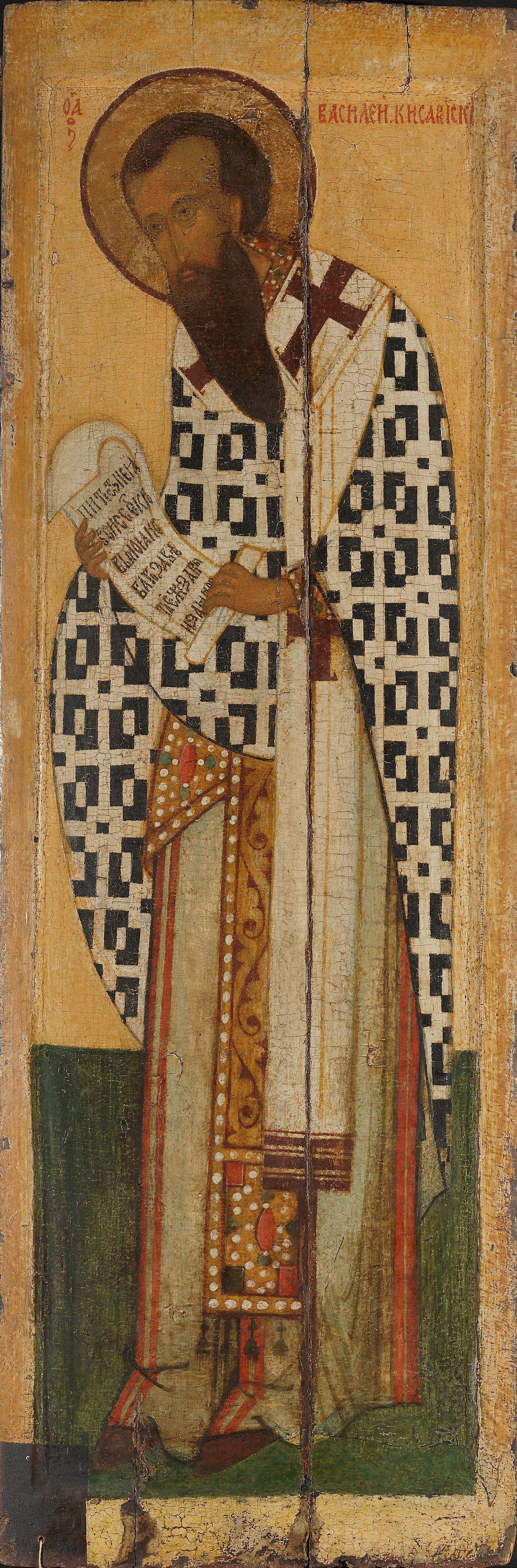
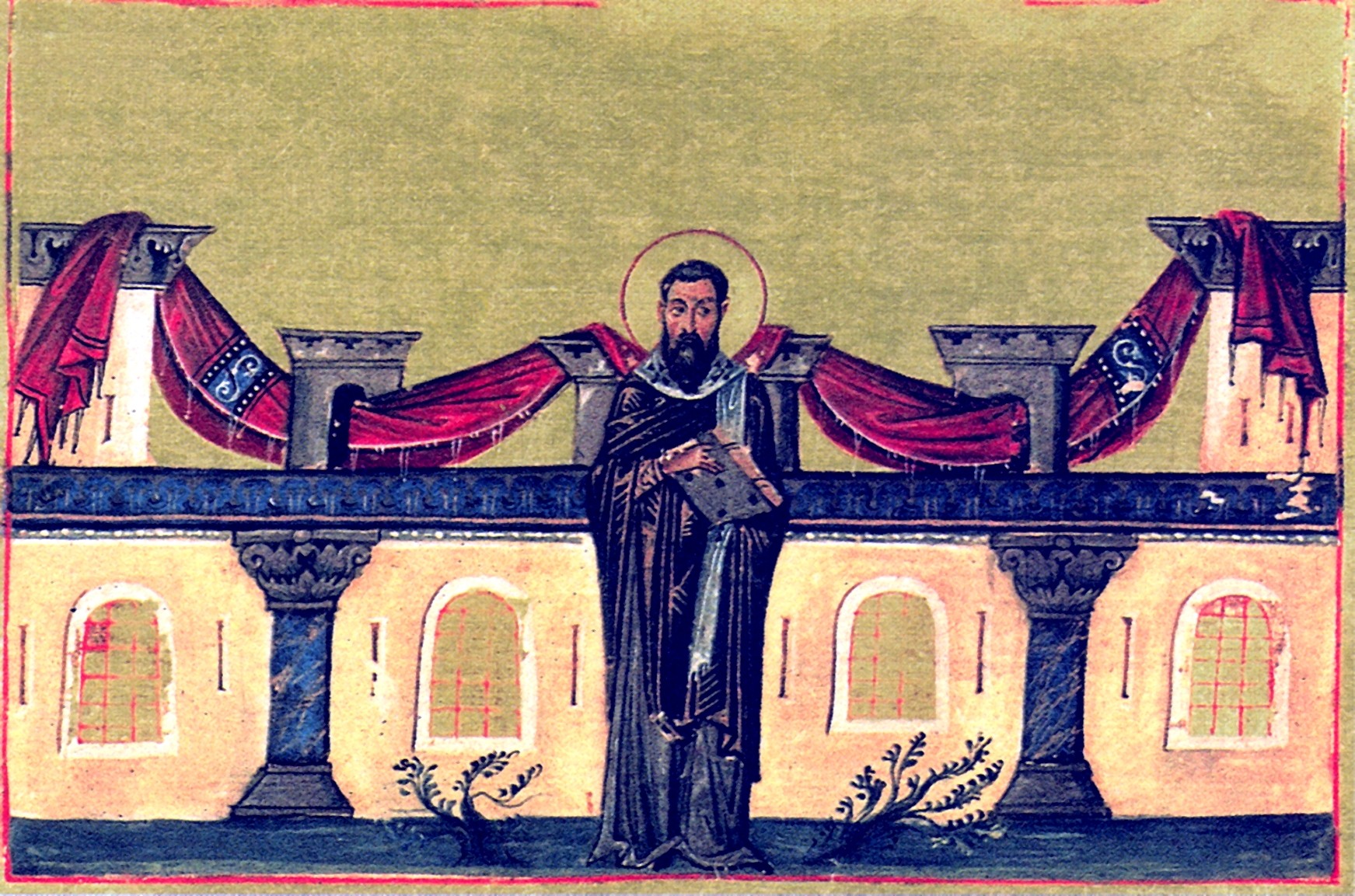
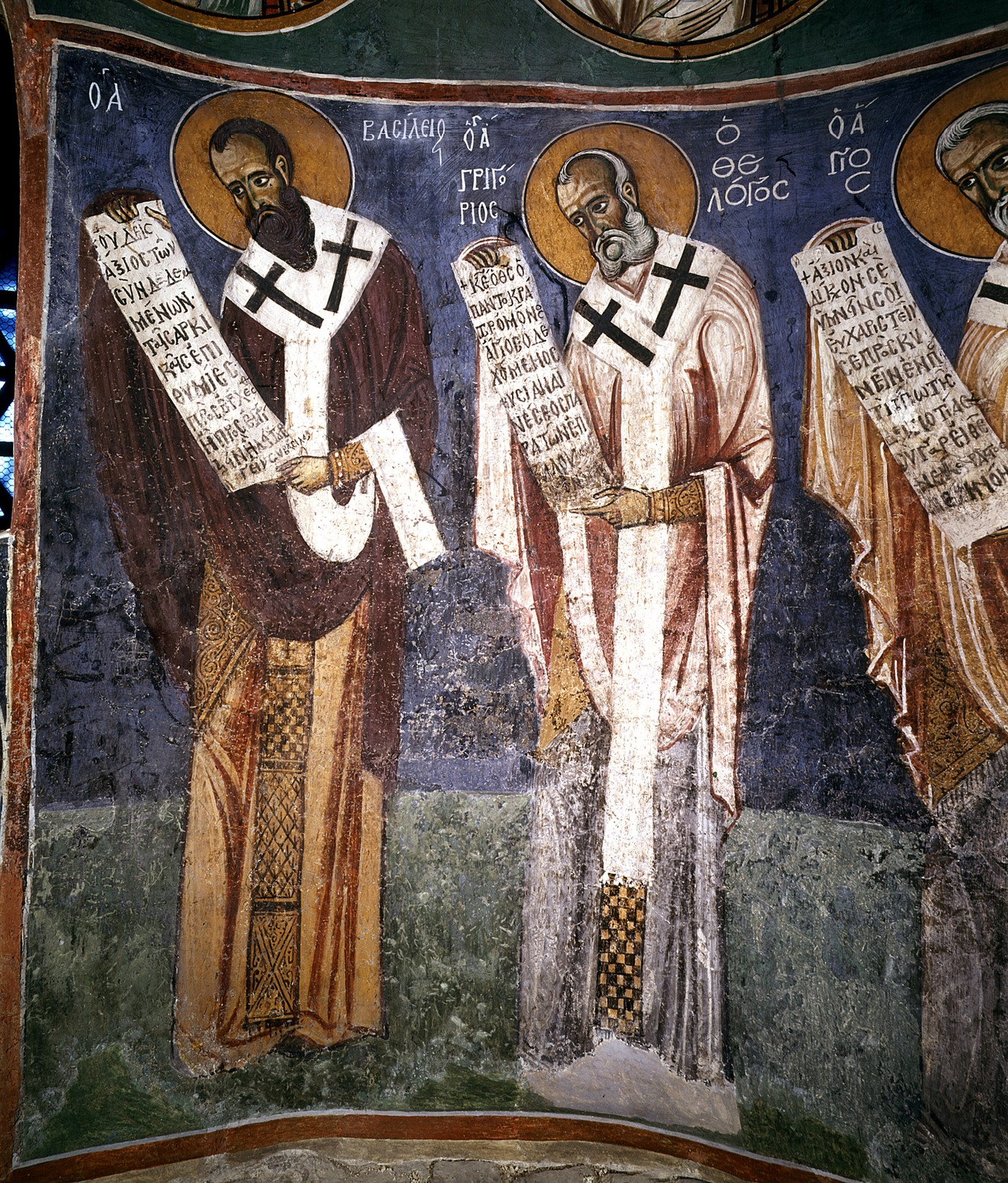
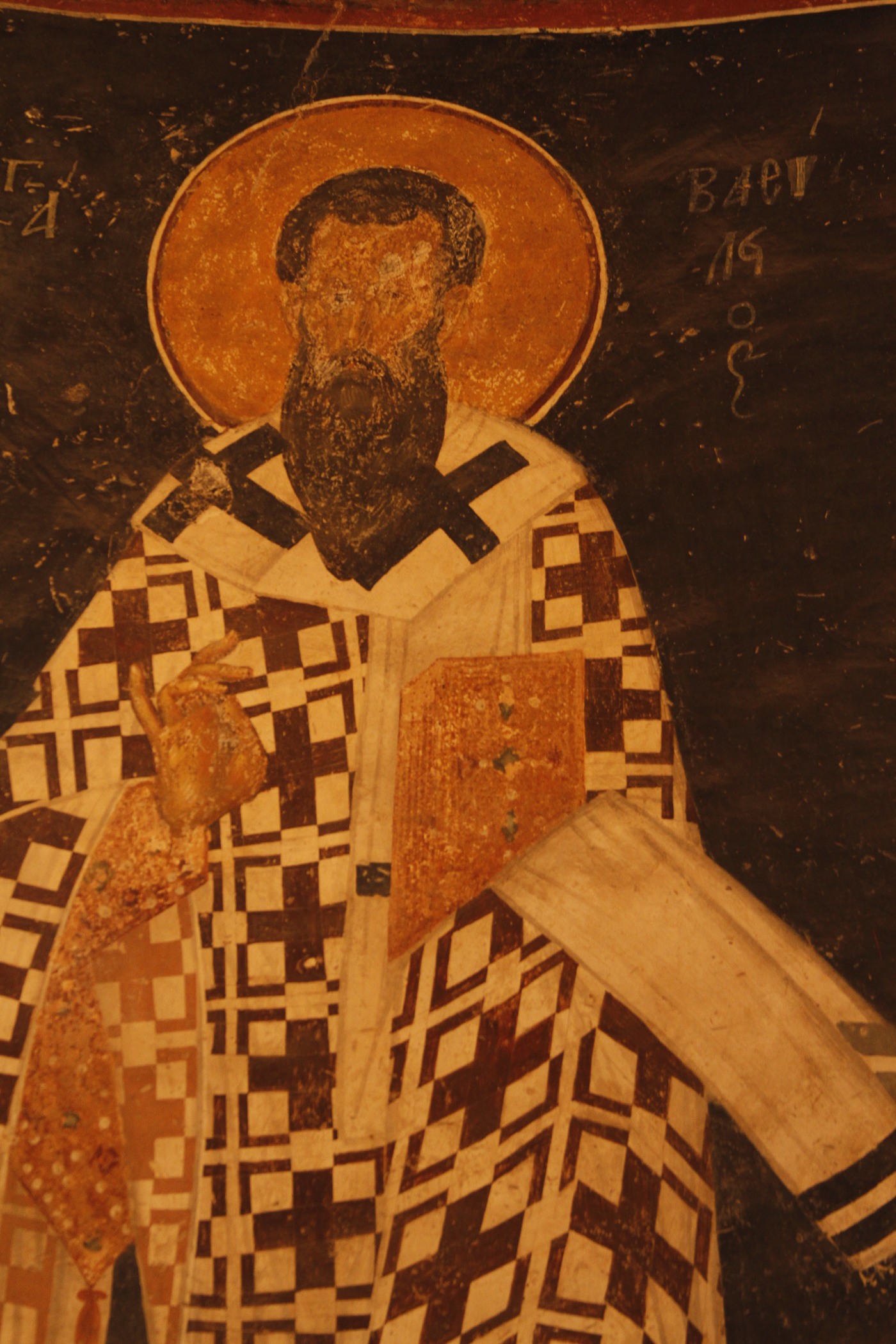
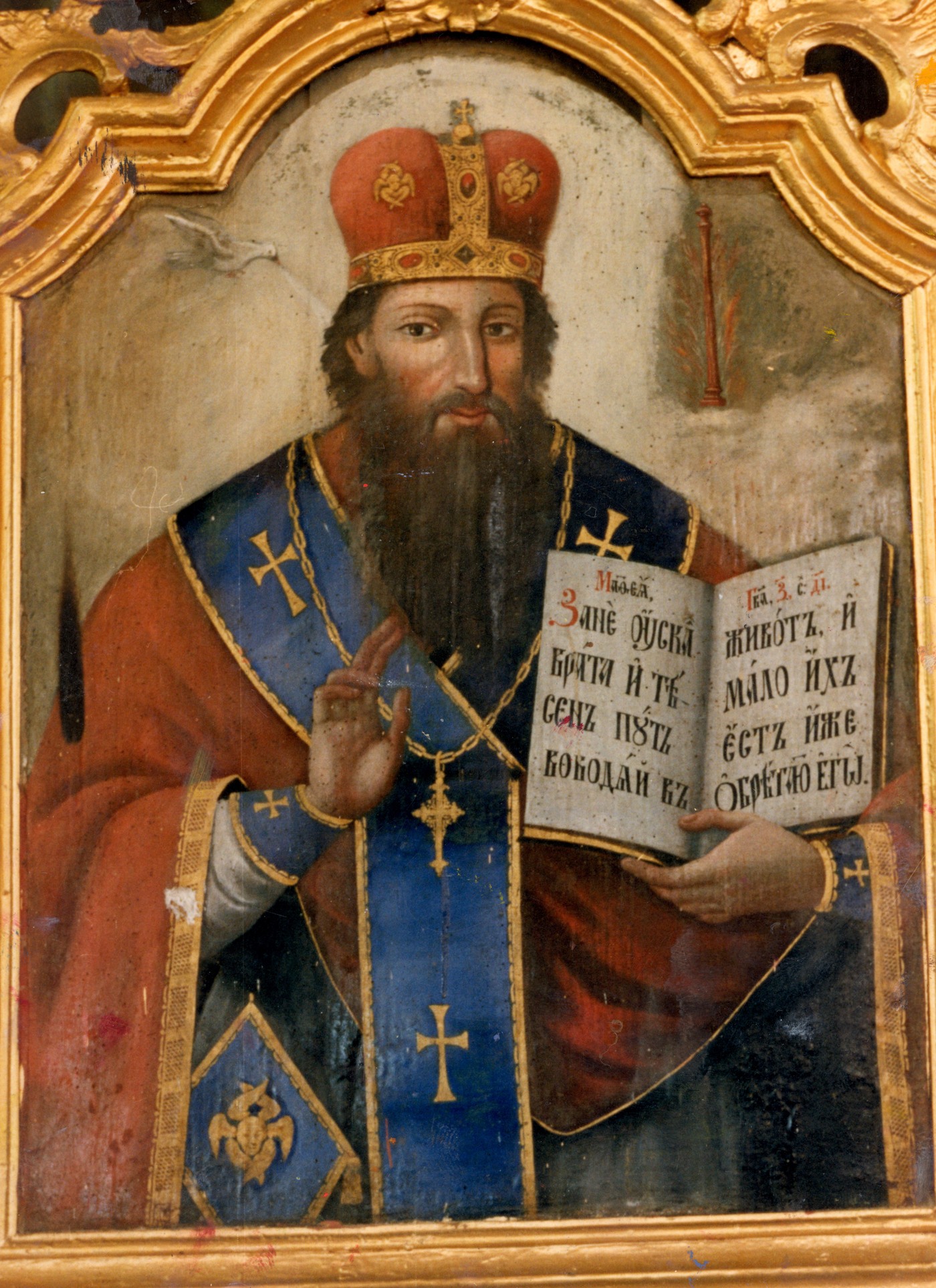
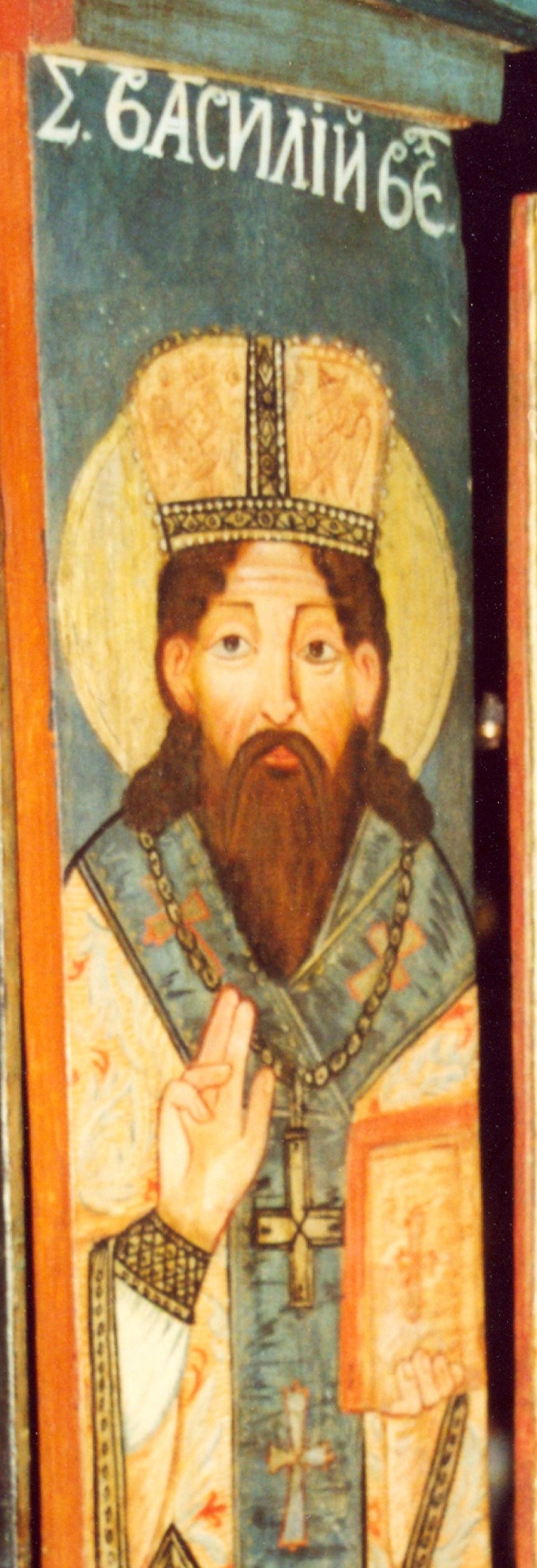
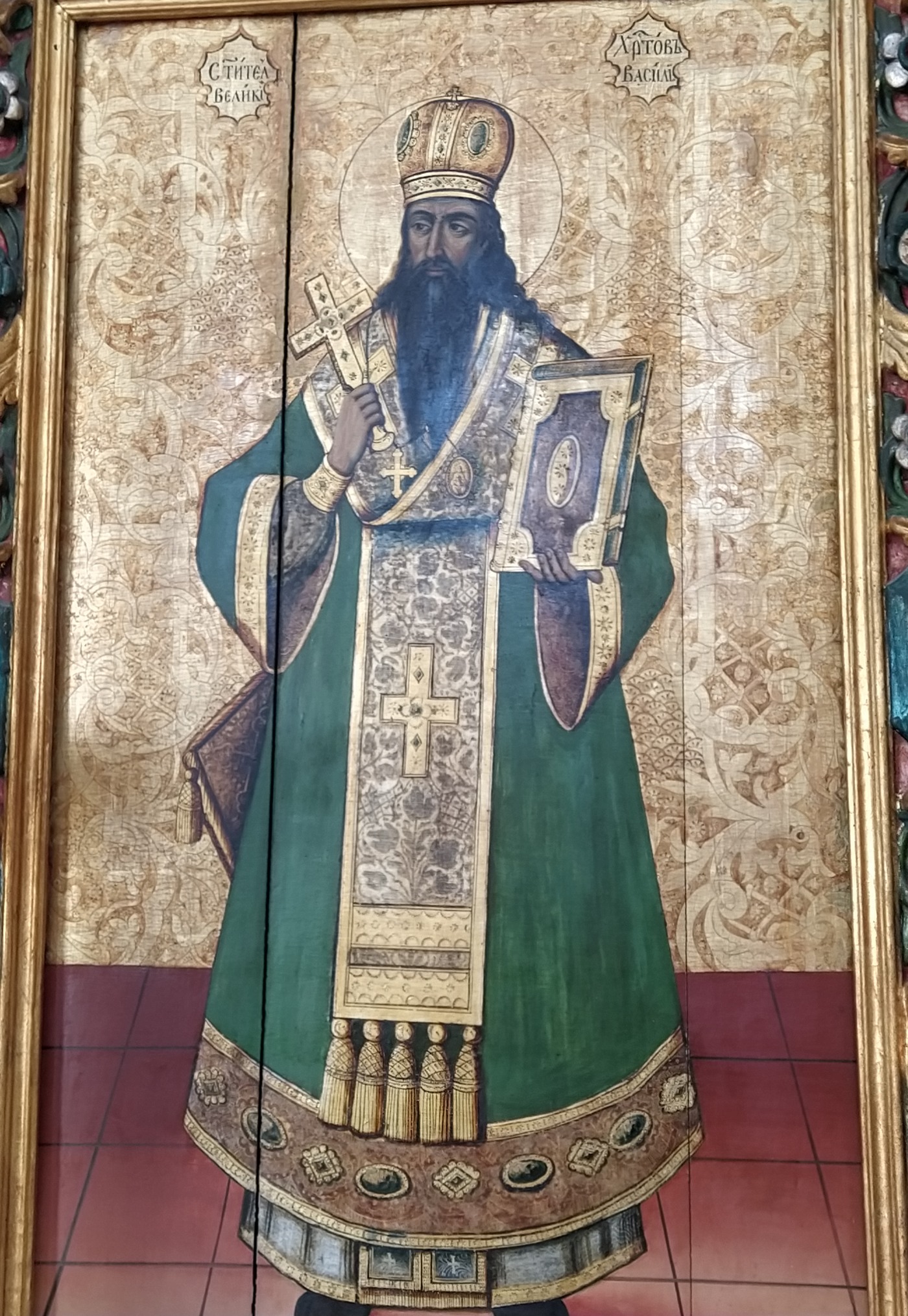
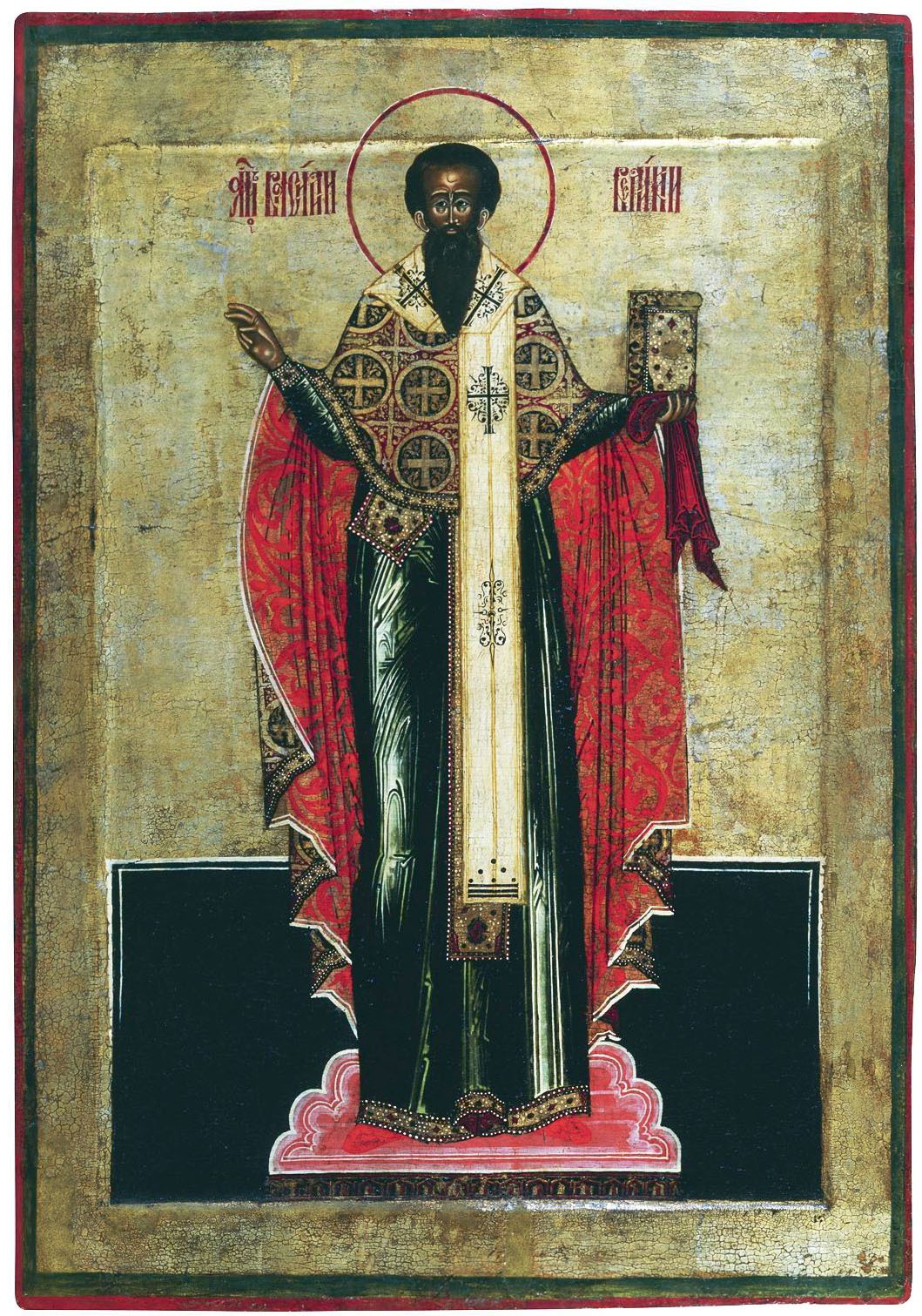
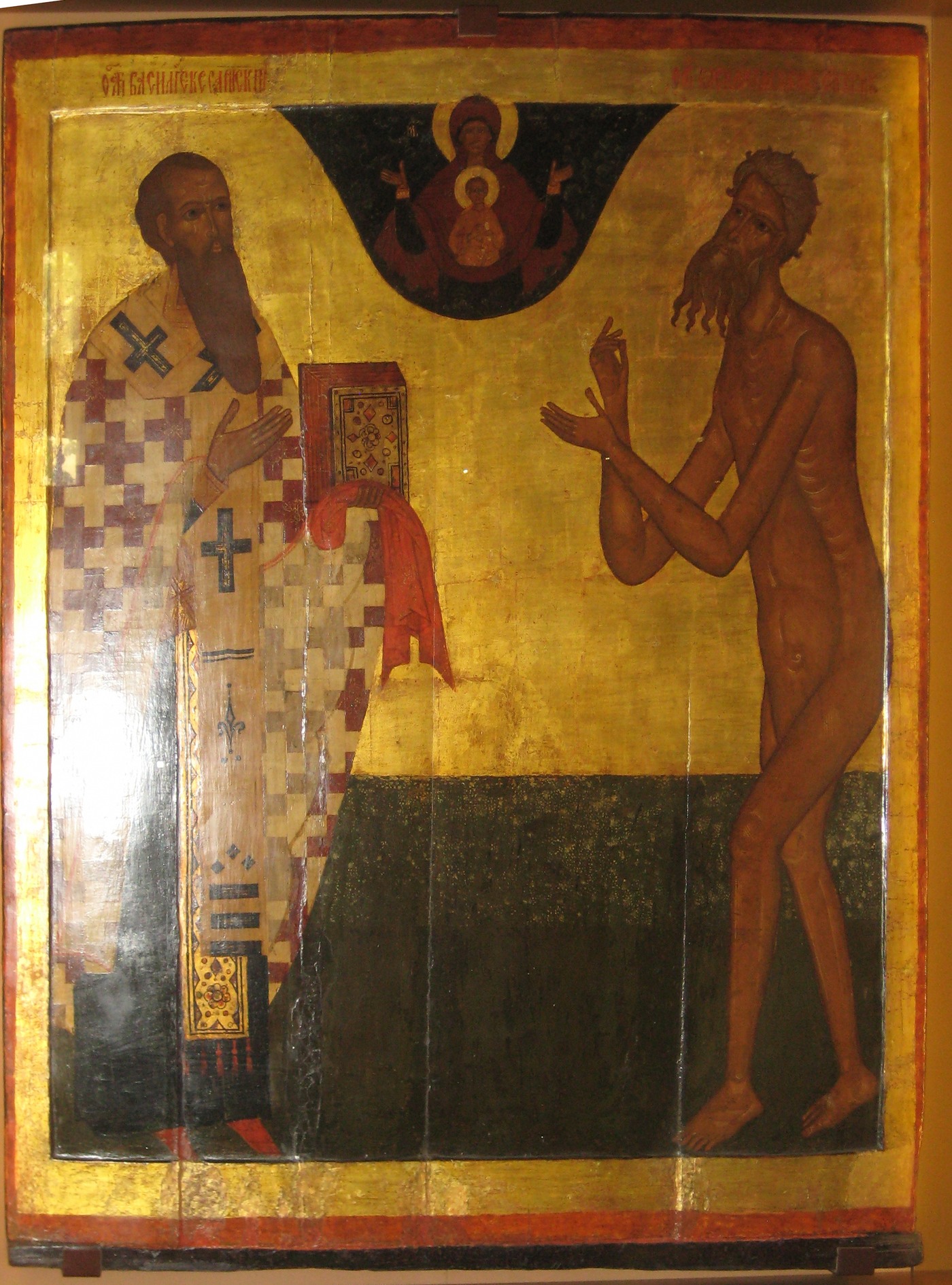
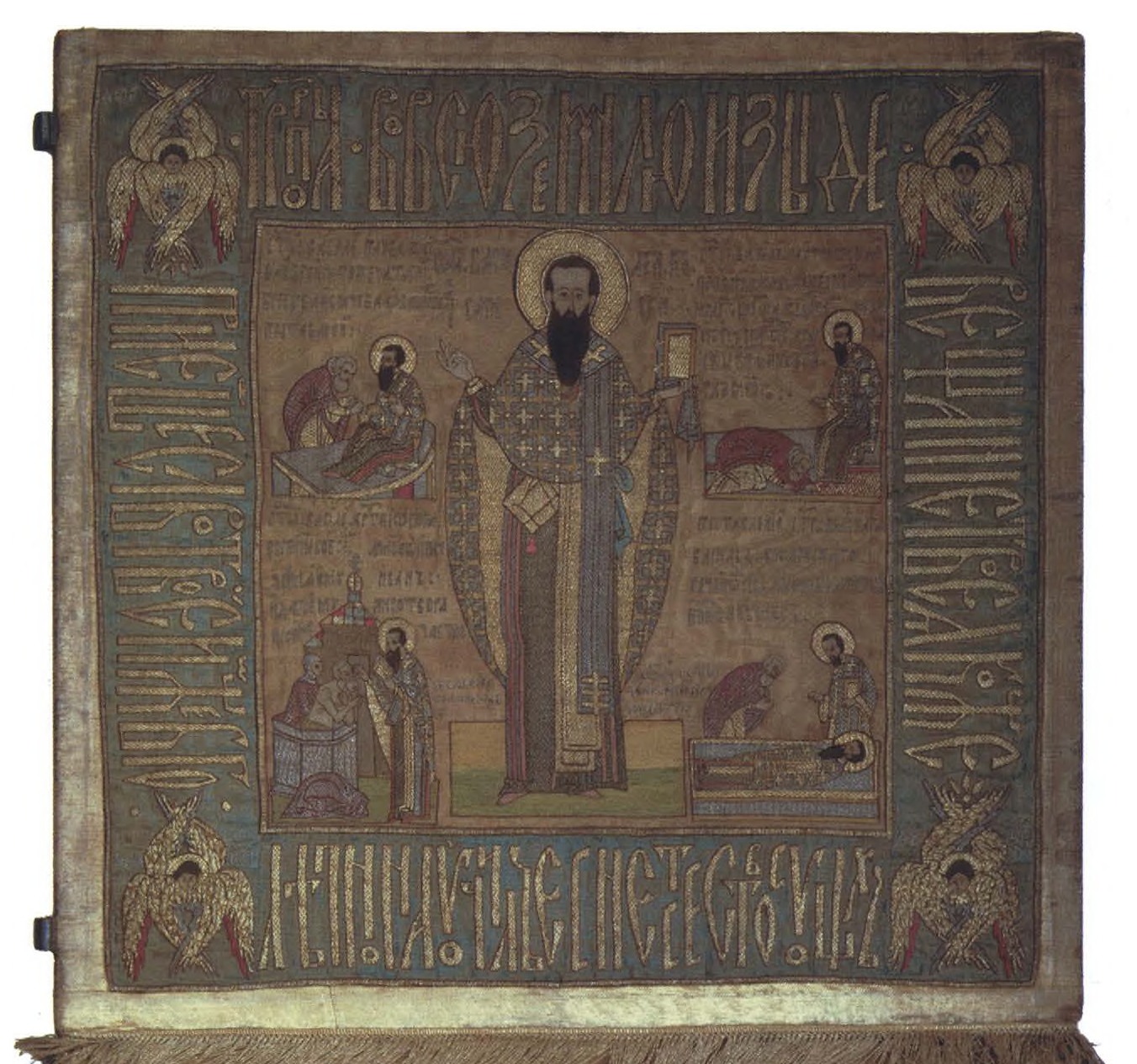
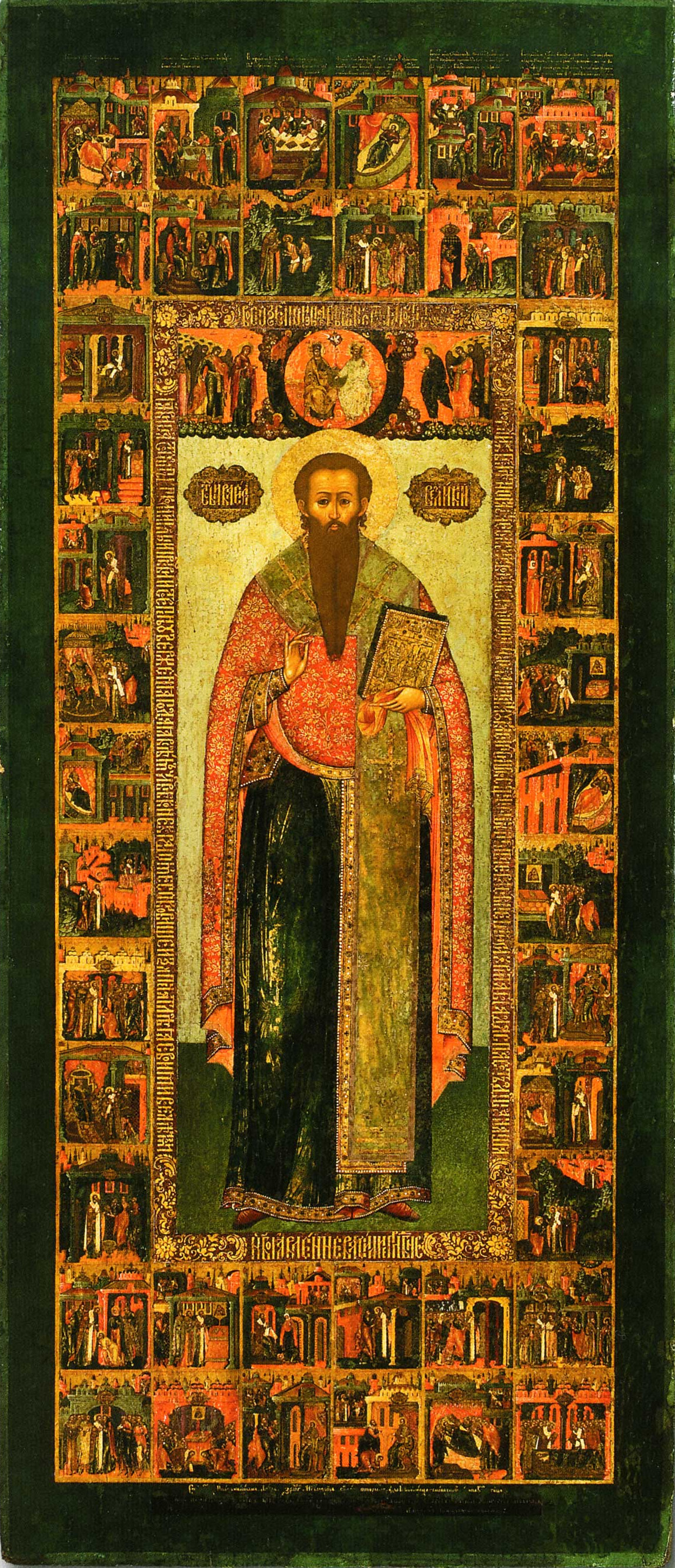
Me, the servant of God Basil, was raised in the Cappadocian city of Caesarea by noble and pious parents — in the days of the reign of Emperor Constantine the Great. My father was also called Basil, and my mother Emmelia. The first seeds of piety were sown in my soul by my pious grandmother Macrina, who in her youth was deemed worthy to hear instructions from the lips of Saint Gregory the Wonderworker — and by my mother, the pious Emmelia. My father instructed me not only in the Christian faith, but also taught me the secular sciences, with which he was well acquainted, for he himself taught rhetoric, that is, the art of oratory, and philosophy.
When I was about fourteen years old, my father reposed, and I, orphaned, spent two or three years with my grandmother Macrina, not far from Neocaesarea, near the river Iris, in a country house which she owned and which was later converted into a monastery. From there I often went to Caesarea to visit my mother, who with her other children lived in that city, from which she was a native. After the death of Macrina, I, in the seventeenth year of my life, again settled in Caesarea in order to study various sciences in the schools there.

Thanks to the sharpness of my mind I soon equalled my teachers in knowledge and, seeking new learning, I set out for Constantinople, where at that time the young sophist Libanius was famed for his eloquence. But even there I did not stay long and departed for Athens — a city that was the mother of all Hellenic wisdom. In Athens I began to attend the lessons of one famous pagan teacher named Eubulus, while at the same time visiting the schools of two other famous Athenian teachers, Himerius and Prohaeresius. I knew only two roads in Athens — one leading to the church, and the other to the school.
In Athens I became friends with another glorious hierarch — Gregory the Theologian, who was also studying at that time in the Athenian schools. We, being alike in our good disposition, meekness and chastity, loved each other as though we had but one soul — and this mutual love we preserved forever after. I was so engrossed in the sciences that I often even forgot, while sitting over books, the necessity of taking food; I studied grammar, rhetoric, astronomy, philosophy, physics, medicine and the natural sciences. But all these secular, earthly sciences could not satisfy my mind, which sought higher, heavenly illumination, and after spending about five years in Athens, I felt that worldly learning could not give me a firm foundation in the work of Christian perfection.

Having stayed in Athens for about five years and feeling that worldly science does not give a firm foundation for the work of Christian perfection, I went to Egypt, where the monastic life was flourishing. At the archimandrite Porphyrius I found a large collection of theological works, in the study of which I spent a whole year, exercising myself also in ascetic labours, and I observed the life of the renowned ascetics — Pachomius, Macarius the Elder and Macarius of Alexandria, Paphnutius, Paul and others. From Egypt I set out for Palestine, Syria and Mesopotamia, to visit the holy places.
On the way to Palestine I stopped in Athens and met my former teacher Eubulus, who was conversing with philosophers outside the city walls. Entering into the conversation, I resolved a difficult question, and Eubulus exclaimed: «This is either some god or Basil». Recognising me, he took me to his home, and we spent three days in conversation, almost without tasting food. He asked what is the essential dignity of philosophy; I answered that the essence of philosophy is that it gives man the remembrance of death. I briefly recounted to him the history of the economy of our salvation, and he exclaimed: «Through thee I believe in One God the Father Almighty», and desired to be baptised.
Having sold our property and given the money to the poor, we went to Jerusalem and, having visited all the holy places, asked the bishop Maximus to baptise us in the Jordan. As I stood on the bank, a fiery lightning suddenly fell upon us, and a dove that came forth from it plunged into the Jordan and, stirring up the water, flew up to heaven. The bishop clothed me in the garment of Christ’s resurrection; he also baptised Eubulus, anointed us with chrism, and gave us Communion of the Divine Gifts.

Having returned to the holy city, Eubulus and I remained there for one year. Then we set out for Antioch, where I was ordained deacon by Archbishop Meletius and occupied myself with the explanation of the Scriptures. A little time later I departed with Eubulus to my native land, Cappadocia. As we were approaching the city of Caesarea, a dream was revealed to Leontius, Archbishop of Caesarea, concerning our arrival, and it was said that in time I would become archbishop of that city. He sent his archdeacon and several honoured clerics to the eastern gates of the city, ordering them to bring the two strangers to him with honour. Seeing us, the archbishop was amazed, for it was precisely us whom he had seen in the dream, and, learning our names, he ordered us to be taken to the refectory and entertained, and he told the clergy of the vision. Then the clergy said with one voice: «Since for thy virtuous life God has shown thee thine heir to the throne, deal with him as it pleases thee».
The archbishop began to converse with me about the Scriptures, desiring to know how well I understood them, and, marvelling at the depth of wisdom, he kept me with him, treating me with especial honour. While I was staying in Caesarea, I led the same kind of life that I had learned from the ascetics in Egypt, Palestine, Syria and Mesopotamia, and Archbishop Eusebius of Caesarea ordained me presbyter and superior of the monks in Caesarea. But scarcely had a year of my presbyterate passed when Bishop Eusebius, through human weakness, began to envy me and to bear me ill will. Learning of this and not wishing to be an object of envy, I withdrew to the Pontic desert.

In the Pontic desert I withdrew to the Iris River, to a place where before me my mother Emmelia and my sister Macrina had withdrawn and which belonged to them; Macrina established a monastery there. Near it, at the foot of a high mountain covered with a dense forest and watered by cold and clear streams, I settled. The desert was so pleasing to me with its undisturbed silence that I intended to end my days there. I struggled in extreme deprivation, having for my covering only one garment — a shirt and a mantle; I also wore a hair shirt, but only at night so that it would not be seen; I ate bread and water, seasoning this scanty food with salt and roots. I never went to the bathhouse and never lit a fire.
But I did not live for myself alone: I gathered monks into a community; by my letters I drew my friend Gregory to me in the desert. In our solitude Gregory and I did everything together; we prayed together; we both abandoned the reading of worldly books, on which we had previously spent much time, and began to occupy ourselves solely with the Holy Scriptures, reading the works of the fathers and ecclesiastical writers who preceded us, especially Origen. Here, guided by the Holy Spirit, we also wrote the rules of monastic community life, by which the monks of the Eastern Church are for the most part guided even now. In regard to bodily life we found pleasure in endurance; we worked with our own hands, carrying wood, hewing stones, planting and watering trees, hauling manure, transporting heavy loads, so that the calluses on our hands remained for a long time. Our dwelling had neither roof nor doors; there was never any fire or smoke there.

The time came when Gregory and I had to leave the desert, for our services were needed by the Church, which at that time was troubled by heretics. Gregory’s father, already an old man, took him to Nazianzus; as for me, Eusebius, Archbishop of Caesarea, who had been reconciled with me by letter and who asked me to help the Church against which the Arians had risen up, persuaded me to return. Seeing such need of the Church and preferring her benefit to the life of a hermit, I left my solitude and came to Caesarea, where I labored much, defending the Orthodox faith from heresy by words and writings.
When Archbishop Eusebius reposed, committing his spirit to God in my arms, I was elevated to the archiepiscopal throne and consecrated by a council of bishops. Among those bishops was also the aged Gregory, father of Gregory of Nazianzus; being weak and wearied by old age, he ordered himself to be conveyed to Caesarea in order to persuade me to accept the archiepiscopate and to prevent the elevation to the throne of any of the Arians. I successfully ruled the Church of Christ; my brother Peter I ordained to the priesthood so that he might help me in the labors of Church affairs, and later I appointed him bishop of the city of Sebaste. At that time our mother, the blessed Emmelia, departed to the Lord, having lived more than ninety years.

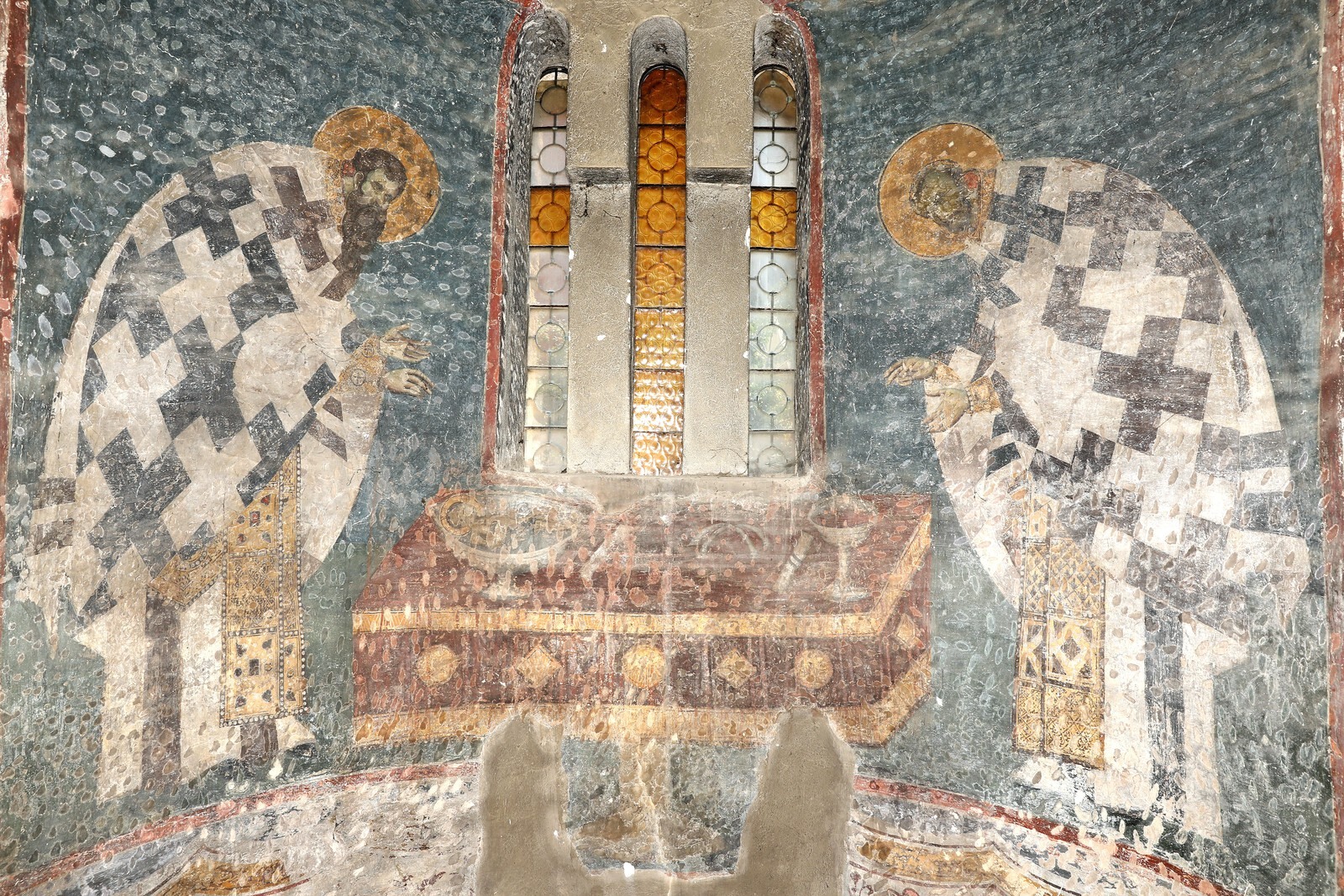
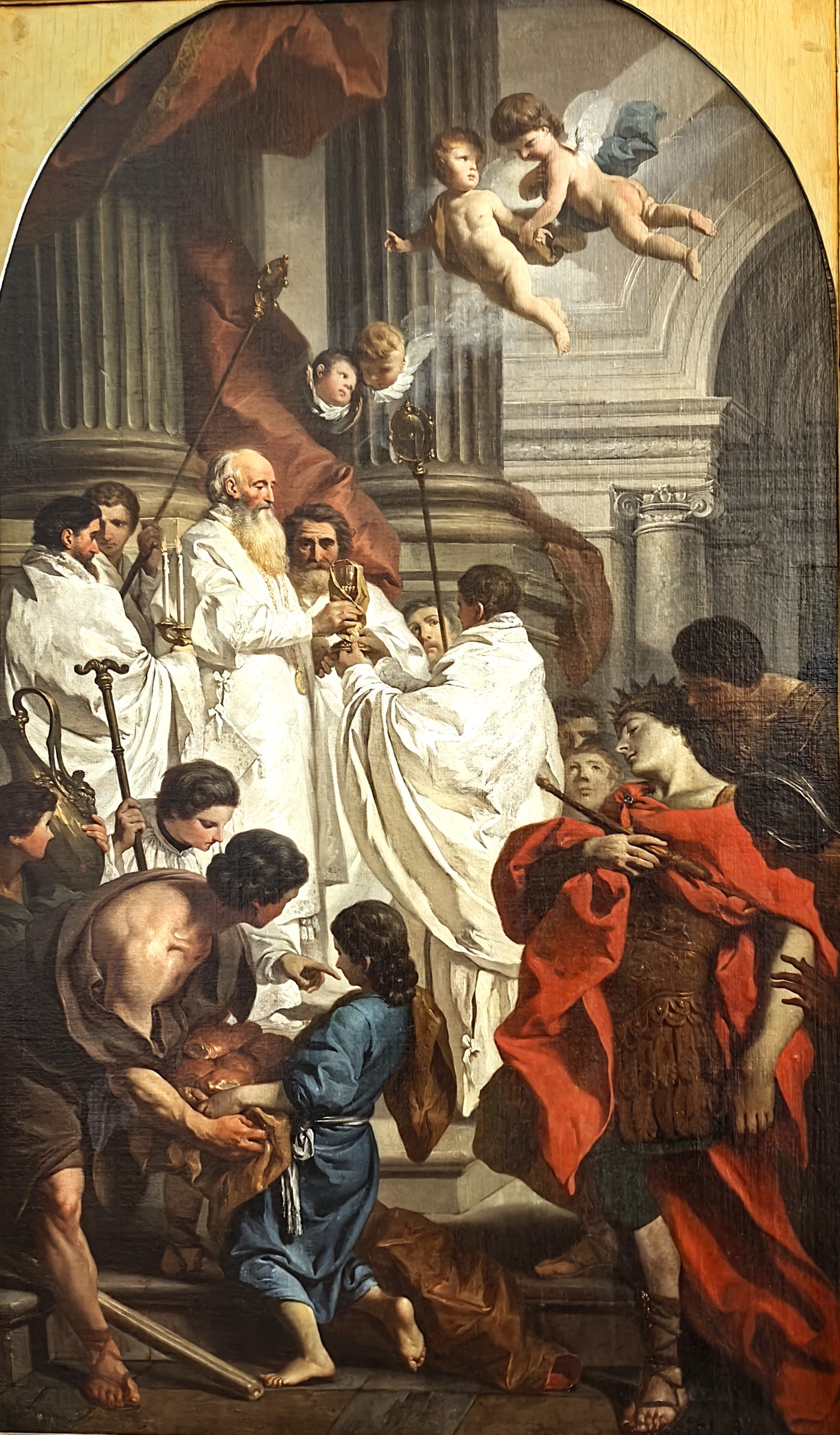
After some time I asked God to enlighten my mind, so that I might offer the bloodless sacrifice to God in my own words, and that the grace of the Holy Spirit might be sent down for this. After six days, on the seventh, when I, standing before the altar, began to offer the bread and the cup, the Lord Himself appeared to me in a vision with the apostles and said: «At your request, let your mouth be filled with praise, so that you may perform the bloodless service, uttering your own prayers». After this I began to speak and to write down such words: «Let my mouth be filled with Thy praise, that I may sing of Thy glory», «O Lord our God, Who hast created us and brought us into this life» and the other prayers of the holy liturgy. Eubulus with the senior clergy saw a heavenly light illuminating the altar and me, and certain radiant men in white robes surrounding me; they were seized with great terror and fell prostrate, shedding tears and glorifying God.
Once, when I was celebrating the Divine service, a certain Jew, wishing to learn in what the holy Mysteries consist, joined the believers as though he were a Christian, and saw that I was holding an infant in my hands and dividing it into parts. When the believers began to receive Communion, he also approached, and I gave him, as to the others, a portion of the Holy Gifts. Taking them in his hands, he saw that it was truly flesh, and when he approached the cup, he saw that there was truly blood in it. Believing that the Christian mystery is truly awesome and glorious, he went the next morning to me and begged to be accounted worthy of holy baptism. I, giving thanks to God, immediately baptised the Jew with all his household.

At the time when I was courageously contending in Caesarea of Cappadocia for the holy faith of Christ, the Emperor Julian the Apostate, the blasphemer and great persecutor of Christians, who boasted that he would destroy the Christians, was marching to war against the Persians. I was then praying in the church before the icon of the Most Holy Theotokos, at Whose feet was also depicted the holy Great-Martyr Mercurius in the form of a warrior with a spear — Mercurius suffered a martyr’s death in Caesarea of Cappadocia. I prayed that God would not allow the persecutor and destroyer of Christians, Julian, to return alive from the Persian war.
And behold, I saw that the image of the holy Mercurius, who stood near the Most Holy Theotokos, was changed, and the depiction of the martyr became invisible for a time. After a little while the martyr appeared again, but with a bloodied spear. At that very time Julian was pierced on the Persian campaign by the holy Martyr Mercurius, who had been sent by the Most Pure Virgin Theotokos to destroy the enemy of God.

While I was bishop, the Church of Christ was troubled by the emperor Valens, blinded by the Arian heresy. Having deposed many Orthodox bishops from their thrones, he installed Arians in their places. Arriving in Caesarea of Cappadocia, he employed every means to draw me over to the side of Arianism. The prefect Modestus summoned me to himself and, unable to sway me with flattering promises, began in a rage to threaten me with the confiscation of my property, exile, and death. To his threats I replied: «If you take away my possessions, you will not thereby enrich yourself, nor will you make me a pauper… There is no exile for me, for I am not bound to any place; the place where I now live is not mine, and every place to which you may banish me will be mine… And what can tortures do to me? I am so weak that perhaps only the first blow will be felt by me. But death is a blessing to me: it will lead me to God the sooner.» Astonished at these words, Modestus said: «No one has ever spoken to me so boldly until now!» — «Yes,» I answered, «because you have not previously had occasion to speak with a bishop.»
Reporting to the emperor on my unyielding stance, Modestus said: «We are defeated, O emperor, by the leader of the Church.» The emperor forbade them to trouble me, but upon withdrawing to Antioch, he again condemned me to exile. When he wished to sign this decree, the throne upon which he sat began to shake and the reed with which he was to make the signature broke; he took another reed, but the same thing happened with it, and with the third as well. Then his hand began to tremble and fear came upon him; seeing in this the power of God, the emperor tore up the document.

After some time had passed, a relative of the emperor named Eusebius was appointed prefect in place of Modestus. In Caesarea at that time there lived a certain widow, young, wealthy, and very beautiful, named Vestiana, daughter of Araxius, a member of the senate. The prefect Eusebius wished to force this widow into marriage with one of the dignitaries; but she, desiring to preserve the purity of her widowhood, did not wish to marry. Learning that they intended to seize her by force, she fled to the church and fell at my feet. I, taking her under my protection, would not hand her over to the men who had come for her, and later secretly sent her to the women’s monastery, to my sister, the venerable Macrina.
The enraged prefect sent soldiers to take that widow from the church by force, and when she was not found there, he ordered that she be sought in my bedchamber, thinking that I had hidden her with me for a sinful purpose. Not finding her anywhere, he summoned me to himself and with great fury reviled me, threatening to hand me over to torture if I did not surrender the widow to him. But I showed myself ready for torments: «If you order my body to be scraped with iron,» I said, «you will thereby heal my liver, which, as you see, greatly troubles me.» At that time the citizens, learning of the incident, rushed with weapons and clubs to the prefect’s palace, intending to kill him on my account; and had I not calmed the people, the prefect would have been slain. But he, seeing such an uprising of the people, became greatly afraid and released me unharmed and free.

One Orthodox senator, named Proterius, resolved to dedicate his daughter to the service of God in one of the monasteries; but the devil stirred up in one of Proterius’ slaves a passion for his master’s daughter. The slave went to a sorcerer, promising him gold for his help; the sorcerer said: «Will you renounce your Christ and give a written pledge of it?» The slave agreed, wrote the renunciation, and at night on a pagan cemetery he called upon the demons; they brought him to the devil, who, taking the pledge, sent the demons of adultery: they kindled in the maiden such a strong love for the youth that she fell to the ground and began to cry to her father to give her in marriage to the slave, or else she would die. The father, terrified, consented.
When the marriage was performed, the newly-wedded husband did not go to church and did not receive Communion. His wife, learning the truth, was exceedingly grieved and came to me. I summoned the husband; he confessed everything with tears and said that he wished to turn to the Lord, but could not, for he had given a written pledge that he renounced Christ. I said: «Do not grieve over this, for God is merciful and receives the penitent,» — and I shut him in a room adjoining the church, commanding him to pray unceasingly. On the fortieth day he told me that he had seen me in a dream striving for him and overcoming the devil.
In the morning we led him to the church, singing psalms; the devil invisibly tried to tear the youth from my hands and cried out: «You wrong me, Basil!» I said to the people: «Lift up your hands on high and cry: Lord, have mercy!» And behold, the youth’s pledge was borne through the air before the eyes of all and came straight into my hands. I immediately tore it up before them all and, leading the youth into the church, I communed him with the Divine Mysteries and restored him to his wife.

Once an impious emperor stopped in the city of Nicaea, and the Arians asked him to expel the Orthodox from the cathedral church and to give the church to their assembly. The emperor did so and departed for Constantinople. When the whole community of the Orthodox was plunged into sorrow, I came to Nicaea; the flock came to me with cries and lamentations. Having comforted them, I immediately went to the emperor in Constantinople and said: «The king’s strength also loves judgment» (Ps. 98:4). Why then, O emperor, have you pronounced an unjust sentence, expelling the Orthodox from the holy church? The emperor said: «You have again begun to offend me, Basil!» I replied: «For the sake of truth it is well for me even to die.» The emperor said: «Go and examine their case; yet judge in such a way as not to appear a helper of your fellow believers.» – «If I judge unjustly, – I answered, – then send me also into exile, drive out my fellow believers, and give the church to the Arians».
Taking the decree, I returned to Nicaea and proposed to seal the church with the seals of both sides: first let the Arians pray for three days and three nights, and if the doors open of themselves, the church shall be theirs forever; if not, we shall pray for one night and go with a procession. The Arians, after praying for three days, departed in shame: the doors did not open. Gathering the Orthodox, I performed a vigil and in the morning went with all to the sealed church. Signing the doors with the sign of the Cross, I said: «Blessed is the God of the Christians, always, now and ever, and unto the ages of ages.» When the people cried «Amen,» the earth shook, the seals were broken, and the gates opened as though from a strong wind. I entered the church with the Orthodox and, having celebrated the service, dismissed the people with joy. A multitude of Arians, seeing the miracle, joined the Orthodox.

Once my brother, Bishop Peter of Sebastia, was slandered before my tribunal: it was said that he continued to live with his wife, whom he had left before his consecration as bishop. Hearing this, I said: «It is well that you have told me of this; I will go with you and expose him.» As I was approaching the city of Sebastia, Peter knew in spirit of my arrival, for he too was filled with the Spirit of God and lived with his supposed wife not as with a wife but as with a sister, in chastity. He came out to meet me eight miles from the city and, seeing me with a large number of companions, smiled and said: «Brother, it is as though you have set out against me as against a robber.» Having given one another the kiss in the Lord, we entered the city and, after praying in the church of the Holy Forty Martyrs, came to the bishop’s house.
I said to Peter: «I ask you, brother, to spend this night with your wife in the church.» When night had come and Peter was resting in the church with his wife, I was also there with five virtuous men. About midnight I asked them what they saw over my brother and my sister-in-law; they said: «We see Angels of God fanning them and anointing with fragrances their undefiled bed.» In the morning I ordered the people to assemble in the church and to bring a brazier with burning coals. I said: «Stretch out, my honourable sister-in-law, your garment,» and when she had done so, I ordered those holding the brazier to put burning coals into her garment; she held them until I told her to stop. The same I did with my brother Peter and his phelonion. When they had held the burning coals in their garments for a long time and suffered no harm from it, the people who saw this marvelled and glorified God.

In Caesarea there lived a certain Jew named Joseph, so skilled in the art of healing that by the movement of the blood in the veins he could determine the day and hour of a patient’s death. Foreseeing his future conversion to Christ, I loved him and urged him to accept holy baptism, but he refused: «In the faith in which I was born, in that I wish to die». I said to him: «Believe me, that neither I nor you will die until you are born of water and the Spirit».
When the time of my departure drew near, I fell ill and summoned Joseph as if in need of his medical help. Having examined me, he said to my household: «Prepare everything for the burial, for his death is to be expected from one moment to the next». But I said: «You do not know what you are saying!» He replied: «Believe me, master, your death will come before the setting of the sun». I asked what he would do if I lived until morning; he swore to fulfil my desire. Then I began to pray to God that He would prolong my life until the morning for the salvation of his soul — and I received what I asked.
In the morning, seeing me alive, Joseph fell at my feet and said: «Great is the God of the Christians, and there is no other God besides Him! Command that holy baptism be given to me and to all my household as well». I said: «I will baptise you myself with my own hands!» And I entered the church and before all the people baptised the Jew and all his family; I gave him the name John and communed him with the Divine Mysteries, having myself celebrated the liturgy that day. Remaining in the church until the ninth hour, I began to give thanks to God, and while the words of thanksgiving were still on my lips, I committed my soul into the hands of God on the first day of January. Jews hastened to my tomb; the hierarchs buried my honourable relics in the church of the holy martyr Eupsychius.
Thy message went out into the whole earth, / because thou didst receive thy word, / which thou hast most gloriously taught, / thou hast clarified the nature of beings, / thou hast adorned human customs, / Royal consecration, Reverend Father, / pray to Christ God // to save our souls.