ORTHODOX HOUSENewsCommunityCalendarPrayer BookLives of the Saints
Great-Martyr Barbara of Heliopolis
Lives of the Saints · the saint tells his own story

Great-Martyr Barbara of Heliopolis

Commemorated: 4 (17) December · 4th century · Heliopolis in Phoenicia — Kiev (transfer of relics)
«My father Dioscorus was a man of noble birth, wealthy and renowned; he lived in the East, in Heliopolis… I was his only daughter, and he guarded me as the apple of his eye»
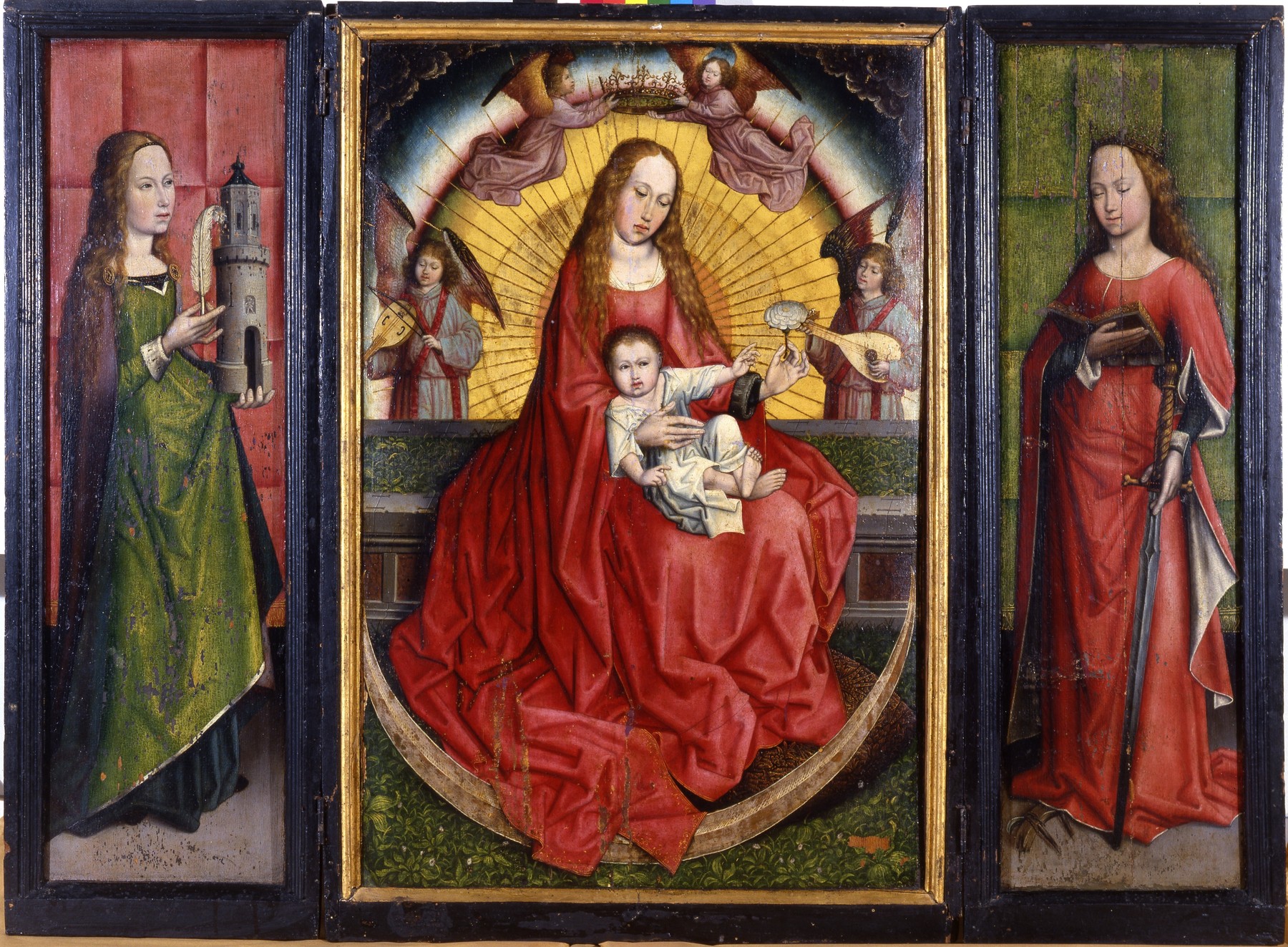
Great-Martyr Barbara. Unknown master, tempera and gold on wood, third quarter of the 15th century. National Art Museum of Catalonia (Barcelona), inv. 114747-000. Public domain.
How this is made. The account is told in the first person — a close paraphrase of this Life; not a single fact is included that is absent from the source. The account of the transfer of the relics to Kiev (recorded in 1670 by Abbot Theodosius Safonovich) and the testimonies concerning them are given with the note “as the Life relates”, since the saint herself could not have been an eyewitness to events after her death. Beneath each excerpt is the actual text of St Dimitry. Source: St Dimitry of Rostov. Lives of the Saints. Month of December, day 4 — The Life and Passion of the Holy Great-Martyr Barbara. The face is an authentic icon; the light and breathing make it a “living icon”, with no talking lips. The pictures beside the passages are the border scenes of the icon of his life. There is no voice: the reading is yours.
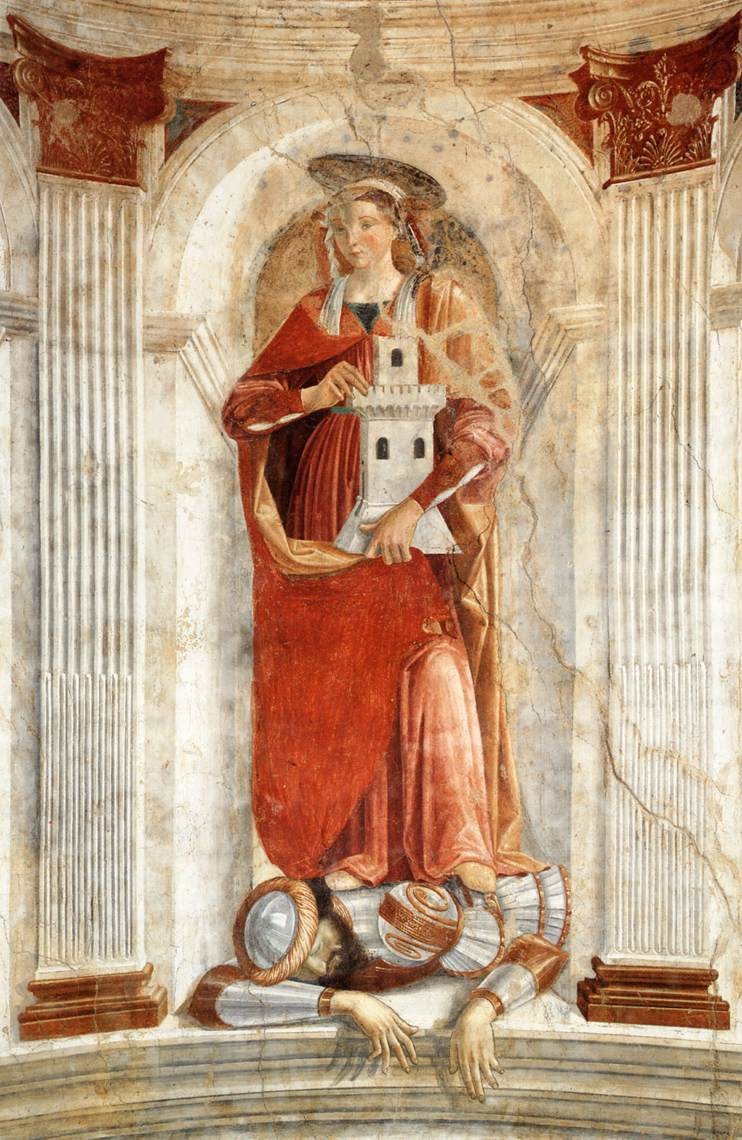
Great-Martyr Barbara — a young maiden
Fresco: Great-Martyr Barbara — a young maiden · D. Ghirlandaio, c. 1471
1 · Heliopolis, Phoenicia

Heliopolis. The Tower

My father Dioscorus was a man of noble birth, wealthy and renowned; he lived in the East, in Heliopolis, and was a pagan by origin and by confession of faith. I was his only daughter: he had no other children besides me, and he guarded me as the apple of his eye.

When I began to come of age, I became exceedingly beautiful of face, so that in all that region there was no maiden like me in beauty. Then my father built for me a high tower with splendid chambers and shut me up in it, assigning to me trustworthy governesses and servants, for my mother had already died: he wished that such beauty of mine should not be seen by common people.

Living in the tower, I found consolation in looking down from that height upon the upper and lower creations of God — upon the luminaries of heaven and upon the beauty of the earthly world. Gazing at the sky and observing the shining of the sun, the course of the moon and the beauty of the stars, I asked the servants who lived with me: “Who created all this?” And looking upon the fields and mountains, I asked: “By whose hand was all this made?” They answered that all this was created by the gods — of gold, silver and wood — whom my father honours.

Hearing such words, I began to doubt: the gods whom my father worships are made by human hands; how then could these handmade gods have created such a bright and lofty heaven and such beauty upon the earth, when they themselves can neither walk with their feet nor work with their hands? Thus I often looked at the sky, striving to know the Creator through creation, until suddenly the light of divine grace shone in my heart and opened the eyes of my mind to the knowledge of the One Invisible, Unknown and Incomprehensible God. And the words of David were fulfilled in me: «I meditate on all Thy works, I muse on the works of Thy hands» (Ps. 142:5).

Source — St Demetrius of Rostov, “Lives of the Saints”
Dioscorus, a pagan by origin and by confession of faith, had a daughter Barbara, whom he guarded as the apple of his eye, for besides her he had no other children. […] When she began to come of age, she became exceedingly beautiful of face, so that in all that region there was no maiden like her in beauty; therefore Dioscorus built for her a high and skilfully constructed tower, and in the tower he arranged splendid chambers. […] In them he shut up his daughter, assigning to her trustworthy governesses and servants, for her mother had already died. […] Living in the tower, in the high chambers, the maiden found consolation in looking down from that height upon the upper and lower creations of God — upon the luminaries of heaven and upon the beauty of the earthly world. […] Hearing such words from them, the maiden began to doubt and reasoned with herself: – The gods whom my father worships are made by human hands […] suddenly the light of divine grace shone in her heart and opened the eyes of her mind to the knowledge of the One Invisible, Unknown and Incomprehensible God, Who in wisdom created heaven and earth. […] the words of David were fulfilled in her: «I meditate on all Thy works, I muse on the works of Thy hands» (Ps. 142:5).
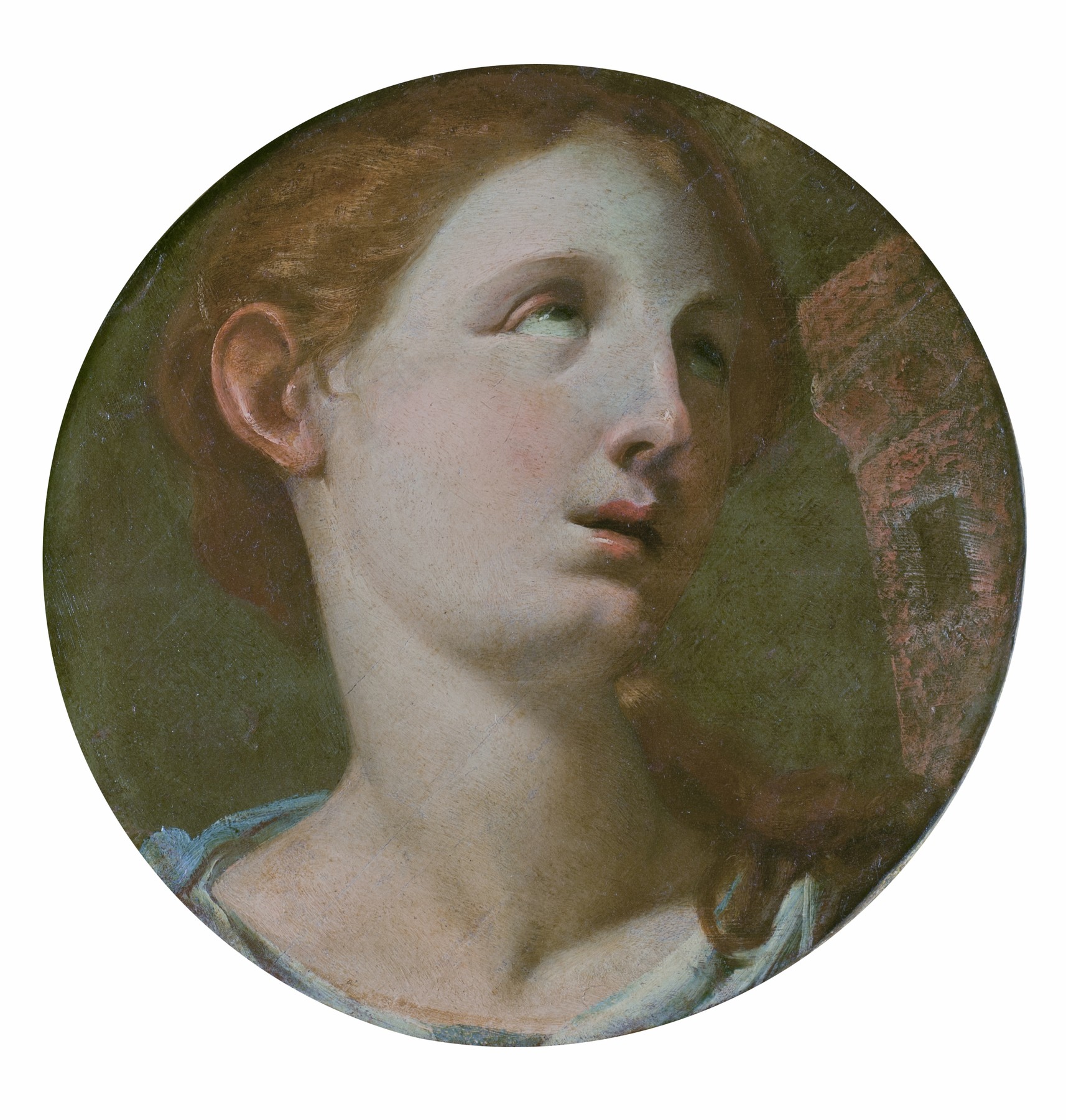
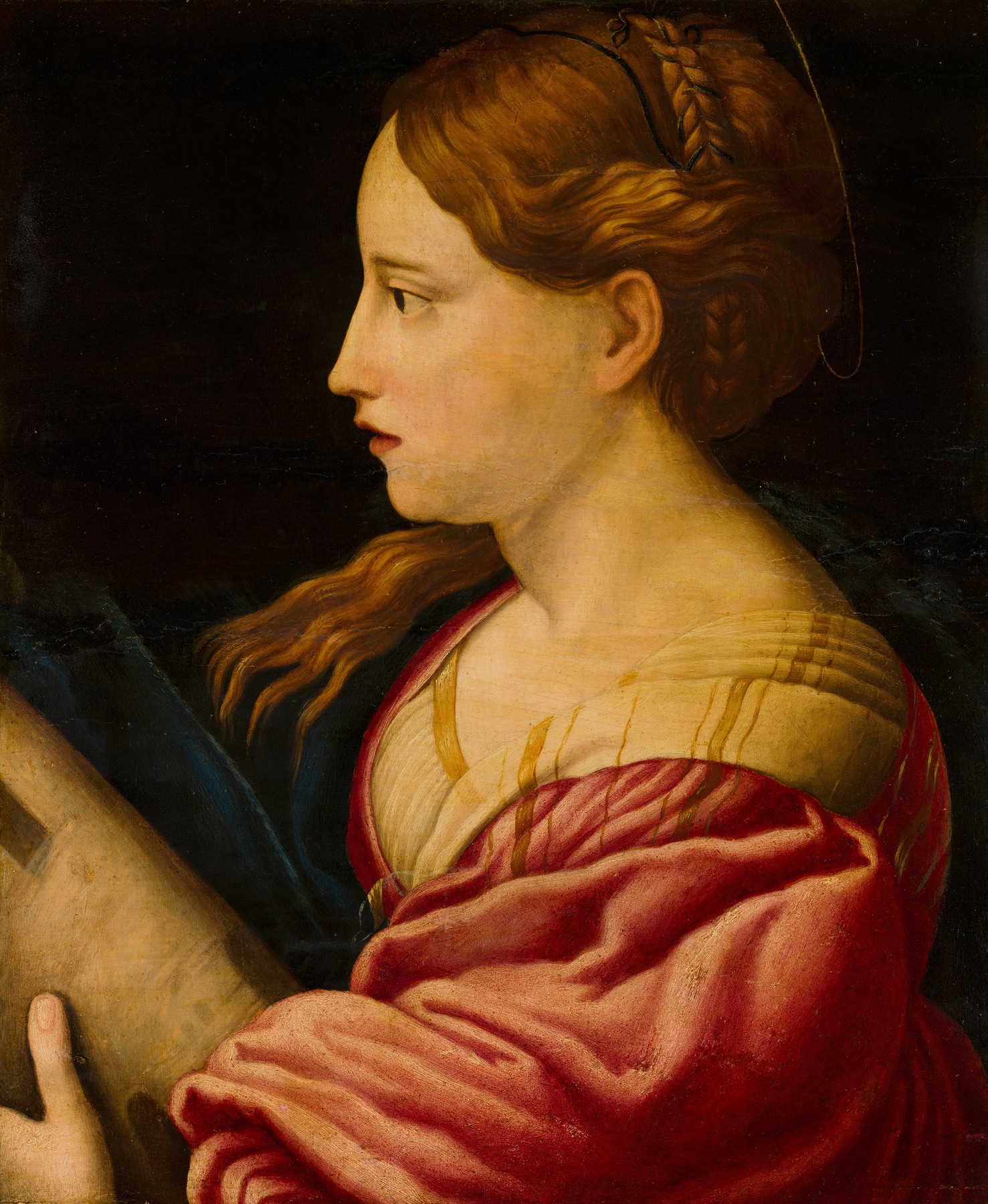
Great-Martyr Barbara with a palm branch and a book
Painting: Great-Martyr Barbara with a palm branch and a book · Parmigianino, c. 1536–1540
2 · Heliopolis

Refusal of Marriage. Baptism

When the time came to give me in marriage, many noble youths, having heard of my beauty, asked my father for my hand. Coming up into the tower to me, Dioscorus began to speak of marriage, naming various suitors to me. I, ashamed even to think of marriage, refused in every way, for I considered it a great loss to myself to lose the priceless pearl of virginity. To my father’s persistent exhortations I at last declared: “If, my father, you continue to speak of this and compel me to betrothal, you will no longer be called my father, for I shall kill myself, and you will be deprived of your only child.”

Hearing this, Dioscorus was struck with horror and went out from me, not daring any longer to compel me to marriage. After this he resolved to set out on a long journey; to those assigned to me he gave orders not to hinder me from freely descending from the tower wherever I wished.

When my father had set out on his journey, I, making use of the freedom to converse unhindered with whom I would, became friends with certain Christian maidens and from them heard the Name of Jesus Christ. They told me of His ineffable Divinity, of the Incarnation from the Most Pure Virgin Mary, of His voluntary Passion and Resurrection, of the future Judgment and of the unending blessedness of believing Christians in the Kingdom of Heaven. Hearing all this, I felt sweetness in my heart and desired to receive baptism.

It happened at that time that a certain presbyter came to Heliopolis in the guise of a merchant. Learning of him, I invited him to myself and secretly learned from him the knowledge of the One Creator of all and faith in our Lord Jesus Christ, which I had long and fervently desired. The presbyter, having set forth to me all the mysteries of the holy faith, baptised me in the Name of the Father and of the Son and of the Holy Spirit and departed to his own country. Enlightened by baptism, I was kindled with yet greater love for God and strove in fasting and prayer, serving my Lord, to Whom I was betrothed, having vowed to preserve my virginity in purity.

Source — St Demetrius of Rostov, “Lives of the Saints”
Many rich, noble and distinguished youths, having heard of the wondrous beauty of Barbara, asked Dioscorus for her hand. […] Hearing such words from her father, the chaste maiden blushed, ashamed not only to listen but even to think of marriage. […] for she considered it a great loss to herself to allow the flower of her purity to wither and to lose the priceless pearl of virginity. […] If, my father, you continue to speak of this and compel me to betrothal, you will no longer be called father, for I shall kill myself, and you will be deprived of your only child. […] Hearing this, Dioscorus was horrified and went out from her, not daring to compel her any longer to marriage. […] To those appointed to attend his daughter he commanded that they should not hinder her from freely descending from the tower wherever she wished and doing whatever she pleased. […] Barbara, enjoying the freedom to leave the house and converse unhindered with whom she wished, befriended certain Christian maidens and from them heard the Name of Jesus Christ. […] Her new friends told her everything about Christ: of His ineffable Divinity, of His incarnation from the Most Pure Virgin Mary, of His voluntary suffering and resurrection, also of the future judgment, of the eternal torment of the idolaters and the unending blessedness of believing Christians in the Kingdom of Heaven. […] It happened at that time that a certain presbyter came to Heliopolis in the guise of a merchant. […] The presbyter, having set forth to her all the mysteries of the holy faith, baptised her in the Name of the Father and of the Son and of the Holy Spirit and, having instructed her, departed to his own country. […] Enlightened by baptism, holy Great-martyr Barbara was inflamed with even greater love for God, and strove in fasting and prayer day and night, serving her Lord, to Whom she had betrothed herself, having vowed to preserve her virginity in purity.
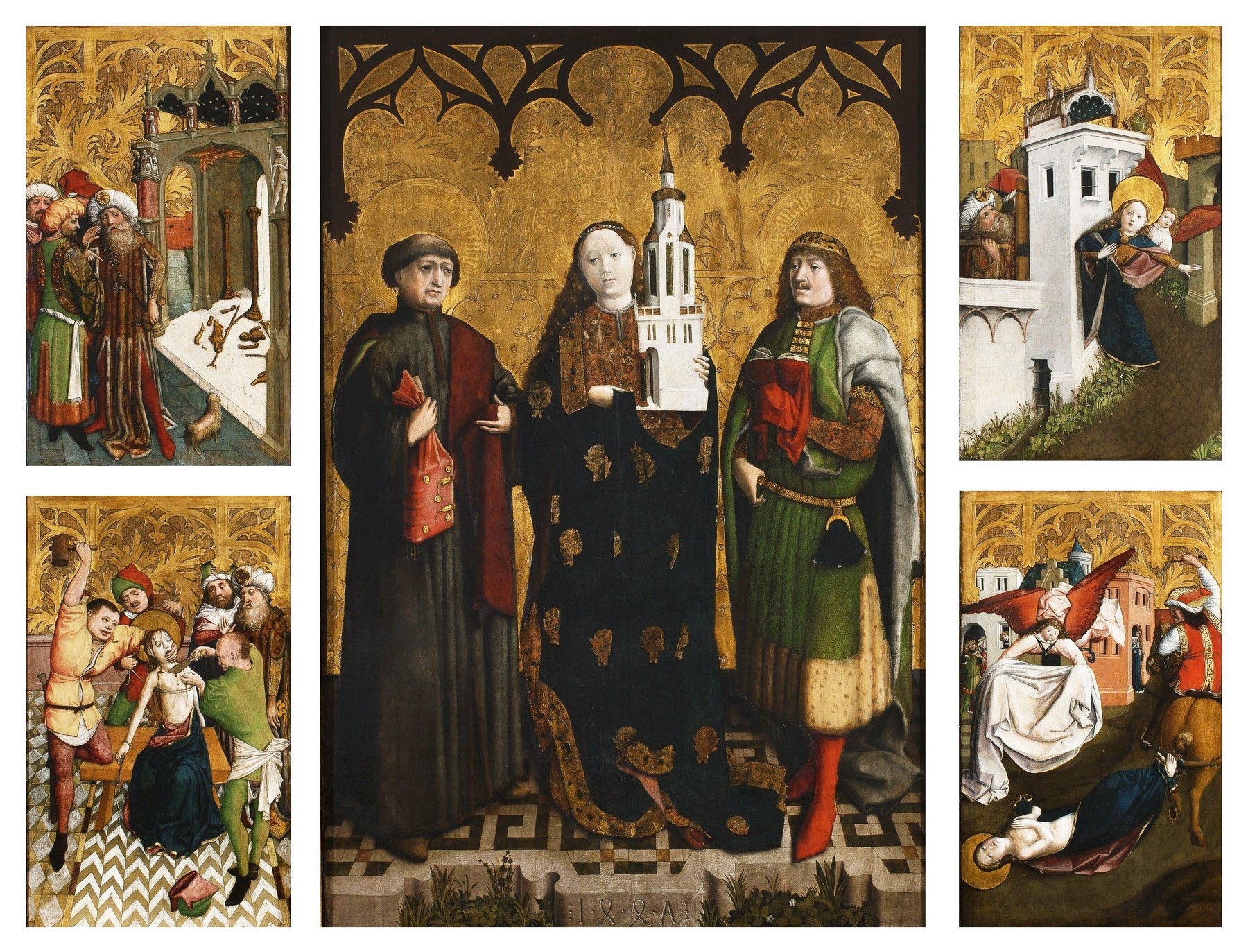
Great-martyr Barbara with the tower – the sign of her confinement
Painting: Great-martyr Barbara with the tower – the sign of her confinement · W. Kalteisen, 1447
3 · Heliopolis, bathhouse in the garden

The Bath with Three Windows

My father, setting out on a journey, ordered that a splendid bath be built at the bathhouse situated in the garden, and that two windows facing south be made in the bath. While the construction was underway, I once descended from my tower to look at it and, seeing two windows in the bath, asked the workmen: «Why have you made only two windows? Would it not be better to make three windows? Then the wall will be more beautiful, and the bath lighter». The workmen replied that my father had so commanded them. But I insistently demanded that they make three windows, in the image of the Holy Trinity, and said to them: «I shall intercede for you before my father and answer for you; do what I command you». Then the workmen, at my desire, made a third window in the bath.

There was there, as has been said, a bathing pool at which the bath was being built; this bathing pool was faced with hewn marble stones. Coming once to this bathing pool and looking toward the east, I traced with my finger upon the marble the image of the holy Cross, which was imprinted upon the stone so clearly as if it had been struck with iron. Moreover, at the same bath, also upon the stone, the imprint of my maiden foot appeared, and from this imprint water began to flow; later many healings occurred here for those who came with faith.

Walking once through the chambers of my father, I saw his gods, the soulless idols, standing in a place of honour, and I sighed deeply over the perdition of the souls of those people who serve idols. Then I spat upon the faces of the idols, saying: «May all who worship you and expect help from you, who are soulless, become like you!» Having said this, I ascended my tower and, as was my custom, gave myself to prayer and fasting, with all my mind immersed in the contemplation of God.

Source — St Demetrius of Rostov, “Lives of the Saints”
Dioscorus ordered that a splendid bath be built at the bathhouse situated in the garden, and that two windows facing south be made in the bath. […] Once holy Great-martyr Barbara descended from her tower to look at the construction, and seeing two windows in the bath, asked the workmen. […] Why have you made only two windows? Would it not be better to make three windows? Then the wall will be more beautiful, and the bath lighter. […] But Barbara insistently demanded that they make three windows (in the image of the Holy Trinity). […] I shall intercede for you before my father and answer for you; do what I command you. […] Then the workmen, at her desire, made a third window in the bath. […] This bathing pool was faced with hewn marble stones. […] Holy Great-martyr Barbara, coming once to this bathing pool and looking toward the east, traced with her finger upon the marble the image of the holy Cross, which was imprinted upon the stone so clearly as if it had been struck with iron. […] at the same bath, also upon the stone, the imprint of her maiden foot appeared, from this imprint water began to flow, and later many healings occurred here for those who came with faith. […] Walking once through the chambers of her father, holy Great-martyr Barbara saw his gods, the soulless idols, standing in a place of honour, and sighed deeply over the perdition of the souls of those people who serve idols. […] May all who worship you and expect help from you, who are soulless, become like you! […] Having said this, she ascended her tower. There she, as was her custom, gave herself to prayer and fasting, with all her mind immersed in the contemplation of God.
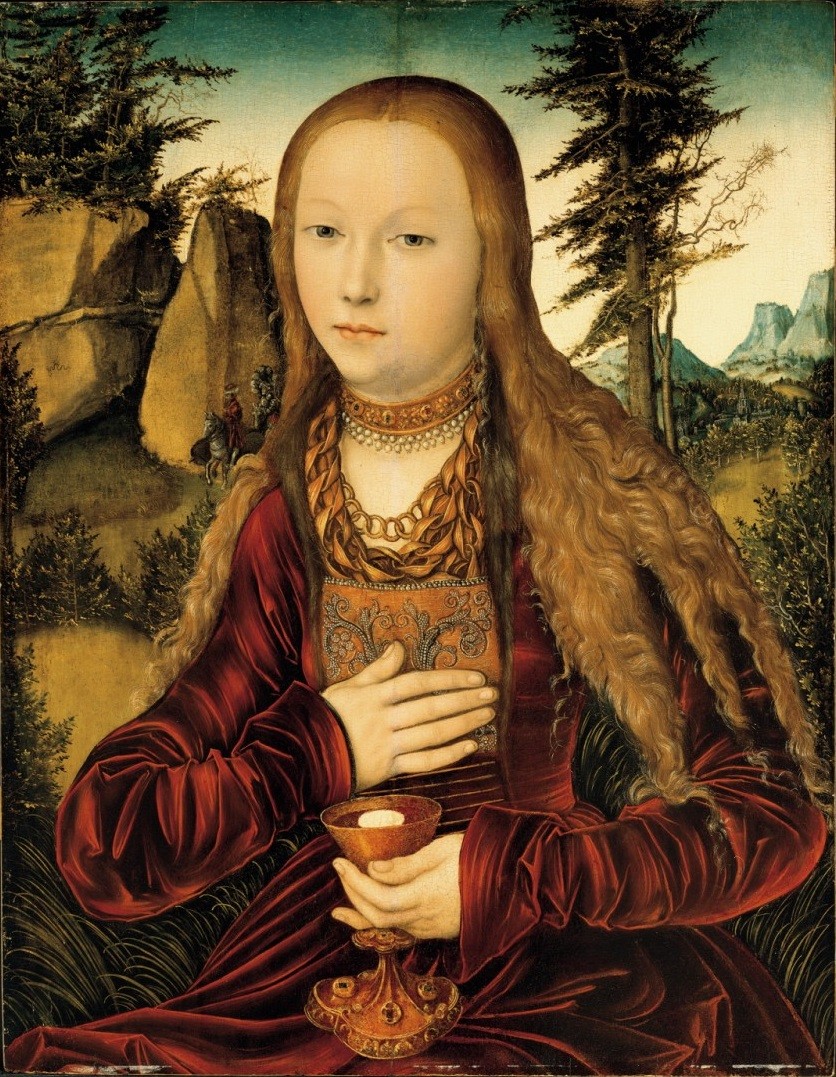
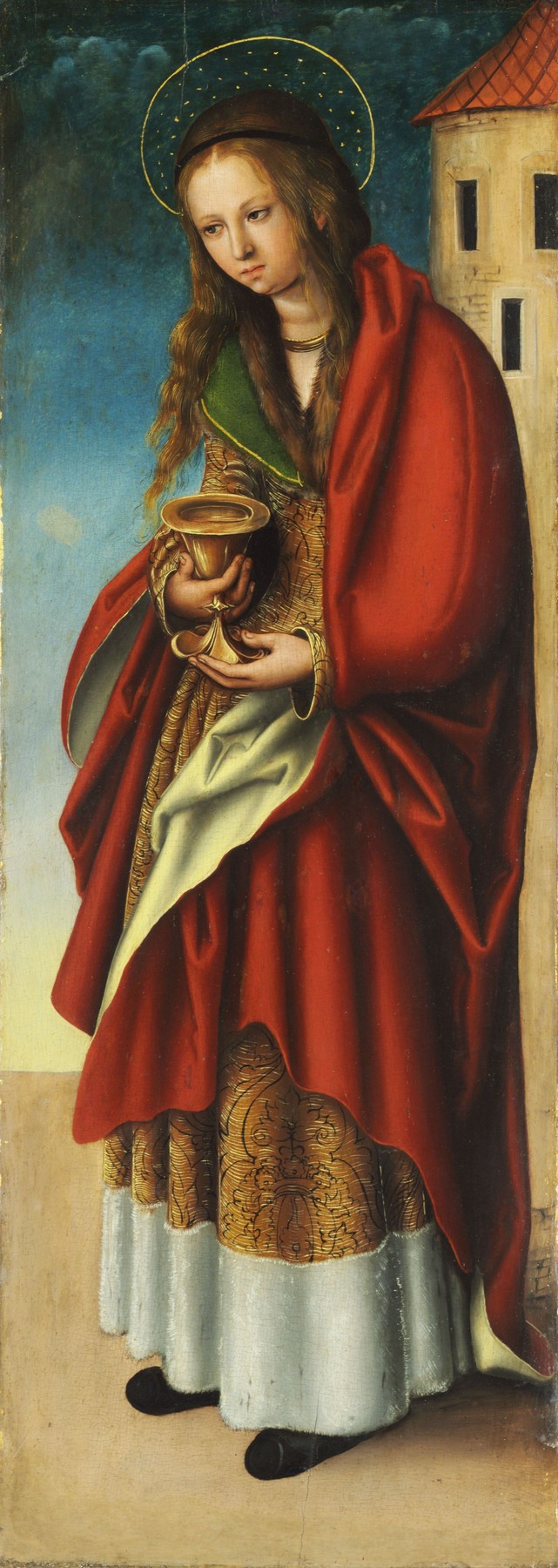
Barbara amid the wild nature
Painting: Barbara amid the wild nature · L. Cranach the Elder, c. 1530
4 · Heliopolis

The Wrath of Dioscorus

Meanwhile my father returned from his journey. Inspecting the buildings, he approached the newly built bath and, seeing three windows in its wall, began angrily to rebuke the servants and workmen for having disobeyed his command. They replied that it had not been their will, but mine. My father immediately summoned me and asked why I had ordered a third window to be made in the bath.

I answered: «Three is better than two, for you, my father, ordered two windows to be made in correspondence, as I suppose, to the two heavenly luminaries, the sun and the moon, but I ordered a third to be made in the image of the Triune Light, for the inaccessible, ineffable, never-setting and unwaning Light of the Trinity has three windows, by which every man coming into the world is enlightened».

My father was troubled by such wondrous but incomprehensible words to him. Leading me to the place in the bathing pool where the Cross had been traced upon the stone by my finger, he asked in what manner the light of the three windows enlightens every man. I answered: «Father, Son and Holy Spirit, the Three Persons of the One God in Trinity, Who dwells in unapproachable light, enlighten and give life to every breath; for this I ordered three windows to be made, that one might represent the Father, another the Son, and the third the Holy Spirit». Pointing with my hand to the Cross upon the marble, I said that by this sign I had depicted the Son of God, Who became incarnate of the Most Pure Virgin and of His own will suffered on the Cross, that the power of the Cross might drive away from here all the power of the demons.

This and much else I said yet to my hard-hearted father concerning the Holy Trinity, the incarnation and suffering of Christ, and the power of the Cross, by which I brought him into terrible rage. Dioscorus was inflamed with wrath and, forgetting his natural love for me, drew his sword and wished to pierce me, but I turned and fled.

Source — St Demetrius of Rostov, “Lives of the Saints”
Meanwhile her father returned from his journey. Inspecting the domestic buildings, he approached the newly built bathhouse and, seeing three windows in its wall, began to rebuke the servants and workmen in anger for disobeying his command and making not two but three windows. […] It was not our will, but that of your daughter Barbara; she commanded us to make three windows, though we did not wish it. […] Dioscorus immediately summoned Barbara and asked her: – Why did you command a third window to be made in the bathhouse? […] Three is better than two, for you, my father, commanded two windows to be made in correspondence, as I suppose, to the two heavenly luminaries, the sun and the moon […] but I commanded a third to be made in the image of the Triune Light, for the inaccessible, ineffable, never-setting and unwaning Triune Light has Three Windows […] by which every man coming into the world is enlightened. […] The father was troubled by the new, truly wondrous, yet incomprehensible to him, words of his daughter. […] Listen attentively, my father, and understand what I say: the Father, the Son and the Holy Spirit, Three Persons of the One God in Trinity, Who dwells in unapproachable light, enlighten and give life to every breath. […] For this reason I commanded three windows to be made in the bathhouse, that one of them might represent the Father, another the Son, and the third the Holy Spirit […] by the good pleasure of the Father and the cooperation of the Holy Spirit, for the salvation of men, He became incarnate of the Most Pure Virgin and willingly suffered on the Cross, the image of which you see. I inscribed here the sign of the Cross so that the power of the Cross might drive away from here all the power of the demons. […] This and much else the wise virgin spoke yet to her hard-hearted father concerning the Holy Trinity, the Incarnation and suffering of Christ, the power of the Cross and the other mysteries of the holy faith, by which she brought him into terrible rage. […] Dioscorus blazed with anger and, forgetting natural love for his daughter, drew his sword and wished to pierce her, but she turned and fled.
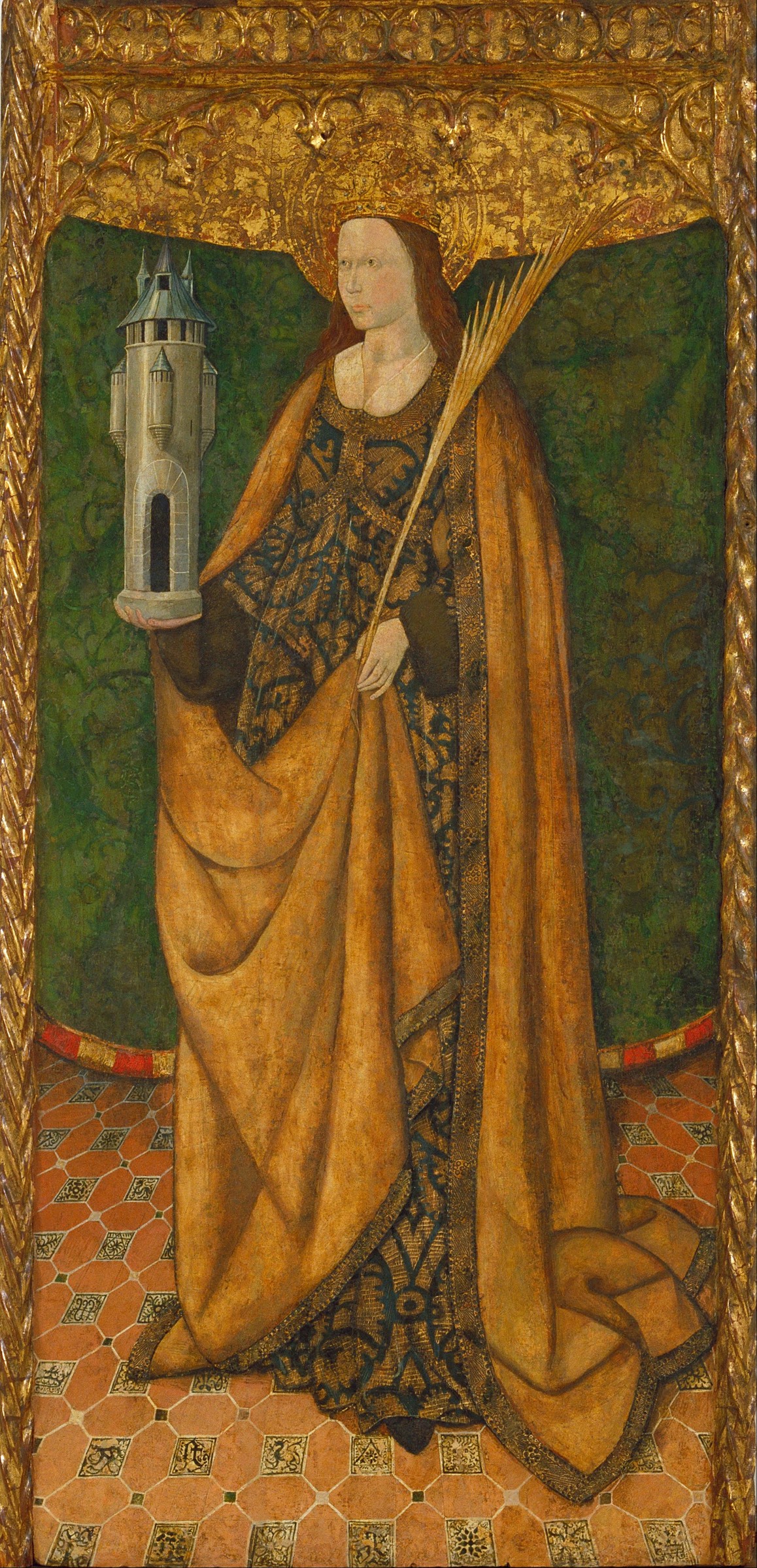
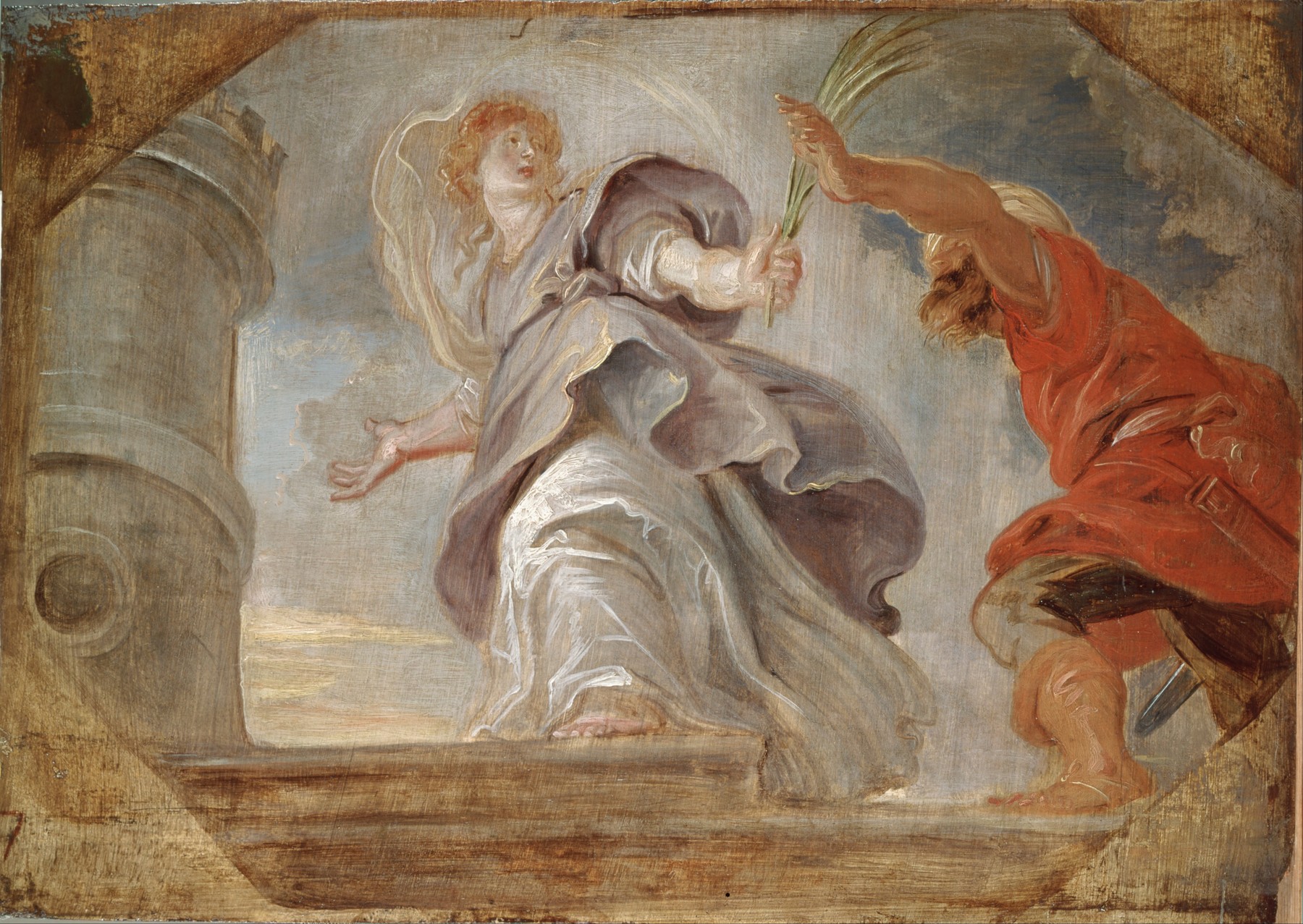
Barbara escapes in flight from her enraged father
Painting: Barbara escapes in flight from her enraged father · P. P. Rubens, c. 1620
5 · The mountain beyond Heliopolis

Flight through the mountain

With sword in hand my father pursued me like a wolf after a sheep, and was already overtaking me when a stone mountain unexpectedly barred my path. I knew not where to flee from the hand and sword of my tormentor; I had but one refuge – God, from Whom I sought help and protection, lifting to Him the eyes of both soul and body.

The Most High quickly heard His handmaid and anticipated me with His help, commanding the stone mountain to part before me in two, as once before the protomartyr Thecla when she fled from the profligates. I hid in the cleft that was formed, and immediately the rock closed behind me, giving me a free path to the top of the mountain; having ascended there, I hid in a certain cave.

My father, not seeing his fleeing daughter before him, was amazed and, going round the mountain, sought me for a long time; he saw on the mountain two shepherds pasturing flocks of sheep – they had seen me ascend the mountain and hide in the cave. One of the shepherds, a compassionate man, seeing that my father was filled with rage, did not wish to betray an innocent maiden and said that he had not seen her; but the other, in silence, pointed with his hand to the place where I was hiding.

My father hastened there, and upon the shepherd who had betrayed me the judgment of God fell in that very place: he himself was turned into a stone pillar, and his sheep into locusts. Finding me in the cave, my father began to beat me mercilessly; throwing me to the ground, he trampled me with his feet and, seizing me by the hair, dragged me to his house. Then he shut me in a narrow, dark hut, locked the doors and windows, affixed a seal, set a guard, and tormented me with hunger and thirst.

Source — St Demetrius of Rostov, “Lives of the Saints”
With sword in hand Dioscorus pursued her like a wolf after a sheep. He was already overtaking the immaculate lamb of Christ when a stone mountain unexpectedly barred her path. […] she had but one refuge – God, from Whom she sought help and protection, lifting to Him the eyes of both soul and body. […] The Most High quickly heard His handmaid and anticipated her with His help, commanding the stone mountain to part before her in two, as once before the protomartyr Thecla when she fled from the profligates. […] The holy virgin Barbara hid in the cleft that was formed, and immediately the rock closed behind her, giving the saint a free path to the top of the mountain. Having ascended there, she hid in a certain cave. […] Going round the mountain and seeking Barbara, he saw on the mountain two shepherds pasturing flocks of sheep. These shepherds had seen how the holy Barbara ascended the mountain and hid in the cave. […] One of the shepherds, a compassionate man, seeing that Dioscorus was filled with rage, did not wish to betray an innocent maiden and said: – I have not seen her. […] But the other, in silence, pointed with his hand to the place where the saint was hiding. Dioscorus hastened there, and upon the shepherd who had betrayed the saint the judgment of God fell in that very place: he himself was turned into a stone pillar, and his sheep into locusts. […] Finding his daughter in the cave, Dioscorus began to beat her mercilessly; throwing her to the ground, he trampled her with his feet and, seizing her by the hair, dragged her to his house. […] Then he shut her in a narrow, dark hut, locked the doors and windows, affixed a seal, set a guard, and tormented the prisoner with hunger and thirst.
The Great-Martyr Barbara before the court
Painting: The Great-Martyr Barbara before the court · After Parmigianino, Mauritshuis
6 · Heliopolis, the judgment hall of the governor Martianus

Before the governor Martianus

After this my father went to the governor of that land, Martianus, and told him everything about me, relating that I rejected their gods and believed in the Crucified One; he brought me to him and gave me into his hands, saying: “I renounce her, for she rejects my gods; torment her, mighty governor, as it shall please your will.”

The governor, astonished at my beauty, began to speak to me meekly and kindly, exhorting me to worship the gods and obey my father. But I, exposing with wise speech the vanity of the pagan gods, confessed and glorified the Name of Jesus Christ. At last he said: “Have pity on yourself, fair maiden, and hasten to offer sacrifice to the gods with us; if you will not submit, you will force me to torment you cruelly.” I answered: “I desire to be a sacrifice to Him myself, for He alone is the true God, Creator of heaven and earth, while your gods are nothing; they themselves are the work of human hands, as the prophet of God says: «Their idols are silver and gold, the work of men’s hands. For all the gods of the nations are idols, but the Lord made the heavens» (Ps. 113:12; Ps. 95:5). These prophetic words I acknowledge, and concerning your gods I confess that they are false.”

Enraged, the governor immediately commanded me to be stripped – this first torment was for me a suffering heavier than the very wounds. Then the tormentor commanded me to be laid on the ground and beaten severely with ox sinews, and the earth was stained with my blood; when the scourging ceased, the tormentors began to rub my wounds with a hair shirt and sharp potsherds. All these torments did not shake the steadfastness in faith of the martyr, for my faith was founded on the rock – Christ the Lord. After this the governor commanded me to be shut in prison until he should devise for me the most cruel torments.

Source — St Demetrius of Rostov, “Lives of the Saints”
Dioscor went to the ruler of that country, Martianus, and told him everything about his daughter; he informed him that she rejected their gods and believed in the Crucified One. […] Dioscor asked the ruler to incline her to her father’s faith by the threat of various torments. […] I renounce her, because she rejects my gods, and if she does not turn to us again and worship them together with me, she will not be a daughter to me, and I will not be a father to her: torment her, mighty ruler, as it pleases your will. […] The ruler was astonished at her extraordinary beauty and began to speak to her meekly and kindly, praising her beauty and nobility. […] He urged her not to depart from the ancient paternal laws and not to oppose her father’s will, but to worship the gods and in all things obey her parent, so as not to lose the right to inherit all his property. […] Have pity on yourself, fair virgin, and hasten with zeal to offer sacrifice to the gods together with us, for I am merciful to you and wish to spare you […] but if you do not obey me and do not submit, you will compel me, though against my will, to torment you cruelly. […] I always offer to my God a sacrifice of praise and desire to be a sacrifice to Him myself, for He alone is the true God, Creator of heaven and earth and all that is in them, while your gods are nothing and have created nothing; being soulless and inactive, they themselves are the work of human hands, as the prophet of God says: […] Their idols are silver and gold, the work of men’s hands. For all the gods of the nations are idols, but the Lord made the heavens […] These prophetic words I acknowledge, and I believe in the one God, the Creator of all, while concerning your gods I confess that they are false and that your hope in them is in vain. […] Enraged by such words of the holy Barbara, the ruler immediately ordered her to be stripped. […] This first torment – to stand naked before the eyes of many men shamelessly and persistently gazing upon the uncovered virginal body – was for the chaste and pure virgin a suffering heavier than the very wounds. […] The torturer ordered her to be laid upon the ground and beaten severely with ox sinews for a long time, and the earth was stained with her blood. […] The torturers, intensifying her sufferings, began to rub the wounds of the holy virgin with a hair shirt and sharp potsherds. […] They did not shake the firm-in-faith martyr Barbara, for her faith was founded upon the rock – Christ the Lord, for whose sake she joyfully endured such grievous sufferings. […] The ruler ordered her to be confined in prison until he should devise for her the most cruel torments.
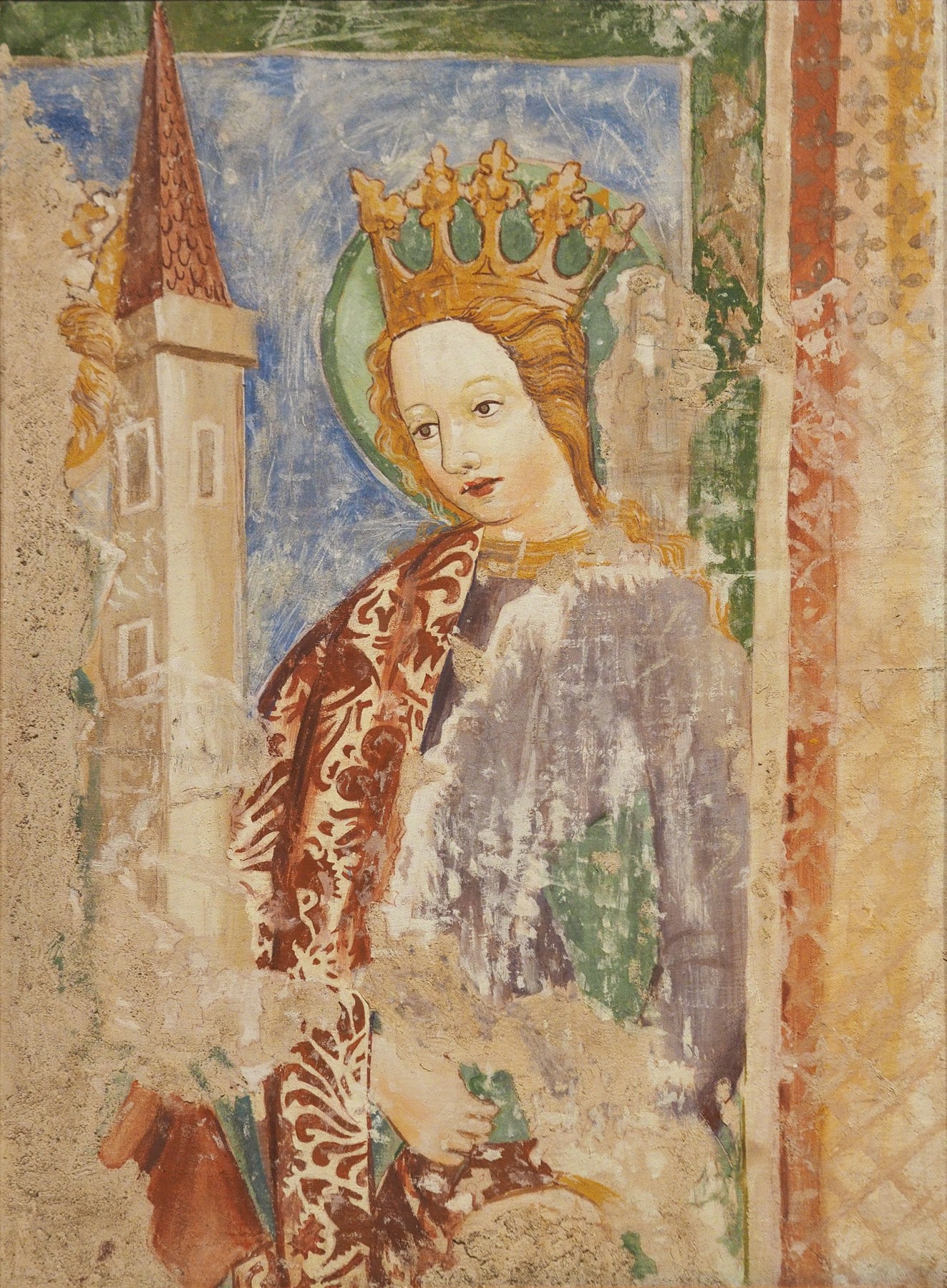
Saint Barbara with the martyr’s crown
Fresco: Saint Barbara with the martyr’s crown · Fresco of 1453, copy of 1949
7 · Heliopolis, the prison

The Appearance of Christ in the Prison

Barely alive from the severe tortures, I prayed with tears in the prison to my beloved Bridegroom, Christ God, that He would not forsake me in such grievous sufferings, and I spoke with the words of David: «Do not forsake me, O Lord, my God! Be not far from me. Make haste to help me, O Lord, my salvation!» (Ps. 37:22–23).

While I was thus praying, at midnight a great light illumined me; I felt both fear and joy together in my heart: my Incorruptible Bridegroom was drawing near, desiring to visit His bride, and behold, the King of Glory Himself appeared to me in ineffable glory. The Lord, looking upon me with love, said to me with His sweetest lips: «Take courage, My bride, and fear not, for I am with you; I guard you, I look upon your struggle and lighten your pains. For your sufferings I am preparing for you in My heavenly chamber an eternal reward; therefore endure to the end, that you may soon delight in the eternal blessings in My Kingdom!»

Hearing the words of the Lord Christ, I melted like wax before the fire with the desire to be united with God. Having comforted me and gladdened me with His love, the Most Sweet Jesus also healed me of my wounds, so that no trace of them remained upon my body; after that He became invisible, leaving me in ineffable spiritual joy. And I remained in the prison as though in heaven, glorifying Him with heart and lips and giving thanks to the Lord for not having despised but having visited His handmaid who was suffering for His Name.

Source — St Demetrius of Rostov, “Lives of the Saints”
Barely alive from the severe tortures, the holy Barbara prayed with tears in the prison to her beloved Bridegroom, Christ God, that He would not forsake her in such grievous sufferings, and she spoke with the words of David: […] Do not forsake me, O Lord, my God! Be not far from me. Make haste to help me, O Lord, my salvation! […] While she was thus praying, at midnight a great light illumined her; the holy one felt both fear and joy together in her heart: her Incorruptible Bridegroom was drawing near, desiring to visit His bride. […] And behold, the King of Glory Himself appeared to her in ineffable glory. […] Take courage, My bride, and fear not, for I am with you; I guard you, I look upon your struggle and lighten your pains. […] For your sufferings I am preparing for you in My heavenly chamber an eternal reward; therefore endure to the end, that you may soon delight in the eternal blessings in My Kingdom! […] the holy Barbara melted like wax before the fire with the desire to be united with God […] the Most Sweet Jesus healed her also of her wounds, so that no trace of them remained upon her body. After that He became invisible, leaving her in ineffable spiritual joy. […] And the holy Barbara remained in the prison as though in heaven, burning like the Seraphim with love for God, glorifying Him with heart and lips and giving thanks to the Lord for not having despised but having visited His handmaid who was suffering for His Name.
The torments of the holy Barbara and Juliana
Painting: The torments of the holy Barbara and Juliana · L. Cranach the Elder, c. 1510
8 · Heliopolis, the place of judgment

Juliana. The Second Torments

There lived in that city a certain woman named Juliana, a believer in Christ. From the time I was seized, she followed my sufferings from afar, and seeing that Christ had healed me of my wounds, she too desired to suffer for Him.

In the morning I was brought out to trial for new tortures; Juliana followed me from afar. When I stood before the governor, he saw with astonishment that I was completely healthy and said: «Do you see, maiden, how our gods care for you? Worship them and offer sacrifices». I answered: «Jesus Christ, my God, Who heals every disease, has healed me; Him I worship. But your mind is blinded, and you cannot see this Divine Healer».

Such speech enraged the governor: he ordered me to be hung on a tree, my body to be scraped with iron hooks, my ribs to be burned with lighted candles, and my head to be struck with a hammer. Juliana, beholding my suffering, could not restrain her tears and began to rebuke the governor; she was immediately seized and declared that she was a Christian. The governor ordered her to be tortured as I was, and hung her with me, and she was scraped with iron combs. Enduring torments myself, I lifted my eyes upward to God and prayed: «Do not forsake me, O Lord, but mercifully regard me and my fellow-sufferer Juliana, strengthen us both and grant us strength to accomplish this present struggle: «The spirit indeed is willing, but the flesh is weak» (Mt. 26:41; Mk. 14:38)».

After this the torturer ordered both our breasts to be cut off. When our suffering increased, I cried out: «Do not take Your Holy Spirit from us, restore to us, O Lord, the joy of Your salvation, and uphold us with a princely spirit in Your love!» (Ps. 50:13–14).

Source — St Demetrius of Rostov, “Lives of the Saints”
There lived in that city a certain woman named Juliana, a believer in Christ and God-fearing. […] Seeing that Christ had healed the holy Great-martyr Barbara of her wounds, she too desired to suffer for Him […] With the coming of day, the holy Great-martyr Barbara was brought out of the prison to the impious trial for new tortures; Juliana followed her from afar. […] he and those with him saw with astonishment that the maiden was completely healthy, radiant of face and even more beautiful than before, and that there were no traces on her body of the wounds she had borne. […] Do you see, maiden, how our gods care for you? Yesterday you were cruelly lacerated and faint from sufferings, and now they have completely healed you and granted you health. Be grateful for such a benefaction – worship them and offer sacrifices. […] Jesus Christ, my God, Who heals every disease and gives life to the dead, has healed me; with gratitude I worship Him and offer myself to Him as a sacrifice. But your mind is blinded, and you cannot see this Divine Healer and are unworthy of it. […] he ordered the martyr to be hung on a tree, her body to be scraped with iron hooks, her ribs to be burned with lighted candles, and her head to be struck with a hammer. […] Juliana could not restrain her tears and wept bitterly. Filled with zeal, she raised her voice from among the people and began to rebuke the merciless governor for his inhuman torture and to revile the pagan gods. She was immediately seized and, when asked what faith she held, declared that she was a Christian. […] Then the governor ordered her to be tortured as Barbara was. Juliana was hung together with Barbara, and she was scraped with iron combs. […] Do not forsake me, O Lord, but mercifully regard me and my fellow-sufferer Juliana, strengthen us both and grant us strength to accomplish this present struggle: […] The spirit indeed is willing, but the flesh is weak […] After this the torturer ordered both their breasts to be cut off. […] Do not take Your Holy Spirit from us, restore to us, O Lord, the joy of Your salvation, and uphold us with a princely spirit in Your love!
Holy Great-martyr Barbara with the martyr’s banner
Painting: Holy Great-martyr Barbara with the martyr’s banner · L. Cranach the Elder, 1510, Kassel
9 · Heliopolis

Naked through the city. The Angel’s Covering

After such tortures the governor ordered Juliana to be taken to prison, and me, for greater shame, to be led naked through the city, with mockery and blows. Covered with shame as with a garment, I cried out to my beloved Bridegroom Christ God: «O God, Who clothest the heaven with clouds and wrappest the earth with mist as with swaddling bands, do Thou Thyself, O King, cover my nakedness and the suffering of the great-martyr Barbara; grant that the eyes of the impious may not see my body and that Thy handmaid may not be utterly mocked!»

The Lord Jesus Christ, looking down from on high with all His holy Angels upon the struggle of His handmaid, at once hastened to my aid and sent me a radiant Angel with a shining garment to cover my nakedness. After that the impious could no longer see my uncovered body, and I was brought back to the torturer. After me the holy Juliana was also led naked through the city.

Finally the torturer, seeing that he could not turn us from love for Christ or incline us to idolatry, condemned both of us to beheading by the sword.

Source — St Demetrius of Rostov, “Lives of the Saints”
the governor ordered the holy Juliana to be taken to prison, and the holy Great-martyr Barbara, for her greater shame, to be led naked through the city, with mockery and blows. […] The holy maiden Barbara, covered with shame as with a garment, cried out to her beloved Bridegroom Christ God: […] O God, Who clothest the heaven with clouds and wrappest the earth with mist as with swaddling bands, do Thou Thyself, O King, cover my nakedness and the suffering of the great-martyr Barbara; grant that the eyes of the impious may not see my body and that Thy handmaid may not be utterly mocked! […] The Lord Jesus Christ, looking down from on high with all His holy Angels upon the struggle of His handmaid, at once hastened to her aid and sent her a radiant Angel with a shining garment to cover the nakedness of the holy martyr. […] After that the impious could no longer see the uncovered body of the martyr, and she was brought back to the torturer. After her the holy Juliana was also led naked through the city. […] the torturer, seeing that he could not turn them from love for Christ or incline them to idolatry, condemned both to beheading by the sword.
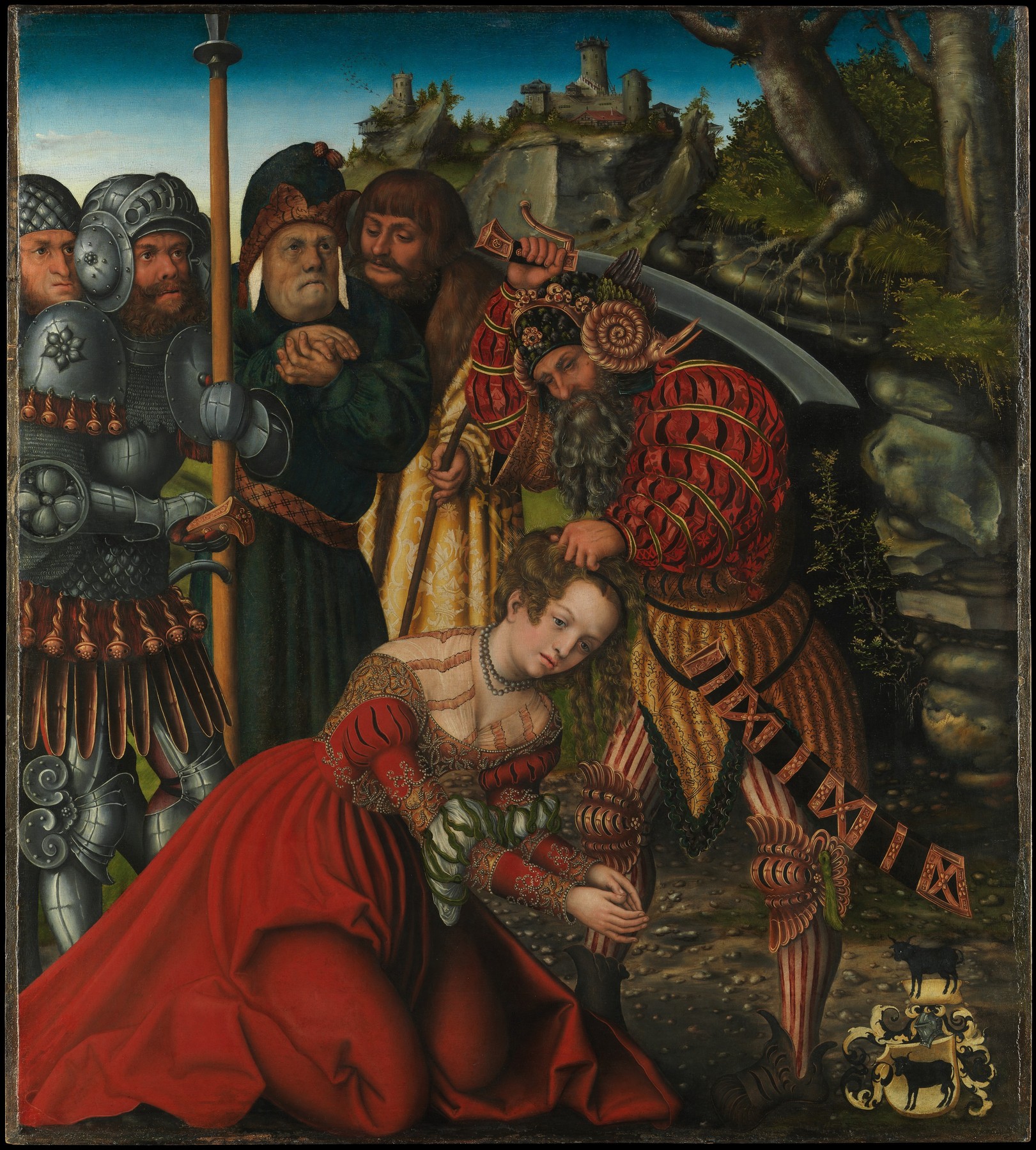
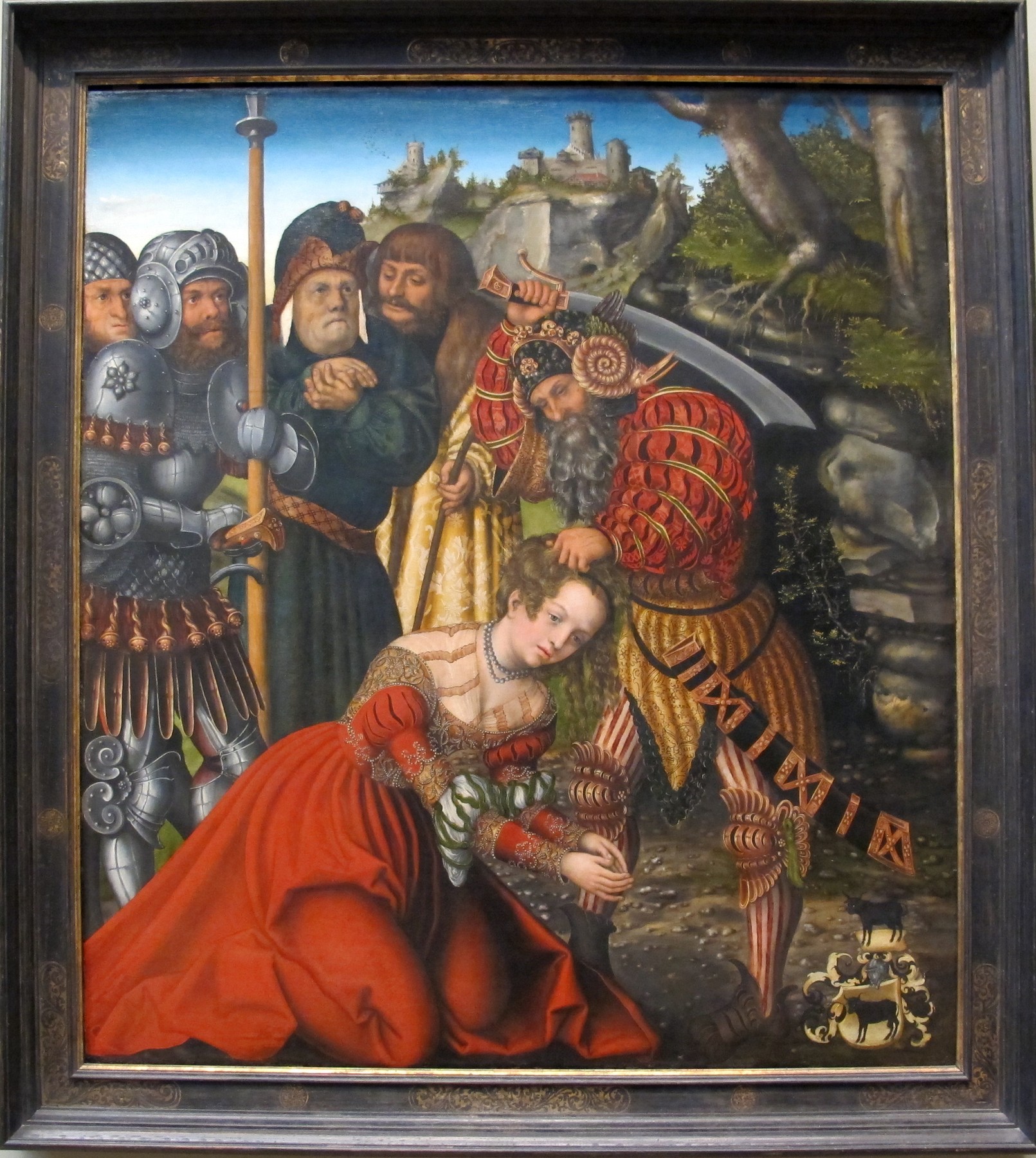
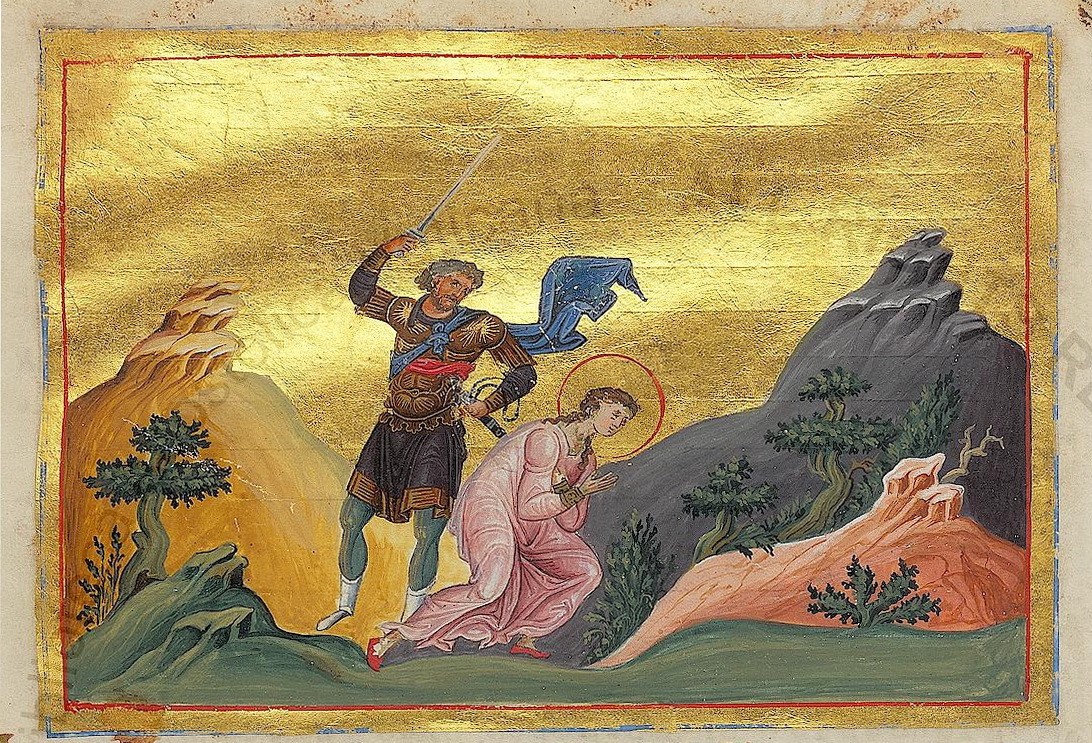
Beheading of the holy Great-martyr Barbara by the sword
Painting: Beheading of the holy Great-martyr Barbara by the sword · Workshop of L. Cranach, c. 1510
10 · The mountain outside the city of Heliopolis

Repose

Dioscor, my hard-hearted father, was so hardened by the devil that he not only did not grieve at seeing the great torments of his daughter, but was not even ashamed to become my executioner. Seizing me and holding a drawn sword in his hand, he dragged me to the place of execution appointed on a mountain outside the city, while one of the soldiers led holy Juliana after us.

As we walked, I prayed to God thus: «O God without beginning, Who hast stretched out the heaven as a covering and established the earth upon the waters, Who commandest Thy sun to rise on the good and the evil and pourest rain upon the righteous and the unrighteous, hearken now also to Thy servant who prayeth to Thee, and grant Thy grace to every man who will remember me and my sufferings, that no sudden illness may come near him, nor unexpected death seize him; for Thou knowest, O Lord, that we are flesh and blood and the creation of Thy most pure hands».

While I was praying thus, a voice was heard from heaven, calling me with Juliana to the heavenly dwellings and promising the fulfilment of what was asked. And we went to death, both martyrs, with great joy, desiring the sooner to be freed from the body and to stand before the Lord. When we reached the appointed place, I, the lamb of Christ, bowed my head beneath the sword and was beheaded by the hands of my merciless father, and the word of Scripture was fulfilled: «the father shall deliver up the child to death» (Mt. 10:21; Mk. 13:12). The soldier beheaded holy Juliana. Thus we accomplished our contest: our souls departed with joy to their Bridegroom Christ, met by Angels and lovingly received by the Master Himself.

Source — St Demetrius of Rostov, “Lives of the Saints”
Dioscor, the hard-hearted father of Barbara, was so hardened by the devil that he not only did not grieve at the sight of the great torments of his daughter, but was not even ashamed to become her executioner. […] Seizing his daughter and holding a drawn sword in his hand, Dioscor dragged her to the place of execution, which was appointed on a mountain outside the city, while one of the soldiers led holy Juliana after them. […] O God without beginning, Who hast stretched out the heaven as a covering and established the earth upon the waters, Who commandest Thy sun to rise on the good and the evil and pourest rain upon the righteous and the unrighteous […] hearken now also to Thy servant who prayeth to Thee, hearken, O King, and grant Thy grace to every man who will remember me and my sufferings, that no sudden illness may come near him, nor unexpected death seize him; for Thou knowest, O Lord, that we are flesh and blood and the creation of Thy most pure hands. […] While she was praying thus, a voice was heard from heaven, calling her with Juliana to the heavenly dwellings and promising her the fulfilment of what was asked. […] And both martyrs, Barbara and Juliana, went to death with great joy, desiring the sooner to be freed from the body and to stand before the Lord. […] When they reached the appointed place, the lamb of Christ, Barbara, bowed her head beneath the sword and was beheaded by the hands of her merciless father, and the word of Scripture was fulfilled: […] the father shall deliver up the child to death […] The soldier beheaded holy Juliana. Thus they accomplished their contest […] Their holy souls departed with joy to their Bridegroom Christ, met by Angels and lovingly received by the Master Himself.
The holy martyrs stand before the Theotokos with the Child
Painting: The holy martyrs stand before the Theotokos with the Child · Unknown master, c. 1450–1500
11 · Heliopolis

The divine punishment and burial — as related by the Life

As the Life relates, immediately after the execution, divine punishment overtook Dioscor and the governor Martian: both were slain by a thunderstorm, and lightning burned their bodies to ashes — thus were the innocent sufferings of the martyrs avenged.

In that city there lived a pious man named Valentian. Taking the honourable relics of the holy martyrs Barbara and Juliana, he brought them into the city, buried them with due honour and built a church over them. In that church many healings were wrought from the relics of the holy martyrs — by the prayers and grace of the Father and of the Son and of the Holy Spirit, one God in Trinity, to Whom be glory unto the ages, amen.

Thus ended the earthly contest of the Great-martyr Barbara. But, as the Life relates, her honourable relics did not remain in Heliopolis even after her death: their path lay far to the north, to a land which she herself did not know in her lifetime.

Source — St Demetrius of Rostov, “Lives of the Saints”
Dioscor and the governor Martian were suddenly overtaken by divine punishment. Immediately after the execution both were slain by a thunderstorm, and lightning burned their bodies to ashes. […] In that city there lived a pious man named Valentian. Taking the honourable relics of the holy martyrs, he brought them into the city, buried them with due honour and built a church over them, in which many healings were wrought from the relics of the holy martyrs, by the prayers and grace of the Father and of the Son and of the Holy Spirit, one God in Trinity.
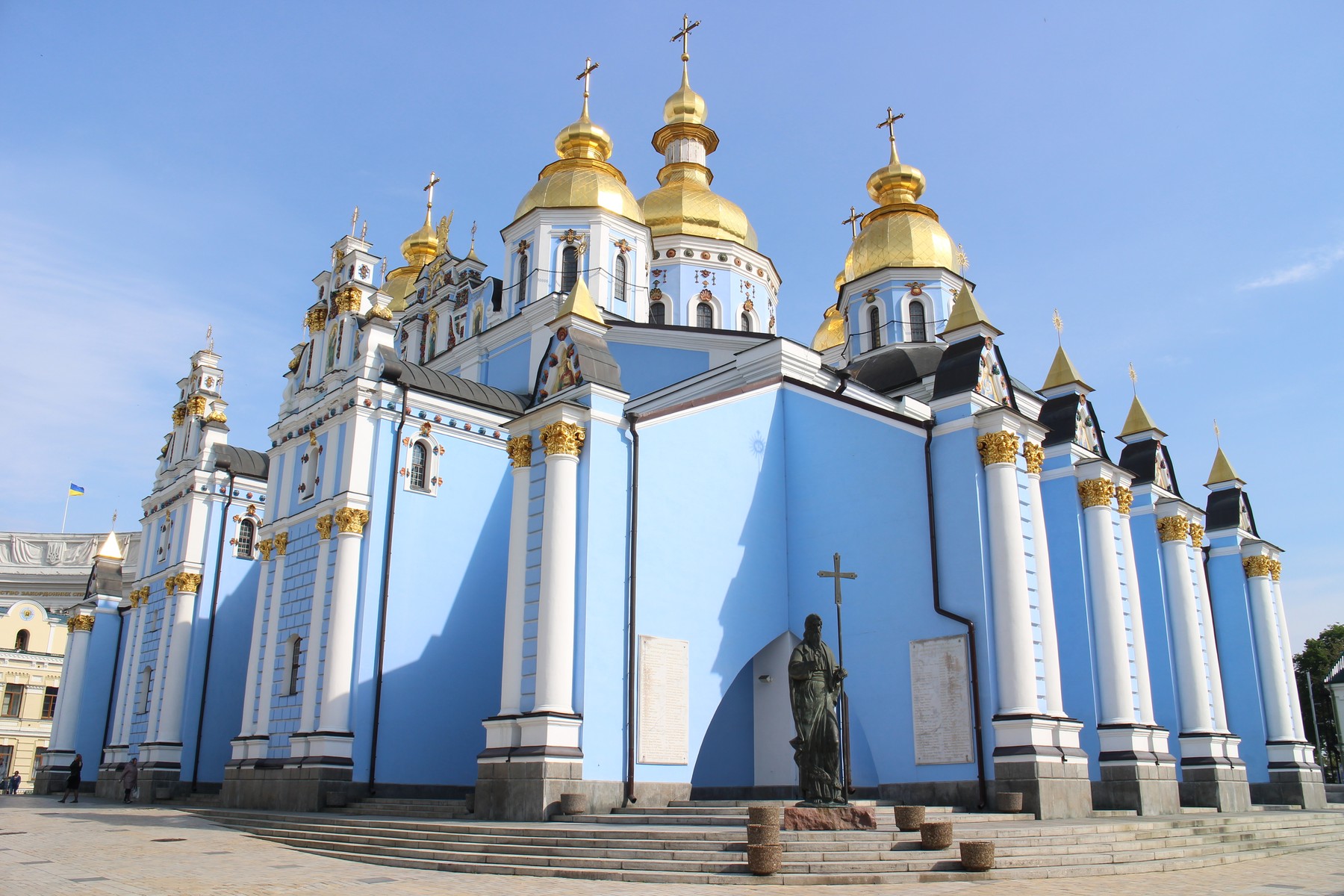
St. Michael’s Golden-Domed Monastery in Kiev
Photograph: St. Michael’s Golden-Domed Monastery in Kiev · Photo by Suicasmo, 2019
12 · Constantinople — Kiev

The translation of the relics to Kiev — as related by the Life

As the Life relates, in later times the honourable relics of the holy Great-martyr Barbara were translated from Greece to Russia, to Kiev, when, after the enlightenment of the Russian land by holy Baptism, the Russian princes were in especially close and friendly relations with the Greek emperors and took their sisters and daughters as wives.

The first wife of the Great Prince of Kiev Svyatopolk Izyaslavich, named Michael in holy Baptism, was the Greek princess Barbara, daughter of the Byzantine Emperor Alexius Comnenus. Before her departure from Constantinople to Russia, Princess Barbara besought her father to grant her the relics of the holy Great-martyr Barbara, which she brought with her to Kiev. Her husband, the Great Prince Michael, having built in Kiev a stone church in the name of the holy Archistrategos Michael, his patron, honourably placed therein the holy relics of the Great-martyr.

During the invasion of the Russian land by the Tatar Khan Batu, the relics of the holy Great-martyr were hidden by the clergy in a secret place beneath the steps of the stone staircase leading to the upper part of the church. Many years after Batu’s devastation, the honourable relics, by God’s good pleasure, were found, taken from under the bushel, and openly laid with honour in the same church.

Source — St Demetrius of Rostov, “Lives of the Saints”
Later the venerable relics of the holy Great-martyr Barbara were transferred from Greece to Russia, to Kiev, when, after the enlightenment of the Russian land with holy baptism, the Russian princes were in especially close and friendly relations with the Greek emperors and took their sisters and daughters as wives. […] The first wife of the Great Prince of Kiev Svyatopolk Izyaslavich, named Michael in holy baptism, was the Greek princess Barbara, daughter of the Byzantine Emperor Alexios Komnenos. […] Before her departure from Constantinople to Russia, Princess Barbara entreated her father to grant her the relics of the holy Great-martyr Barbara, which she brought with her to Kiev. […] Her husband, the Great Prince Michael, having built in 1108 in Kiev a stone church in the name of the holy Archistrategos Michael, his patron, with honour placed in it the holy relics of the Great-martyr. […] During the invasion of the Russian land by the Tatar Khan Batu, the relics of the holy Great-martyr were hidden by the church servants in a secret place beneath the steps of the stone staircase leading to the upper part of the temple. […] Many years after Batu’s devastation, the venerable relics, by God’s good pleasure, were discovered, taken out from under the bushel, and openly laid with honour in the same temple.
Veneration of the relics of the Great-martyr Barbara in Kiev
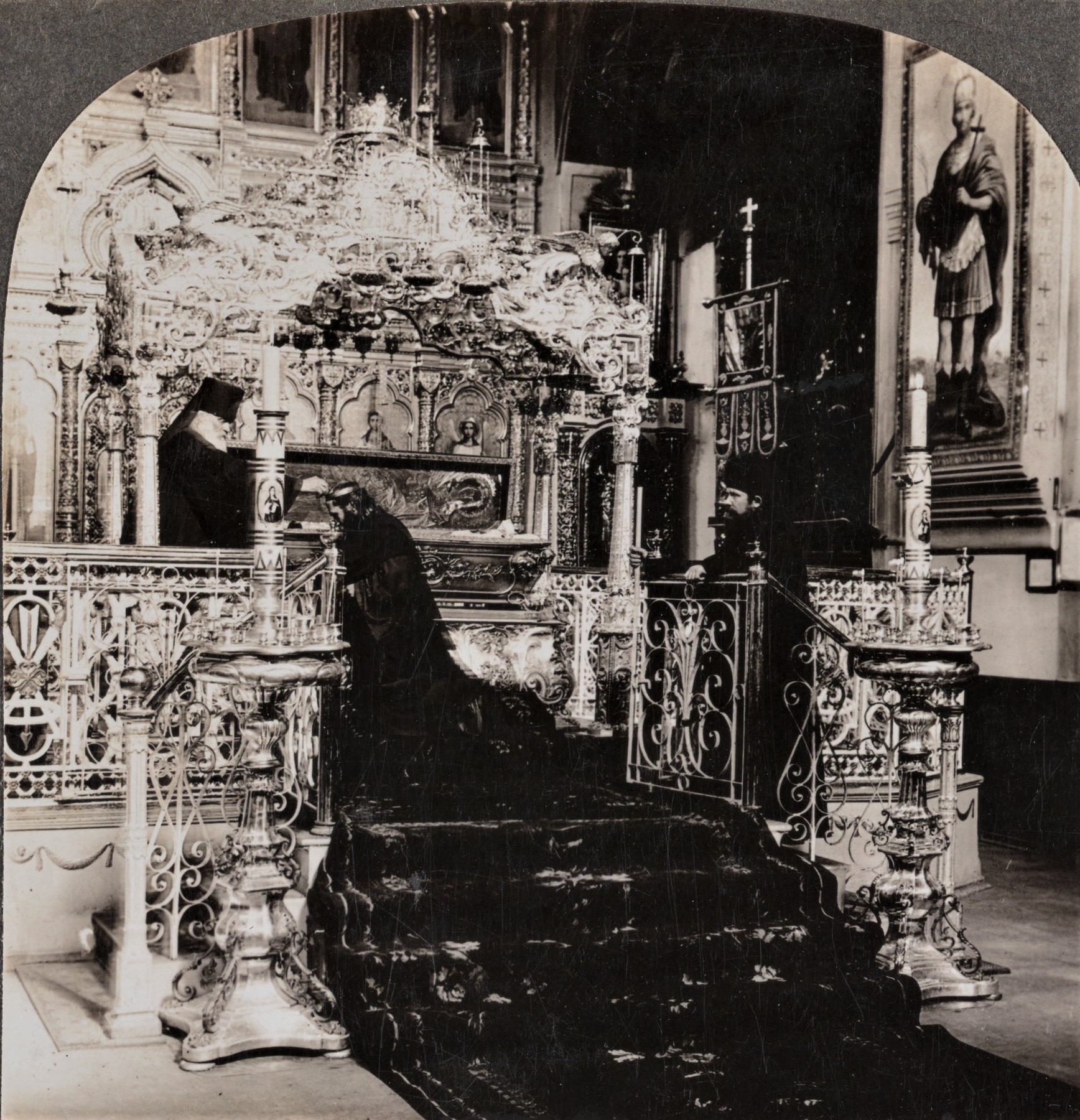
Photograph: Veneration of the relics of the Great-martyr Barbara in Kiev · Photo, late 19th – early 20th c.
13 · Kiev, St. Michael’s Golden-Domed Monastery

Testimonies at the shrine — as the Life relates

As the Life relates, the Chancellor of the Polish Kingdom, George Ossoliński, once visited Kiev. Coming to the church of the Michael Monastery to venerate the venerable relics of the Great-martyr Barbara, he related: «I cherish a deep faith in the help of the holy Great-martyr Barbara, for many testify that whoever entrusts himself to her intercession will not die without repentance and partaking of the Divine Mysteries. I was in Rome and in the western lands and everywhere asked where the relics of the holy Great-martyr Barbara are, in the West or in the East. I was told that in the West the relics of the holy Great-martyr are not found, nor are they in the East, but that they abide in these lands. Now I believe that it is here, in Kiev, that the true relics of the holy Great-martyr Barbara are found». Having venerated the holy relics, the Chancellor received as a gift, on account of his great faith, a portion of the finger of the right hand of the Great-martyr.

There was also in Kiev the Patriarch of Antioch Macarius; with great faith and love and with tears he venerated the venerable relics and related: «In my patriarchate, not far from Antioch, there is a city called Heliopolis, in which the holy Great-martyr Barbara suffered. When I inquired there about her holy relics, I was told that from deep antiquity they are not there, nor in any other place in the East, but that they abide in the Russian land. Now I undoubtedly believe that here rest the true relics of the holy Great-martyr». The Patriarch earnestly asked that a portion of these holy relics be given to him, and his request was granted.

Source — St Demetrius of Rostov, “Lives of the Saints”
The Chancellor of the Polish Kingdom, George Ossoliński, visited Kiev. Coming to the church of the Michael Monastery to venerate the venerable relics of the Great-martyr Barbara, he related the following: […] I cherish a deep faith in the help of the holy Great-martyr Barbara, for many testify that whoever entrusts himself to her intercession will not die without repentance and partaking of the Divine Mysteries. […] I was in Rome and in the western lands and everywhere asked where the relics of the holy Great-martyr Barbara are, in the West or in the East. I was told that in the West the relics of the holy Great-martyr are not found, nor are they in the East, as those who have been there assert, but that they abide in these lands. […] Now I believe that it is here in Kiev that the true relics of the holy Great-martyr Barbara are found. […] Having venerated the holy relics with fervent prayer and having reverently kissed them, the Chancellor asked that some portion of these holy relics be given to him. On account of his great faith, he was given a portion of the finger of the right hand of the holy Great-martyr, which he received with great gratitude. […] the Patriarch of Antioch Macarius was in Kiev. With great faith and love and with tears he venerated the venerable relics of the holy Great-martyr and related the following: […] In my patriarchate, not far from Antioch, there is a city called Heliopolis, in which the holy Great-martyr Barbara suffered. […] from deep antiquity they are not there, nor in any other place in the East, but that they abide in the Russian land, which some call the barbarian land. […] Now I undoubtedly believe that here rest the true relics of the holy Great-martyr. […] The Patriarch earnestly asked that a portion of these holy relics be given to him. His request was granted by the Metropolitan of Kiev Sylvester, and the Patriarch received a portion of the holy relics with great joy and thanksgiving.
The Great-martyr Barbara in the most ancient depiction
Miniature: The Great-martyr Barbara in the most ancient depiction · Menologion of Basil II, 10th c.
14 · Kiev, St. Michael’s Golden-Domed Monastery

Miracles from the venerable relics — as the Life relates

As the Life relates, many miracles and healings from the holy relics of the Great-martyr took place in St. Michael’s Golden-Domed Monastery. The Archbishop of Chernihiv Lazar Baranovych, even before he occupied the episcopal see, related in one of his books: «Afflicted with a grave illness, I turned to no other physician, but hastened with prayer to the relics of the holy Great-martyr Barbara, with faith drank the water in which the hand of the Great-martyr had been dipped, and the cup of this water was unto my salvation».

A certain warrior, coming to the church to the venerable relics, venerated them with great reverence and related: «Once, while I was with the regiment, I rode out with my comrades to mow hay, and behold, the Tatars attacked us and took all my comrades captive; I alone was saved. When I was thanking God for my deliverance, the holy virgin Barbara appeared to me in exactly the same garment and crown as she lies here, and said to me: “Know that I am the martyr Barbara, who delivered you from the Tatars.” And so I have come here to her holy relics to thank her for her wondrous intercession».

Likewise a certain citizen of Slutsk, whose withered hand was healed through prayer to the Great-martyr, brought to her relics a hand made of silver as a token of healing, and asked that it be hung by the shrine of the saint.

Source — St Demetrius of Rostov, “Lives of the Saints”
Many miracles and healings have been wrought and continue to be wrought from the holy relics of the Great-martyr in the Michael the Archangel Golden-Domed Monastery. […] Archbishop Lazar Baranovich of Chernigov, even before he ascended the episcopal cathedra, […] Suffering from a grievous illness, I turned to no other physician, but hastened with prayer to the relics of the holy Great-martyr Barbara; with faith I drank the water in which the hand of the Great-martyr had been dipped, and a cup of this water was unto my salvation. […] One soldier, coming into the church to the venerable relics of the holy Great-martyr Barbara, venerated them with great reverence and, sighing, related to the sacristan and many others the following: […] Once, while I was with my regiment, I rode out with my comrades to mow hay, and behold, the Tatars fell upon us and took all my comrades captive; I alone was saved. […] When I was thanking God for my deliverance and grieving for my comrades, the holy virgin Barbara appeared to me in exactly the same garments and crown in which she lies here, and said to me: «Know that I am the martyr Barbara, who has delivered you from the Tatars». […] And so I have come here to her holy relics to thank her for her wondrous intercession and to tell you of this miracle. […] There came to him a certain citizen of Slutsk who brought him a hand made of silver and asked that it be hung by the relics of the holy Great-martyr Barbara. […] My hand was afflicted with a grievous disease and was so contracted that I could not even straighten it. […] And so, by the help of holy Barbara, my contracted hand was healed; and I, fulfilling my vow, have come here with thanksgiving and have brought this silver hand to the holy relics of the Great-martyr as a token of the healing of my own hand.
The Church sings

Troparion, tone 8

Let us honor Saint Barbara:/ for you crushed the enemy’s snares/ and like a bird got rid of them,// with the help and weapon of the Cross, O all-honorable one.

Prayers to the Great-martyr BarbaraSt Dimitry of Rostov, “Lives of the Saints”, in our libraryAll lives