ORTHODOX HOUSENewsCommunityCalendarPrayer BookLives of the Saints
Venerable Anthony the Great
Lives of the Saints · the saint tells his own story

Venerable Anthony the Great

Commemorated: 17 (30) January · 251–356 · Egypt (Thebaid)
«I am from Egypt. My parents were people of noble birth and known for their Christian piety…»
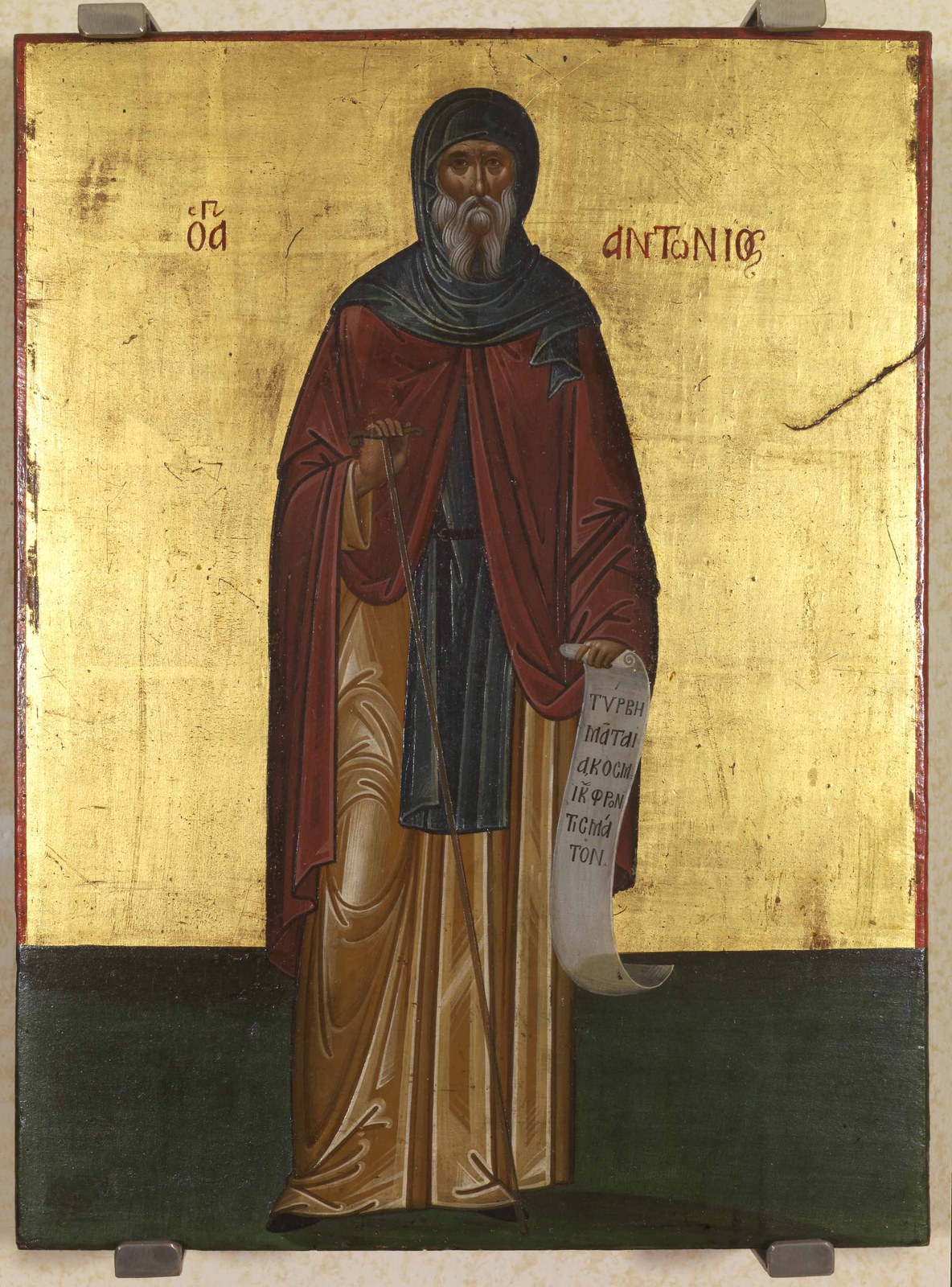
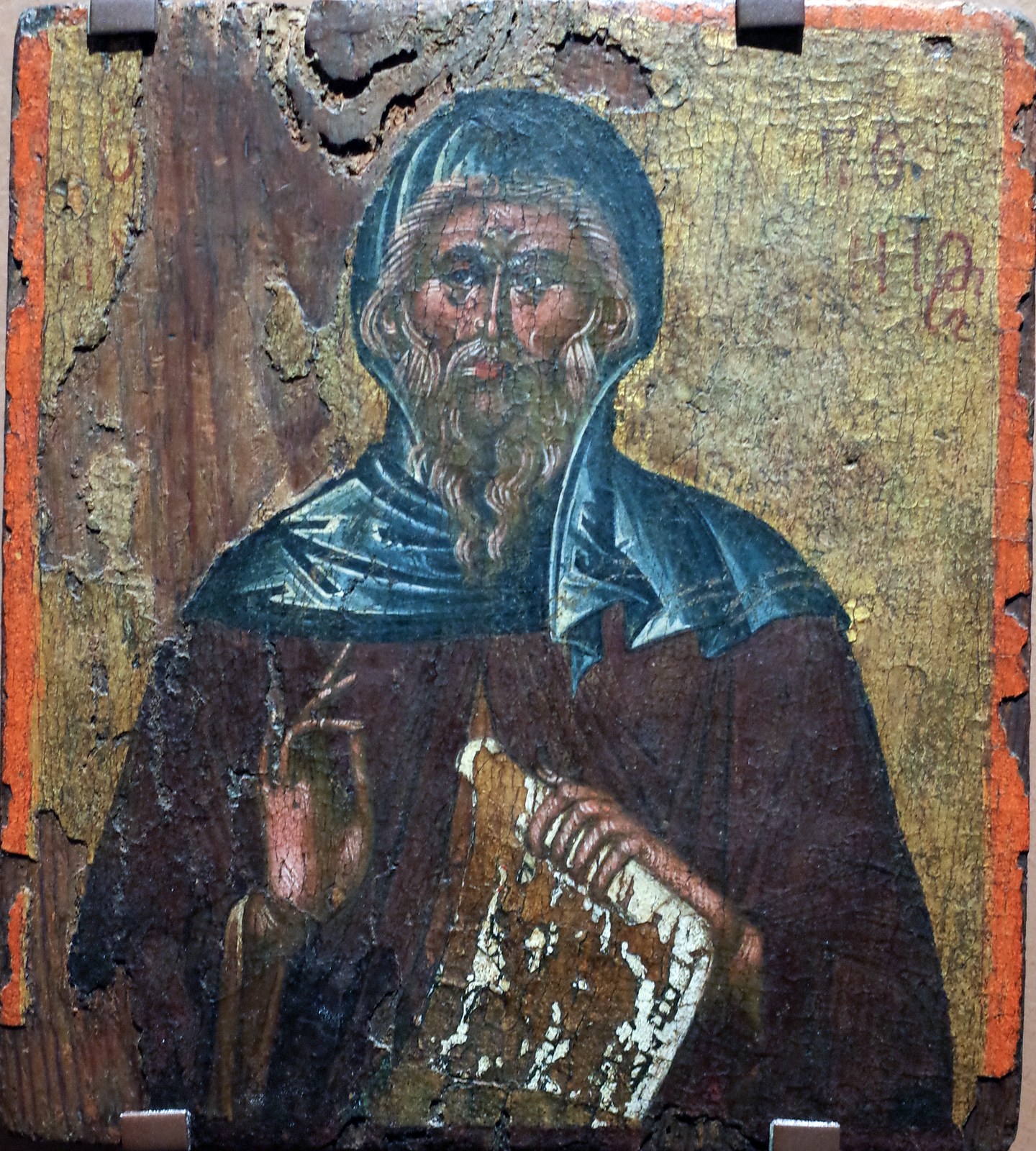
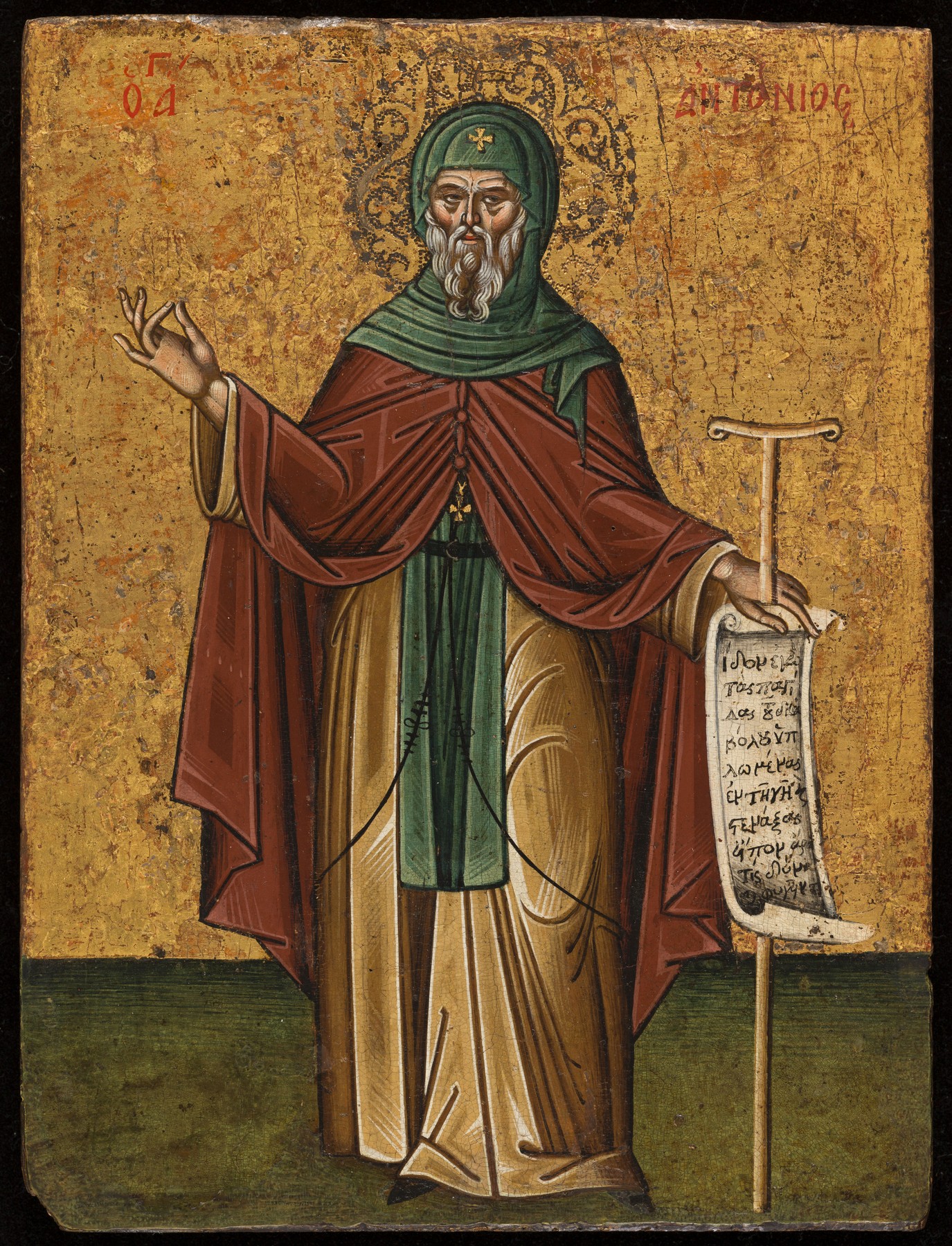
Venerable Anthony the Great. Cretan school of iconography, late 16th – early 17th century. Petit Palais, Musée des Beaux-Arts de la Ville de Paris, inv. PPP4882. Public domain.
How this is made. First-person narrative — a close literal retelling of this Life; not a single fact that is absent from the source. St Dimitry of Rostov retells the Life of Venerable Anthony with direct references to the biography compiled by St Athanasius the Great. Beneath each excerpt is the text of St Dimitry himself. Source: St Dimitry of Rostov. Lives of the Saints. Month of January, day 17 (incorporating information from the Life compiled by St Athanasius the Great, Archbishop of Alexandria) — The Life of Our Venerable Father Anthony the Great. The face is an authentic icon; the light and breathing make it a “living icon”, with no talking lips. The pictures beside the passages are the border scenes of the icon of his life. There is no voice: the reading is yours.
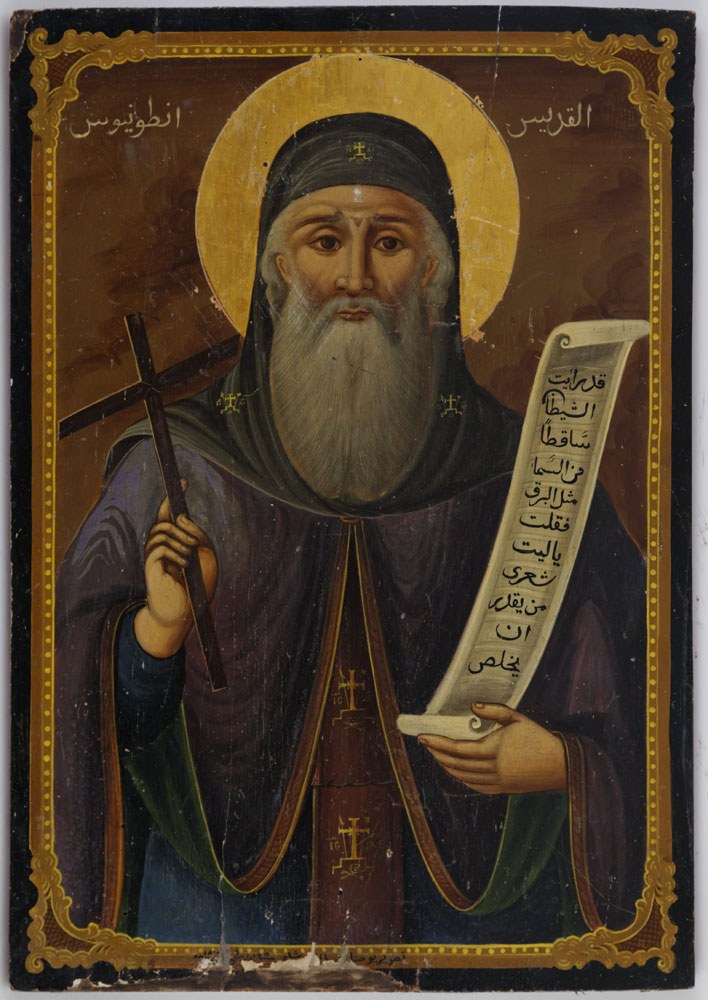
Venerable Anthony the Great
Icon: Venerable Anthony the Great · Coptic icon, 19th–20th c.
1 · Egypt

Egypt. Childhood and Youth

I am from Egypt. My parents were people of noble birth and known for their Christian piety; they brought me up so that I knew no one but them and my own home.

When I reached boyhood, I was in no hurry either to take up studies or to associate with other boys, but remaining in my house I preserved the purity of my heart and strove to advance in piety. I did not indulge in the amusements of boyhood, but loved to go with my parents to the house of God and, listening there to the readings from the Divine Scriptures, I strove to draw from them all possible benefit for myself and to live exactly as they taught. I did not ask the elders for sweet food, as is natural for children, and in general paid little attention to food, always being content with what was given me.

When I was about twenty years old, my parents died, and I was left with my younger sister; at first I took care of the house and of the proper upbringing of my sister.

Source — St Demetrius of Rostov, “Lives of the Saints”
Venerable Anthony was from Egypt […] His parents were people of noble birth and known for their Christian piety; they brought up their son so that he knew no one but them and his own home […] he was in no hurry either to take up studies or to associate with other boys, but remaining in his house he preserved the purity of his heart and strove to advance in piety […] Anthony loved to go with his parents to the house of God and, listening there to the readings from the Divine Scriptures, he strove to draw from them all possible benefit for himself and to live exactly as they taught […] He did not ask the elders for sweet food, as is natural for children, and in general paid little attention to food, always being content with what was given him […] The parents of Venerable Anthony died when he was about twenty years old […] Left after them with his younger sister, at first he took care of the house and of the proper upbringing of his sister.
Venerable Anthony the Great
Icon: Venerable Anthony the Great · Cretan school, 16th–17th c.
2 · Egypt

The words of the Gospel in the temple. The sale of the estate

Often, as was my custom, visiting the temple, I heard from the Divine books read there how the apostles, leaving everything, followed the Saviour, and how, according to the testimony of the book of the Acts of the Apostles, many of the Christians sold their possessions and laid the price of what was sold at the apostles’ feet for distribution to those in need. I reflected on how firm was the faith of these people and what great reward was prepared for them in heaven.

With such thoughts I once came to the temple and there suddenly heard again the words of Christ spoken to the rich young man: «If you would be perfect, go, sell what you possess and give to the poor; and you will have treasure in heaven; and come, follow Me» (Mt 19:21). I accepted this as a reminder from above — as if Christ had spoken these words to me personally — and immediately upon leaving the temple I sold my property, and the large sum received from the sale I distributed to the poor, keeping only a small part of it for my weak and young sister.

I had three hundred very good date palms, rich in fruit, and I gave them to my neighbours, so as to free both myself and my sister from all care concerning them.

Source — St Demetrius of Rostov, “Lives of the Saints”
Often, as was his custom, visiting the temple, he heard from the Divine books read there how the apostles, leaving everything, followed the Saviour, and how, according to the testimony of the book of the Acts of the Apostles, many of the Christians sold their possessions and laid the price of what was sold at the apostles’ feet for distribution to those in need […] Anthony reflected on how firm was the faith of these people and what great reward was prepared for them in heaven […] there he suddenly heard again the words of Christ spoken to the rich young man: «If you would be perfect, go, sell what you possess and give to the poor; and you will have treasure in heaven; and come, follow Me» […] Anthony accepted this as a reminder from above — as if Christ had spoken these words to him personally — and immediately upon leaving the temple he sold his property, and the large sum received from the sale he distributed to the poor, keeping only a small part of it for his weak and young sister […] He had three hundred very good date palms, rich in fruit, and he gave them to his neighbours, so as to free both himself and his sister from all care concerning them.
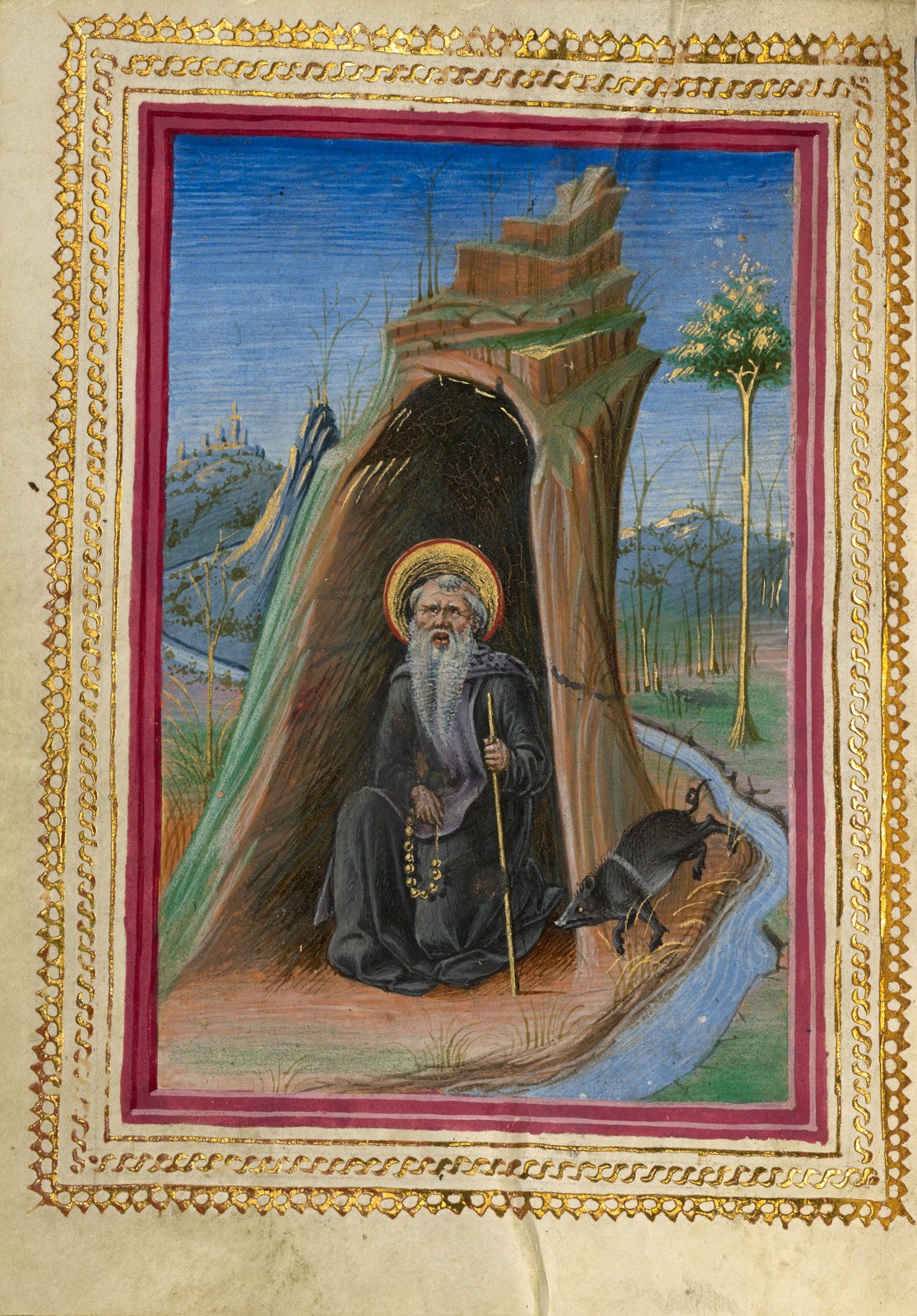
Venerable Anthony the Great
Miniature: Venerable Anthony the Great · T. Crivelli, miniature, 1469.
3 · Egypt, environs of the village

«Take no thought for the morrow». The sister and the beginning of the hermit life

When, soon after this, I again came to the temple and heard the words of the Lord in the Gospel: «Take no thought for the morrow» (Mt 6:34), — I immediately went out and distributed to those in need the remaining part of my property as well.

No longer wishing to live in my own house, I entrusted my sister to faithful and well-known virgins who had dedicated themselves to the service of the Bridegroom — Christ, so that she might be brought up among them by the example of their life; and I myself began to lead a severe and strict ascetic life. At that time there were still few monasteries in Egypt, and the hermit life was not yet widespread; but everyone who wished to serve Christ and to be saved exercised himself in virtue by settling somewhere near his own village.

At no great distance from my village there lived an elder who from his youth had devoted himself in solitude to monastic labours. Having met him and received benefit for my soul from this, I began to imitate him and also to seek solitude in various places near my village. If after this I happened to hear of some hermit, I, like a prudent bee, would set out to seek him and would not return until I had found the one I sought and through meeting and conversing with him had drawn, like a bee drawing honey, some benefit for myself.

Source — St Demetrius of Rostov, “Lives of the Saints”
Soon after this, when he again came to the temple and heard the words of the Lord in the Gospel: «Do not worry about tomorrow» (Mt. 6:34), he immediately went out and distributed to those in need the remaining part of his property […] Not wishing to live any longer in his own house, he entrusted his sister to faithful and well-known virgins […] who had dedicated themselves to the service of the Bridegroom – Christ, that she might be brought up among them by the example of their life; and he himself began to lead a harsh and strict ascetic life […] At that time there were still few monasteries in Egypt and desert-dwelling was not yet widespread; but everyone who wished to serve Christ and to be saved exercised himself in virtue by settling somewhere near his own village […] not far from the village of Anthony there lived an elder who from his youth had devoted himself in solitude to monastic labors. Having met with him and received benefit for his soul from this, Anthony began to imitate him and likewise to seek solitude in various places near his own village […] he, like a wise bee, would set out to seek it and would not return until he had found what he sought and, through meeting and conversing with him, had extracted – as a bee extracts honey – some benefit for himself.
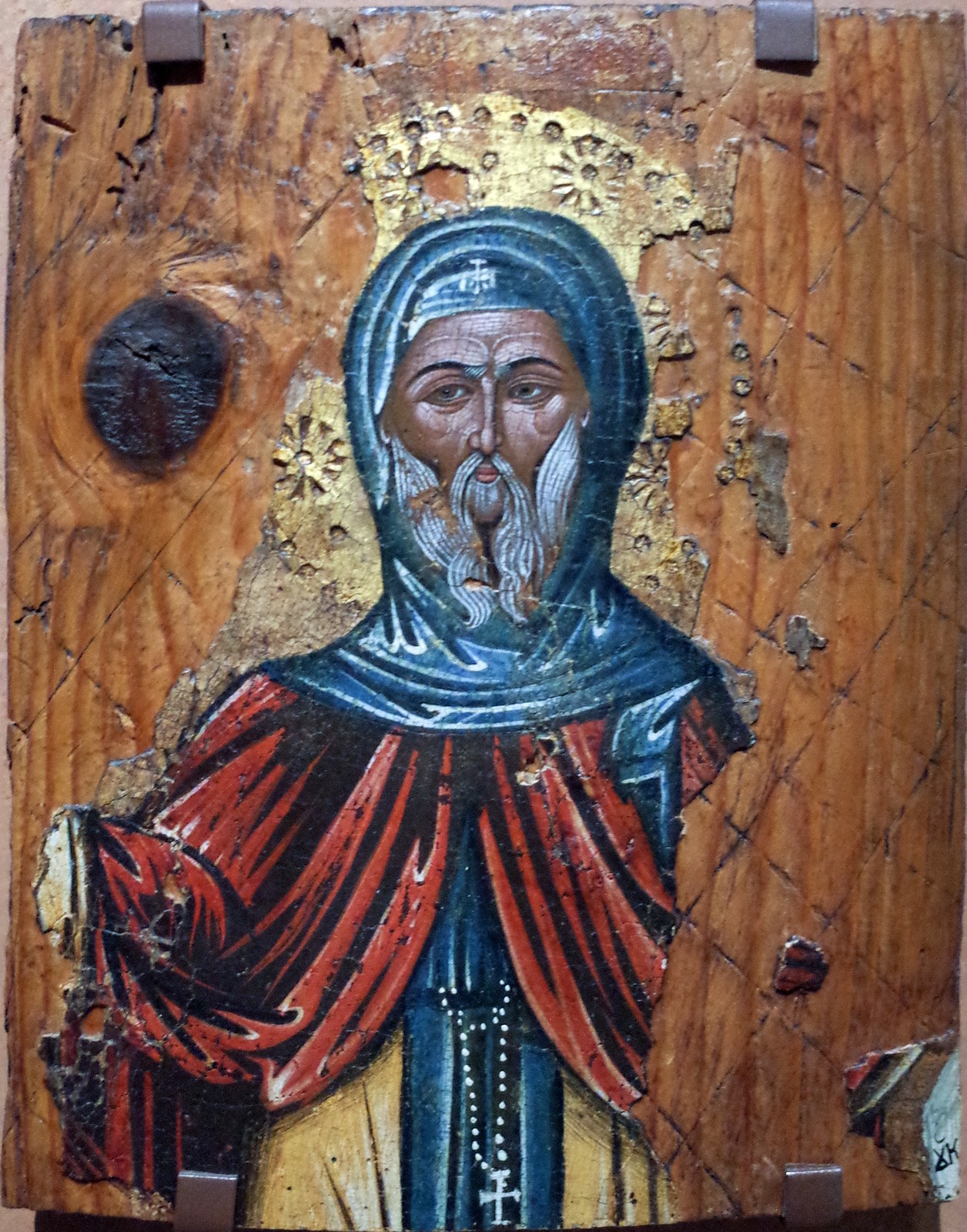
Venerable Anthony the Great
Icon: Venerable Anthony the Great · Thessaloniki, 18th cent.
4 · Egypt, environs of the village

Among the hesychasts. Labor and prayer

Such were my first labors; progressing in them, I strengthened my thoughts more and more in the good direction. At the same time I obtained my sustenance by the labor of my hands, remembering the words of Scripture: «if anyone is not willing to work, let him not eat» (2 Thess. 3:10). With the money received from the sale of my handiwork I bought bread and fed the hungry; my soul was in constant prayerful communion with God, for I knew from Scripture that one must pray without ceasing (1 Thess. 5:17).

I listened to the reading of the Holy Scriptures with such deep attention that I forgot absolutely nothing of what was read, and by strictly observing all the Lord’s commandments, memory began to serve me instead of the sacred books themselves.

Thus I lived, and all the brethren to whom I came to receive benefit for my soul loved me; and, remaining in subjection to them, I learned virtue from them – in which each one especially excelled: I strove to imitate one in abstinence, another in vigilance, one in meekness, another in sleeplessness, yet another in attentiveness to what was read; from one I learned the labors of fasting, at another I marveled at lying on the bare ground, I praised the humility of one and the patience of another. Having gained the love of them all and received benefit for myself from all, I would return to my cell and there, reflecting on everything I had seen, I strove to appropriate and combine within myself the virtues of all.

Source — St Demetrius of Rostov, “Lives of the Saints”
Such were the first labors of the blessed one; progressing in them, he strengthened his thoughts more and more in the good direction […] he obtained his sustenance by the labor of his hands, remembering the words of Scripture: «if anyone is not willing to work, let him not eat» […] With the money received from the sale of his handiwork he bought bread and fed the hungry; his soul was in constant prayerful communion with God, for he knew from Scripture that one must pray without ceasing […] He listened to the reading of the Holy Scriptures with such deep attention that he forgot absolutely nothing of what was read, and by strictly observing all the Lord’s commandments, memory began to serve him instead of the sacred books themselves […] Thus Anthony lived, and all the brethren to whom he came to receive benefit for his soul loved him; and, remaining in subjection to them, he learned virtue from them […] he strove to imitate one in abstinence, another in vigilance, one in meekness, another in sleeplessness, yet another in attentiveness to what was read; from one he learned the labors of fasting, at another he marveled at lying on the bare ground, he praised the humility of one and the patience of another […] Having gained the love of them all and received benefit for himself from all, he would return to his cell and there, reflecting on everything he had seen, he strove to appropriate and combine within himself the virtues of all.
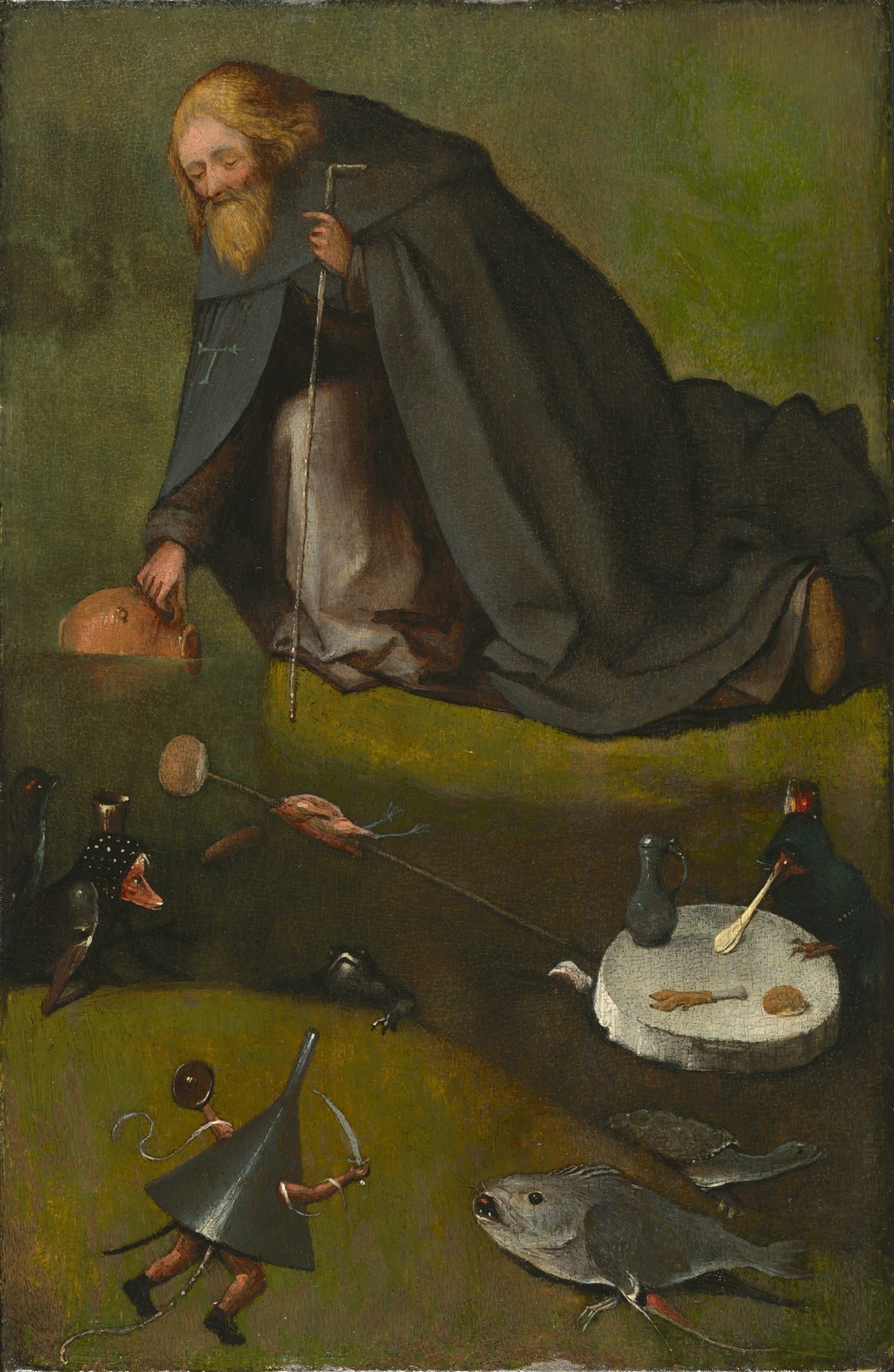
The Temptation of Saint Anthony
Painting: The Temptation of Saint Anthony · H. Bosch, ca. 1500–1510
5 · Egypt, environs of the village

Struggle with the spirit of fornication

When I was thus progressing and being strengthened in good, the enemy of the Christian name – the devil – being unable to bear such virtues in me, rose up against me with his ancient cunning, trying to turn me away from my good intentions through deception. He brought to my mind thoughts of the property I had sold, of my sister’s lack of provision, of the nobility of my family, of vain worldly glory, and of the pleasure of various foods.

When the devil saw himself defeated through my prayers to God, my patience and faith, he turned to the temptations usual in youth: he began to trouble me with nocturnal fantasies, fear and apparitions. He cast unclean thoughts into me – I drove them away with unceasing prayer; he took at night the form of a beautiful woman, trying to arouse passion in me, but I quenched it with the thought of the inextinguishable fire of Gehenna.

Then he appeared to me visibly – in the form of a black and terrible youth, who with weeping said in a human voice: «Many have I led into temptation, many have I deceived, but now I am defeated by your labors.» – «Who are you?» I asked. «I am the tempter to fornication,» he answered, «by manifold wiles I try to draw all young men into this sin, and therefore I am called the spirit of fornication»: I am he of whom the prophet Hosea accuses the fallen: «the spirit of fornication has led them astray» (Hos. 4:12).

Having heard this, I gave thanks to the Lord and with even greater fearlessness said to the enemy: «In many things you are put to shame, in many things you are disgraced; now I no longer fear you at all: the Lord is my helper – I will look upon my enemies» (Ps. 117:7). At these words the apparition immediately vanished without a trace.

Source — St Demetrius of Rostov, “Lives of the Saints”
As Anthony was thus advancing and being strengthened in virtue, the enemy of the Christian name – the devil – being unable to bear such virtues in a youth, rose up against him with his ancient cunning and began to try to turn him away from his good intentions through enticement […]. He brought to his mind the thought of the property that had been sold and distributed, the uncertain future of his sister, the nobility of his family, the vain glory of the world, and the pleasure that could be obtained from various foods […]. But when the devil saw himself defeated by Anthony through his prayers to God, his patience and faith, he turned to the temptations usual in youth: he began to trouble him with nocturnal fantasies, fear and apparitions […]. He cast unclean thoughts into him, but Anthony drove them away with unceasing prayer […]. The devil would take on at night the form of a beautiful woman and in every way tried to arouse passion in Anthony, but he quenched it with the thought of the inextinguishable fire of Gehenna and the undying worm […]. Then he appeared to him visibly – in the form of a black and terrible youth, who with weeping spoke thus in a human voice: – Many have I led into temptation, many have I deceived, but now I am conquered by you as by other saints through your ascetic labors […]. Who are you, that you speak thus of yourself? – asked the blessed Anthony […]. I am the tempter to fornication, – answered the devil, – by manifold wiles I strive to incline all young men to this sin, wherefore I am also called the spirit of fornication […]. I am he of whom the prophet Hosea also reproaches the fallen, saying: «for the spirit of fornication hath caused them to err» (Hos. 4:12) […]. When Anthony heard this, he gave thanks to the Lord and with even greater fearlessness than before said to the enemy: – In many things thou art put to shame, in many things thou art put to confusion […]. Now I no longer fear thee: «The Lord is my helper; I will look upon mine enemies» (Ps. 117:7). At these words of Anthony the apparition immediately vanished without a trace.
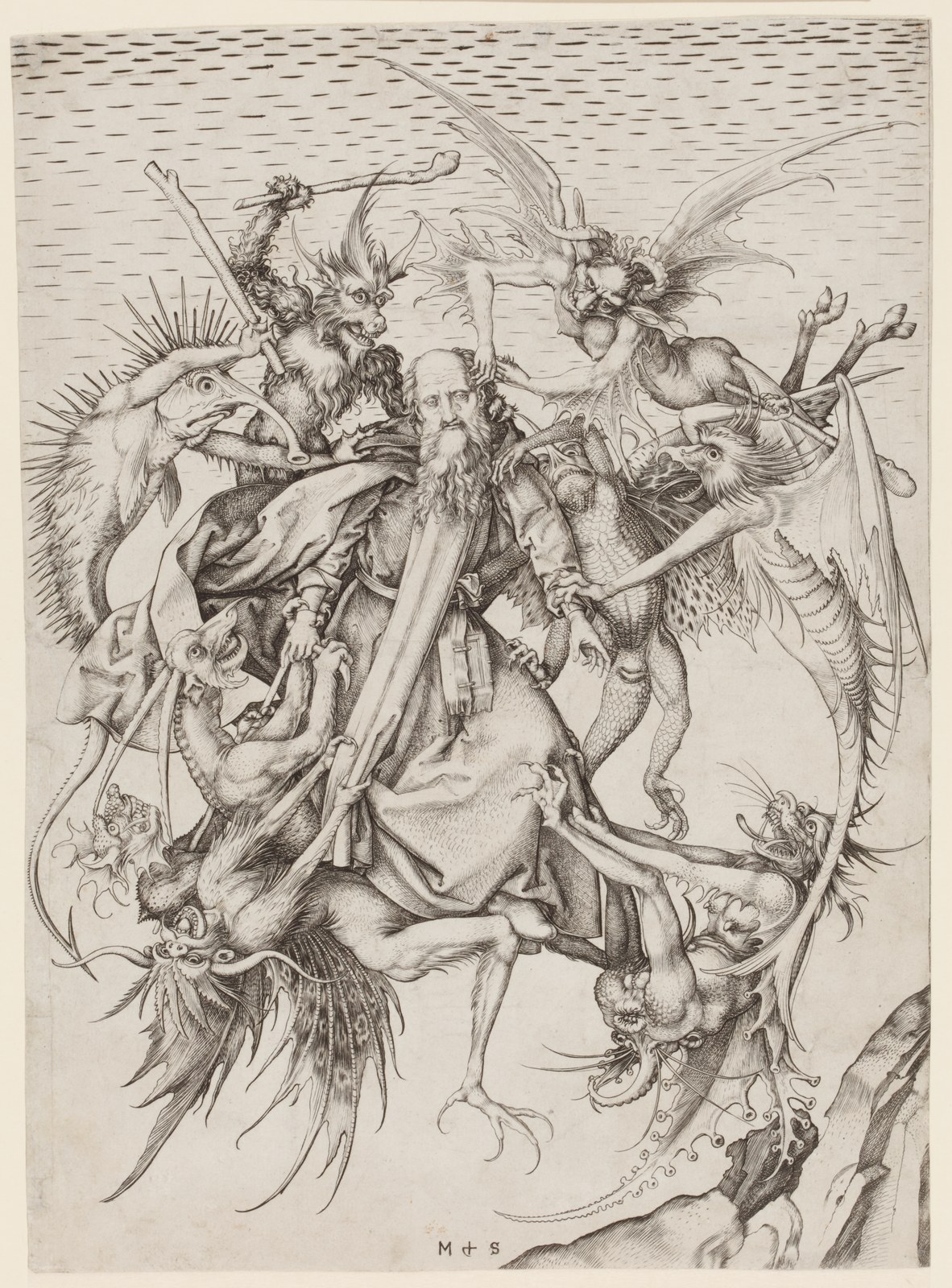
Saint Anthony Tormented by Demons
Engraving: Saint Anthony Tormented by Demons · M. Schongauer, engraving, ca. 1470
6 · Tomb near the village

Tomb. Beating by the demons

But even after this first victory I did not fall into carelessness about myself, for after one defeat the devil’s strength had not yet weakened: he «walketh about, as a roaring lion, seeking whom he may devour» (1 Pet. 5:8). I went to the tombs that were not far from the village, first asking one of my acquaintances to bring me food on appointed days. He locked me in one of these tombs, and there, in solitude, I gave myself to silence.

Seeing this, the devil feared that I would arm myself against him with the ascetic labor of the desert: gathering demons, by God’s permission he subjected me to such terrible beatings that afterwards I lay motionless and speechless; the torments inflicted on me surpassed all human sufferings.

After several days the aforementioned acquaintance of mine came to me, bringing the usual food. Opening the doors and seeing me lying on the ground as if dead, he lifted me up and carried me to his village. But at midnight, when all were sound asleep from weariness, I began gradually to come to myself; noticing that only the one who had brought me there was not asleep, I asked him, without waking anyone, to carry me back to the former place – which was done, and I again began to live in solitude.

Having no strength, because of the wounds, to stand on my feet, I prayed lying face down and after the prayer cried out loudly: «Demons! Here I am, Anthony. I do not avoid combat with you; know that even if you do something greater than before, nothing can separate me from the love of Christ.» And I sang then: «Though a host should encamp against me, my heart shall not fear» (Ps. 26:3).

Source — St Demetrius of Rostov, “Lives of the Saints”
However, neither did Anthony fall into carelessness about himself after this one victory, nor had the devil’s strength yet weakened after one defeat, because he «walketh about, as a roaring lion, seeking whom he may devour» (1 Pet. 5:8) […]. Therefore Anthony increasingly exhausted and subjected his body […]. Therefore he went to the tombs that were not far from the village, first asking one of his acquaintances to bring him food on appointed days. He locked him in one of these tombs and there, in solitude, the blessed one gave himself to silence […]. At the sight of this, the devil began to fear that in time Anthony would arm himself against him with the ascetic labor of the desert: gathering demons, by God’s permission he subjected him to such terrible beatings that afterwards the blessed one lay motionless and speechless […] the torments inflicted on him surpassed all human sufferings […] After several days the aforementioned acquaintance of his came to Anthony, bringing the usual food. Opening the doors and seeing him lying on the ground as if dead, he lifted him up and carried him to his village […] at midnight, when all were sound asleep from weariness, Anthony began gradually to come to himself; sighing and raising his head, he noticed that only the one who had brought him there was not asleep. Calling him to himself, he began to ask him, without waking anyone, to carry him back to the former place, which was done, and Anthony again began to live in solitude […]. Having no strength, because of the wounds, to stand on his feet, he prayed lying face down and after the prayer cried out loudly: – Demons! Here I am, Anthony. I do not avoid combat with you; know that even if you do something greater than before, nothing can separate me from the love of Christ […] The blessed one sang at the same time: – «Though a host should encamp against me, my heart shall not fear» (Ps. 26:3).
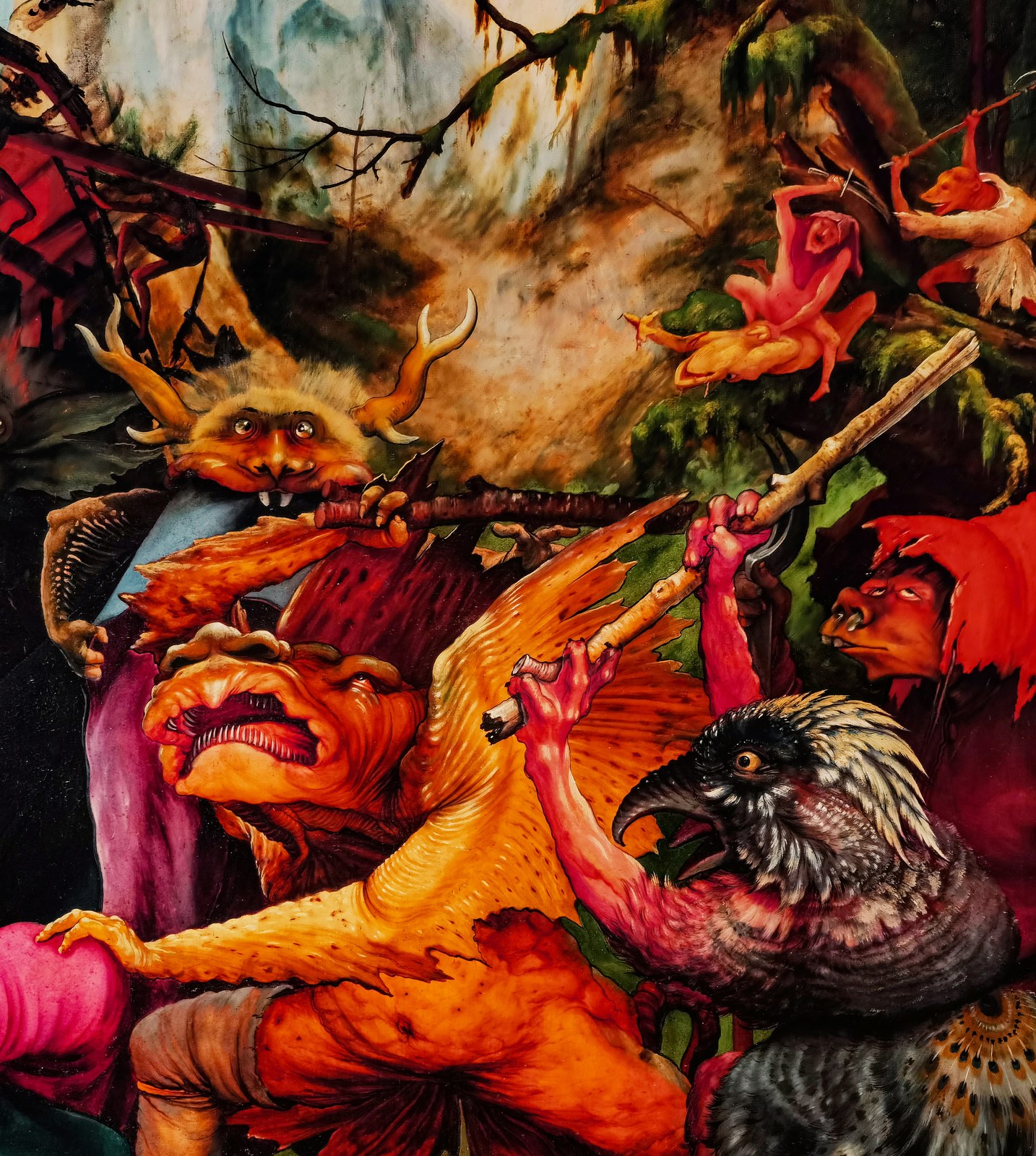
The Temptation of Saint Anthony the Great (fragment of the Isenheim Altarpiece)
Painting: The Temptation of Saint Anthony the Great (fragment of the Isenheim Altarpiece) · M. Grünewald, Isenheim Altarpiece
7 · Tomb near the village

Demons as beasts. Appearance of the light

The hater of good, amazed that I had dared to return here after such beatings, calls together his demons and says to them with fury: «We have not succeeded in conquering him either by the spirit of fornication or by bodily wounds – arm yourselves therefore each for an even stronger and more persistent struggle with him.» And suddenly there was such a crash that the place itself was shaken to its foundations, and the walls collapsed; and immediately there rushed in and filled my dwelling a multitude of demons who appeared in the form of phantoms of lions, wolves, asps, snakes, scorpions, lynxes and bears, and each displayed its fury in a manner corresponding to its appearance.

Struck and tormented by them, I endured the most agonizing sufferings, but did not fall into fear and preserved courage and clarity of mind, saying to them: «If you had any strength at all, even one of you would suffice for combat with me, but since the Lord has taken away your power, you try to frighten with your multitude. The sign of the Cross and faith in God serve us as an impregnable wall of defense.»

Raising my gaze upward, I saw that the vault of the tomb had opened above me and a bright ray was descending upon me, dispelling the darkness. With the appearance of the light not one of the demons remained, and the bodily pain instantly ceased. I cried out then: «Where wast Thou, merciful Jesus? Where wast Thou and why didst Thou not appear from the beginning to heal my wounds?» And there came to me a voice: «Anthony! I was here, but waited, desiring to see thy courage; now, after thou hast firmly endured the struggle, I will always help thee and glorify thee throughout the world.» I was then thirty-five years old.

Source — St Demetrius of Rostov, “Lives of the Saints”
Then the hater of good, the devil, marvelling that Anthony had dared to return after such beatings, called together his demons and said to them with fury: ‘You see that we have not been able to overcome him either by the spirit of fornication or by bodily wounds; after both he only mocks us with yet greater boldness. Arm yourselves therefore, each one, for yet stronger and more persistent combat against him.’ […] such a crash was heard that the place was shaken to its very foundations and the walls collapsed; and immediately a multitude of demons burst in and filled Anthony’s dwelling, appearing in the form of phantoms of lions, wolves, asps, serpents, scorpions, lynxes and bears; and each of these phantoms displayed its fury in a manner corresponding to its appearance. […] Anthony, being struck and torn by them, endured the most tormenting sufferings, yet he did not fall into fear and preserved cheerfulness and clarity of mind. […] If you had any power at all, even one of you would suffice for the struggle with me; but since the Lord has taken away your power, you try to frighten me with your numbers. […] The sign of the Cross and faith in God serve us as an impregnable wall of defence. […] Raising his eyes upward, Anthony saw that the roof of the tomb had opened above him and a bright ray was descending upon him, dispelling the darkness. With the appearance of the light not one of the demons remained, and the bodily pain instantly ceased. […] Where were You, merciful Jesus? Where were You and why did You not appear from the beginning to heal my wounds? And a voice came to him: ‘Anthony, I was here, but I waited, desiring to see your courage; now, since you have firmly endured the struggle, I will always help you and glorify you throughout the world.’ […] The blessed Anthony was then thirty-five years old.
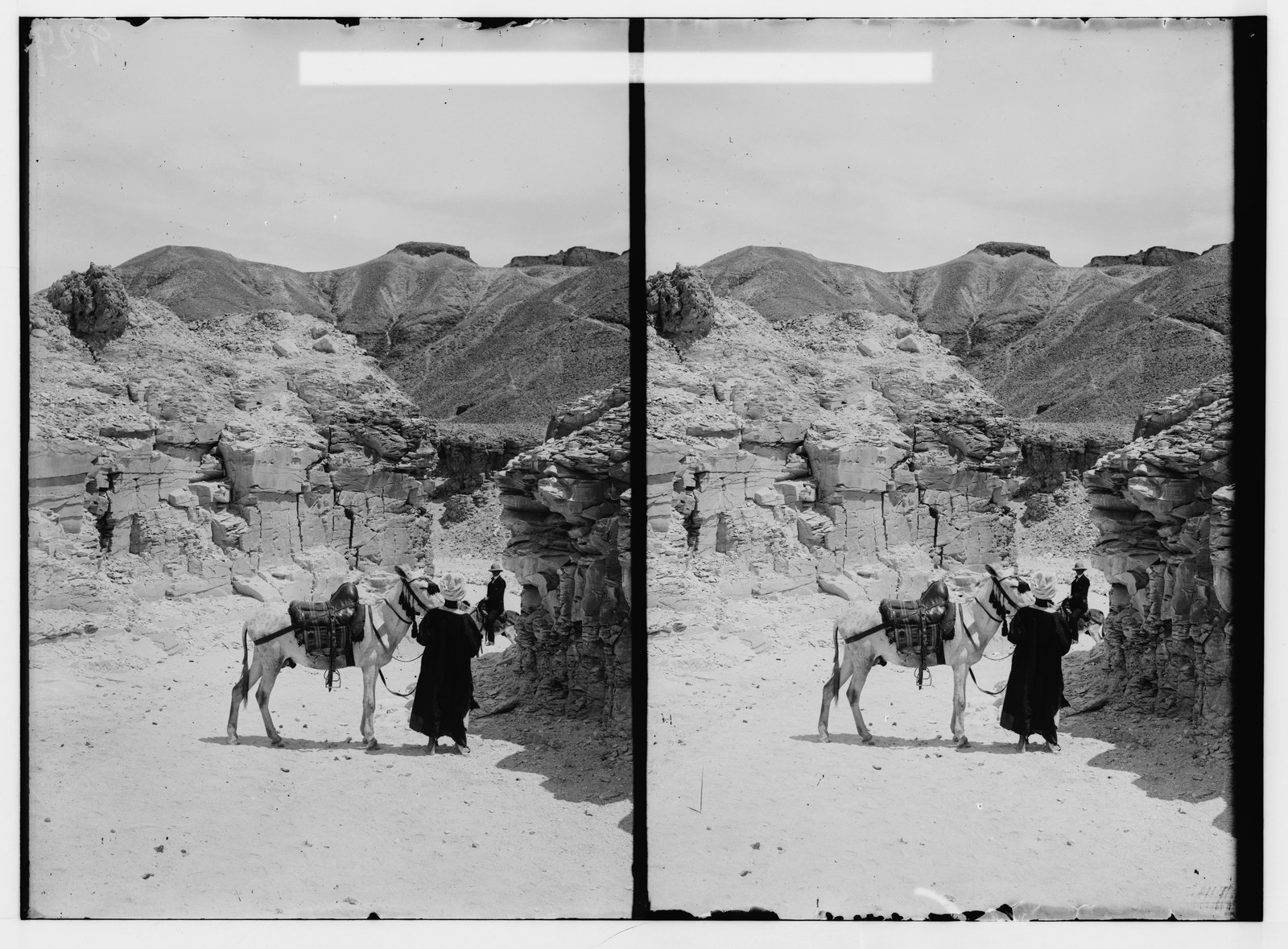
The Libyan Desert near Thebes, Egypt
Photograph: The Libyan Desert near Thebes, Egypt · Early 20th-century photograph, Egypt
8 · The Desert near the Nile

The Path into the Distant Desert. Silver and Gold

After this I went to the former elder from whom I had sought guidance at the very beginning, and began to entreat him to go and dwell with me in the desert in some inaccessible place. When the elder refused – both because of his old age and because of the novelty of such a form of asceticism – I fearlessly set out alone on the long journey to a mountain in the desert unknown among the monks.

But the enemy, not ceasing to tempt me and wishing to hinder the fulfilment of my intention, cast a silver dish on my path in order to tempt me with love of money. Seeing the dish, I understood the enemy’s cunning and paused a little in thought, saying to myself: ‘Whence could this dish come in the desert? There is not even a single human footprint here; this is your cunning, devil, but you will not hinder my intention by this: let your silver perish with you’ (Acts 8:20). And as soon as I had spoken this, the dish instantly vanished as smoke is dispersed by fire.

At another time after this I saw gold, lying in great quantity on my path. I quickly leapt over it as over some fire and hastened into the desert.

Source — St Demetrius of Rostov, “Lives of the Saints”
After this Anthony went to the above-mentioned elder from whom he had sought guidance at the very beginning, and began to entreat him to go and dwell with him in the desert in some inaccessible place. When the elder refused – both because of his old age and because of the novelty of such a form of asceticism – Anthony fearlessly set out alone on the long journey to a mountain in the desert unknown among the monks. […] the enemy, not ceasing to tempt him and wishing to hinder the fulfilment of his intention, cast a silver dish on his path in order to tempt him with love of money. Seeing the dish, Anthony understood the enemy’s cunning and paused a little in thought. […] Whence could this dish come in the desert? This is only a path for beasts and birds; there is not even a single human footprint here. […] This is your cunning, devil, but you will not hinder my intention by this: ‘let your silver perish with you’ (Acts 8:20). And as soon as he had spoken this, the dish instantly vanished as smoke is dispersed by fire. At another time after this he saw gold, lying in great quantity on his path. He quickly leapt over it as over some fire and hastened into the desert.
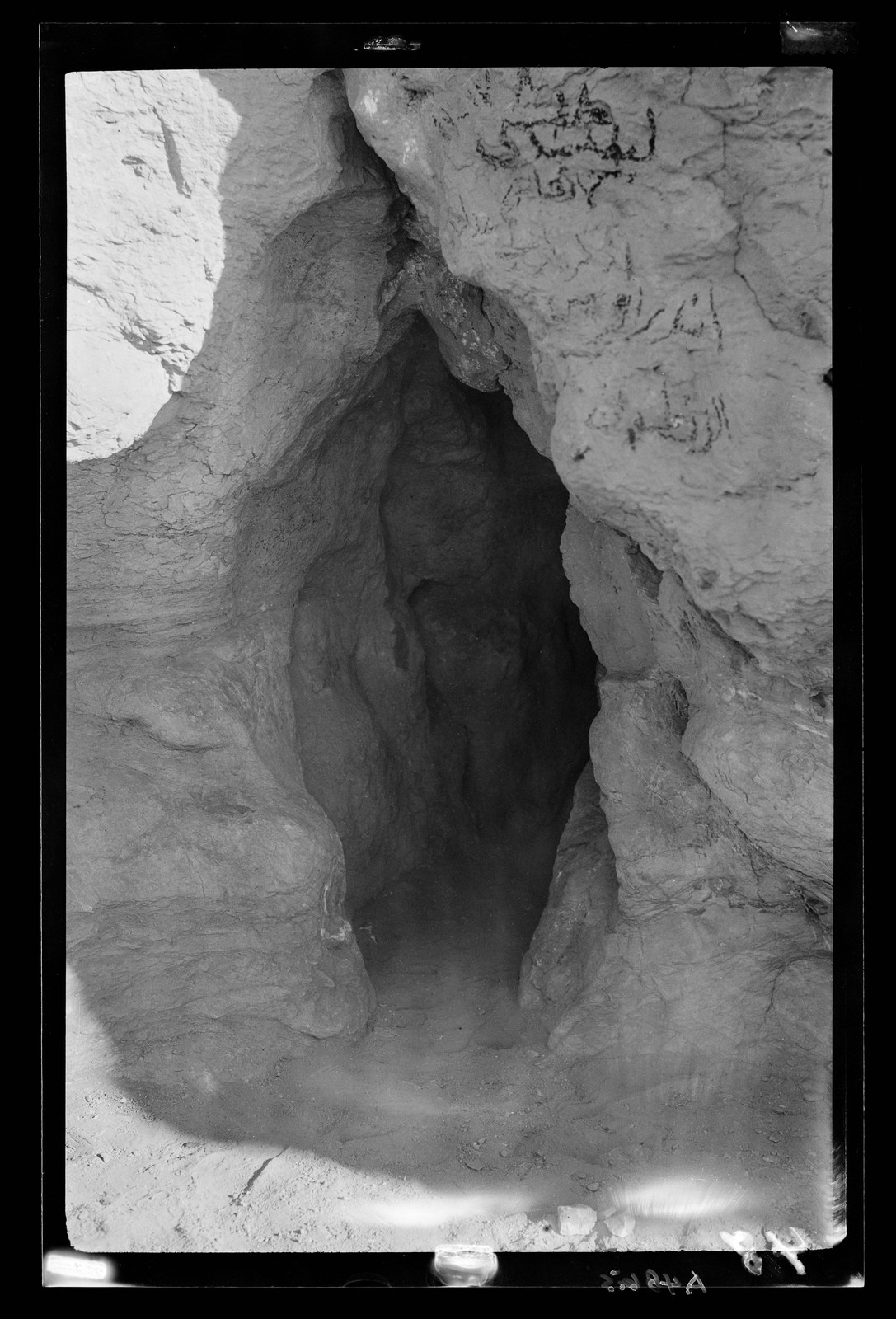
The Cave of Venerable Anthony the Great, Monastery of Saint Anthony, Egypt
Photograph: The Cave of Venerable Anthony the Great, Monastery of Saint Anthony, Egypt · Monastery of St. Anthony, Egypt
9 · A Mountain in the Desert

The Fortress in the Desert. Twenty Years of Enclosure

Crossing the river, I found in the mountain a certain empty enclosed place which, because of long abandonment, was full of all kinds of poisonous reptiles and serpents. I settled there, and all the multitude of scorpions, as though driven by someone, immediately scattered. Blocking the entrance with stones and bringing with me bread for six months – since it was the custom among the Thebans to store it, and it often remained unspoiled for a whole year – and having a little water inside the enclosure, I began to live there in complete solitude, as a hermit, never going out myself nor receiving anyone. Only twice a year did I receive through the roof bread brought to me by a friend whom I had previously asked to do this; but I did not speak a word with the one who brought it.

In such unceasing struggle with the demons and in such solitude far from men I lived a full twenty years. When the time came to labour not only for my own salvation but also for the benefit of others, many people gathered at my dwelling who desired to imitate my ascetic life, and they forcibly broke open the entrance to my dwelling. Seeing that my face was radiant and my body healthy, they marvelled how, after such fasts and labours and after such struggle with the demons, I had not changed either in face or in body. From this time I became for others also a guide, a shepherd, a teacher of ascetic life and a leader on the path to heaven.

Source — St Demetrius of Rostov, “Lives of the Saints”
Crossing the river there, he found in the mountain a certain empty enclosed place, which, because of its long abandonment, was full of various kinds of poisonous reptiles and snakes. Anthony settled there, and all the multitude of scorpions, as if driven away by someone, immediately scattered. He blocked the entrance with stones; having brought with him bread for six months – since it was the custom among the Thebans to store it, and it often did not spoil for a whole year – and having a little water inside the enclosure, he began to live there in complete solitude, as a hermit, never going out himself and not receiving anyone. Only twice a year did he receive through the roof bread brought to him by a friend, whom he had previously asked about this; but he did not speak a word with the one who brought it […] In such unceasing struggle with the demons and in such solitude far from people, Venerable Anthony lived a full twenty years. When the time came to labor not only for his own salvation, but also for the benefit of others, many people gathered at Anthony’s dwelling, wishing to imitate his ascetic life, and they forcibly broke open the entrance to his dwelling. Seeing that his face was radiant and his body healthy, they marveled how after such fasts and labors and after such struggle with the demons he had not changed either in face or in body. From this time Venerable Anthony became for others also a teacher, shepherd, instructor in ascetic life and guide on the path to heaven.
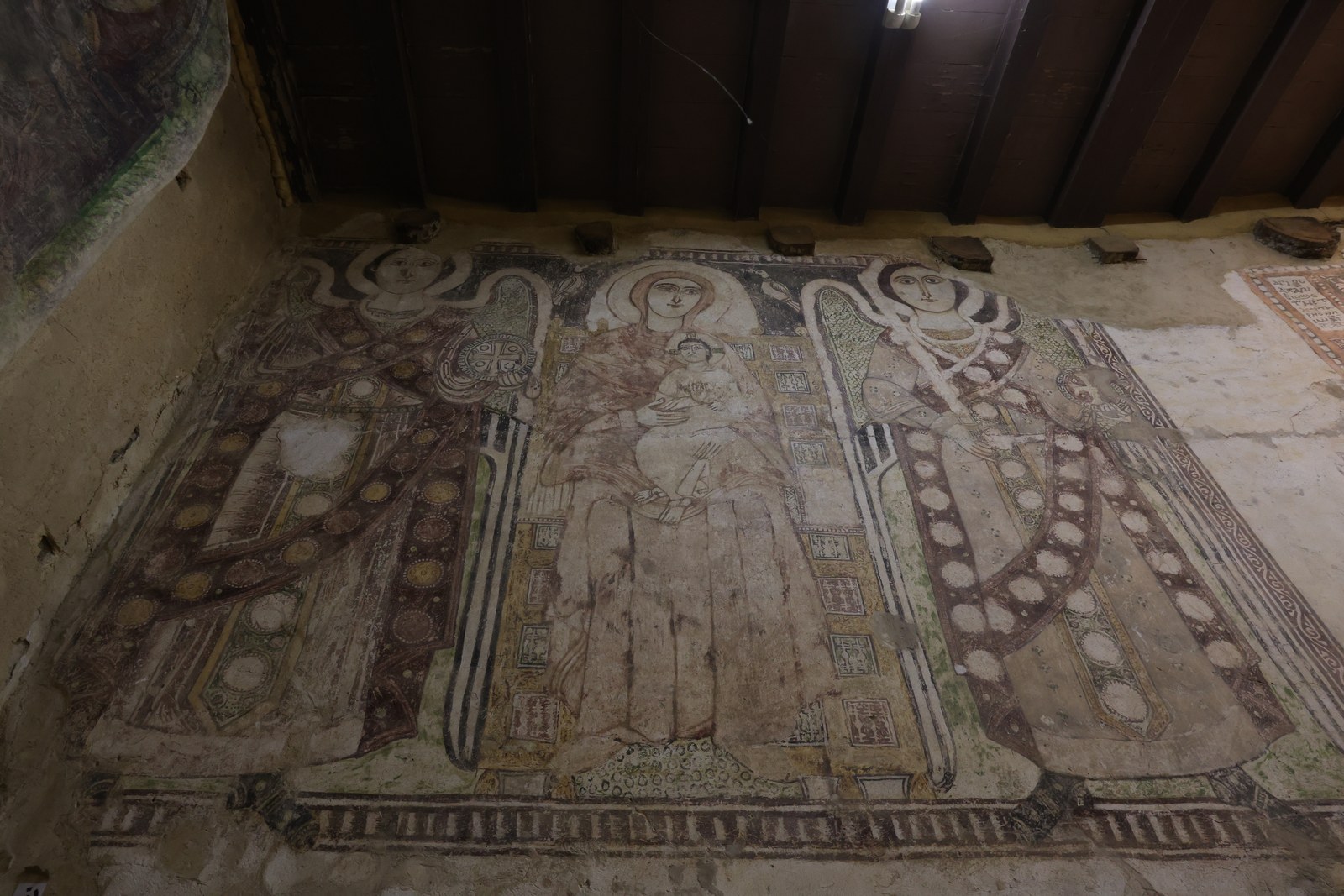
Coptic fresco, Monastery of Naqlun, Egypt
Fresco: Coptic fresco, Monastery of Naqlun, Egypt · Coptic fresco, Egypt
10 · A mountain in the desert

Instructions on Eternal Life

Once the brethren gathered and began to ask me to give them a rule of monastic life. I answered them, raising my voice: for learning the fulfillment of the commandments of God, the Divine Scriptures are completely sufficient; however, one cannot but consider it a very good and excellent thing if the brethren mutually comfort one another with words. Reveal to me, I said, as children to a father, what you know, and I, as to children, will impart to you what I have learned from long experience.

I taught about eternal life in this way: in this present life the price of a purchased thing is equal to what it is worth, and the seller receives no more than that. But the promise of eternal life is acquired for too small a price: it is given to us for a short life, about which it is written: «The days of our years are seventy years, and if we have strength, eighty years; and their best part is labor and sorrow» (Ps. 89:10). Even if we lived, laboring in the service of God, eighty or a hundred years, still in the life to come we are to reign not for some limited time, but for ages of ages – and we shall receive not earth in possession, but heaven.

Let no one who has renounced the world think of himself that he has left something great, because, in comparison with the heavenly blessings, the whole earth is insignificant and small. And I also said to the brethren: even if someone did not wish to part with his riches, still death will forcibly separate him from them; so why should we not do the same voluntarily for the sake of virtue?

Source — St Demetrius of Rostov, “Lives of the Saints”
Once the brethren gathered and began to ask him to give them a rule of monastic life. Raising his voice, he answered: – For learning the fulfillment of the commandments of God, the Divine Scriptures are completely sufficient; however, one cannot but consider it a very good and excellent thing if the brethren mutually comfort one another with words. Therefore reveal to me, as children to a father, what you know, and I, as to children, will impart to you what I have learned from long experience […] In this present life the price of a purchased thing is equal to what it is worth, and the seller receives no more than that. But the promise of eternal life is acquired for too small a price: it is given to us for a short life, about which it is written: «The days of our years are seventy years, and if we have strength, eighty years; and their best part is labor and sorrow» (Ps. 89:10). Even if we lived, laboring in the service of God, eighty or a hundred years, still in the life to come we are to reign not for some limited time, but for the aforementioned number of years we shall reign for ages of ages, and moreover – we shall receive not earth in possession, but heaven […] Let no one who has renounced the world think of himself that he has left something great, because, in comparison with the heavenly blessings, the whole earth is insignificant and small […] We must especially firmly remember that even if someone did not wish to part with his riches, still death will forcibly separate him from them. If so, then why should we not do the same for the sake of virtue?
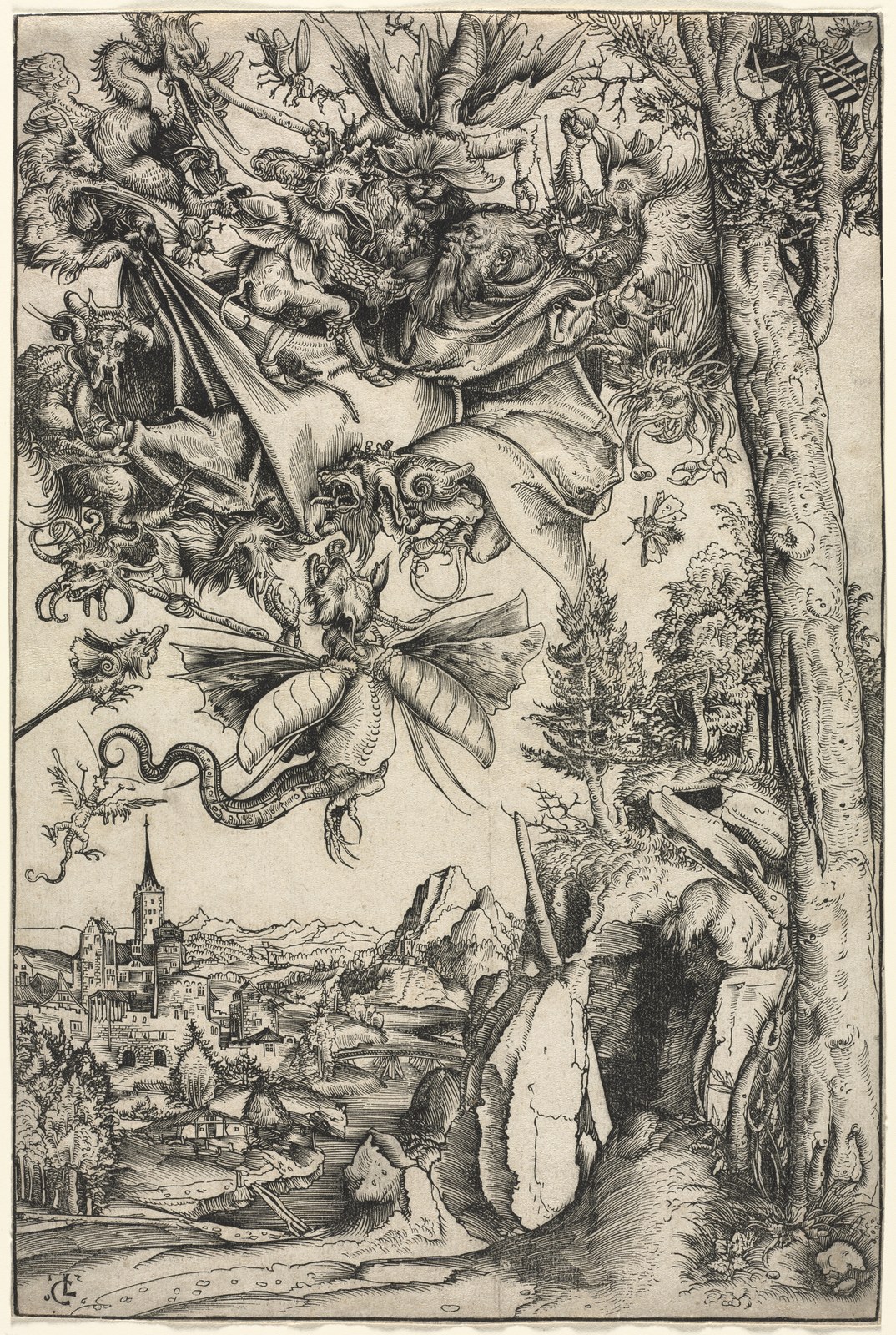
The Temptation of Saint Anthony
Painting: The Temptation of Saint Anthony · L. Cranach the Elder
11 · A mountain in the desert

On the wiles of the demons

God Himself has indicated to us to watch with unceasing attention what is happening in our soul, because we have very cunning enemies in battle – I mean the demons. First of all we must firmly remember that God is not the author of evil, and that the demons did not become evil by His will: as created by the good God, they were originally good spirits, but for self-exaltation they were cast down from heaven to earth. Cunningly changing their methods of battle, if they cannot seduce a man with thoughts, they try to deceive or frighten him with apparitions, taking the form now of a woman, now of a scorpion, now of a giant.

Once I saw the devil in the form of an extraordinary giant, who dared to say of himself: «I am the power and wisdom of God», – and he turned to me: «Ask of me, Anthony, whatever you wish, and I will give it to you». But I spat in his mouth in reply and, arming myself with the name of Christ, rushed at him, and that giant immediately melted and disappeared in my hands.

When I was fasting, he appeared to me in the form of a monk who brought loaves and urged me to eat: «Make some allowance for your body». But I understood that this was the cunning deception of the evil serpent, and, turning to my usual weapon – the sign of the Cross of Christ – I saw him turn into a stream of smoke and disappear through the window.

Once a demon knocked at the gate of the monastery. Going out, I saw before me a huge giant and asked: «Who are you?» He answered: «I am Satan… have you not heard from Scripture that the enemy’s weapons have completely failed, and you have destroyed cities» (Ps. 9:7). Behold, I am already deprived of any place in the world, all nations confess the name of Christ, the deserts are filled with monks.

Source — St Demetrius of Rostov, “Lives of the Saints”
God Himself has indicated to us that we must always watch with unremitting attention what is happening in our soul, for we have very cunning enemies in the struggle – I mean the demons […] First of all we must firmly remember that God is not the author of evil, and that the demons did not become evil by His will: such a change in them occurred not by nature, but depended on their own will. Created by the good God, they were originally good spirits, but for their self-exaltation they were cast down from heaven to earth […] Cunningly changing their methods of warfare, if they cannot seduce a man by thoughts, they try to deceive or frighten him with apparitions, assuming the form now of a woman, now of a scorpion […] I have seen many crafty deceptions from the demons […] once I saw the devil in the form of an enormous giant who dared to say of himself: – I am the power and wisdom of God, – and he addressed me with these words: – Ask of me, Anthony, whatever you wish, and I will give it to you. But I spat in his mouth in reply and, arming myself with the name of Christ, rushed at him with all my might, and that giant immediately melted at my touch and vanished from my hands. When I was fasting, he appeared to me again in the guise of a monk who brought loaves and urged me to eat. – You, – he said, – are a man and not free from human weakness; grant some relief to your body, lest you fall ill. But I understood that this was a crafty deception of the evil serpent, and when I turned to my usual weapon – the sign of the Cross of Christ – he immediately turned into a puff of smoke that stretched toward the window and disappeared through it […] Once a demon knocked at the gate of the monastery. Going out, I saw before me an enormous giant […] Who are you? He replied: – I am Satan […] the enemy has no weapon left at all, and «Thou hast destroyed their cities» (Ps. 9:7) […] behold, I am already deprived of every place in the world, no city remains under my power, and I have no weapon; all nations in all lands confess the name of Christ, and the deserts are filled with monks.
Date palms by the spring, Siwa Oasis, Egypt
Photograph: Date palms by the spring, Siwa Oasis, Egypt · Oasis in Egypt, our days
12 · The Inner Desert

The Inner Desert. The Gift of Healings

I resolved to go to the Upper Thebaid, where I would be unknown to anyone. Taking bread with me, I sat down on the riverbank, waiting for a boat. Suddenly I heard a voice from above: «Anthony! Where and why are you going?» I answered: «People give me no peace here, so I have decided to go to the Upper Thebaid.» – «If you go to the Thebaid,» the voice continued, «you will have to endure the same difficulties to an even greater degree; but if you wish to strive in strict solitude, go now into the inner desert.» The voice pointed out to me some Saracens who were traveling that road to Egypt for trade.

After spending three days and three nights with them on the way, I came upon a very high mountain, from under which flowed a spring of good water, and around it grew wild date palms. This place pleased me, as though it had been indicated by God Himself. The Saracens, seeing my ascetic life, began to bring me bread; and I, having cleared a small plot of ground, sowed seeds, and from that time onward I had my own bread each year.

Once the military commander Martinian came to me with his demon-possessed daughter. He began to knock and beg me to come out and pray for his suffering daughter. I, without opening the door, looked out from above and said: «Why do you turn to me for help? I am mortal like you; we are both equally weak by nature. If you believe in Christ, Whom I serve, then go, pray to God according to your faith, and your daughter will be healed.» Martinian believed, called upon the name of Christ and went home with his daughter who was healed at once.

Source — St Demetrius of Rostov, “Lives of the Saints”
he resolved to go to the upper Thebaid, where he would be unknown to anyone. Taking bread with him, he sat down on the riverbank and began to wait for a boat in order to cross to the other side. Suddenly he heard a voice from above which asked: – Anthony! Where and why are you going? […] Since people give me no peace here, I have decided to go to the Upper Thebaid […] If you go to the Thebaid, – the voice continued, – you will have to endure the same difficulties to an even greater degree. But if you truly wish to strive in strict solitude, then go now into the inner desert […] the voice pointed out to him some Saracens who usually traveled that road to Egypt for trade […] After spending three days and three nights with the Saracens on the way, blessed Anthony came upon a very high mountain, from under which flowed a spring of good water; the mountain was surrounded by a small plain on which grew several wild date palms. Anthony liked this place – as though it had been indicated to him by God Himself […] The Saracens, seeing his ascetic life, began to bring him bread […] he sowed seeds, and from that time onward he had his own bread each year […] the military commander Martinian came to him with his demon-possessed daughter. He began to knock and beg the venerable one to come out and pray and help his suffering daughter. Anthony, without opening the door, looked out from above and said: – Why do you turn to me for help? I am mortal like you; we are both equally weak by nature. If you believe in Christ, Whom I serve, then go, pray to God according to your faith, and your daughter will be healed. Martinian believed, called upon the name of Christ and went home with his daughter who was healed at once.
Venerable Anthony the Great
Icon: Venerable Anthony the Great · Thessaloniki, 16th c.
13 · Alexandria — a mountain in the desert

Persecutions. Prophecy of the Desecration and of Valacius

When a cruel persecution of the Church of Christ arose on the part of the impious Emperor Maximian, and the holy martyrs were being led to Alexandria, I too followed the victims of Christ, leaving my monastery for this purpose: «Let us go,» I said, «and we also to the bright feast of our brethren, that we may either ourselves be counted worthy of the same, or see others striving.» I openly showed my devotion to the holy martyrs, ministered to them in their bonds, accompanied them to judgment and did not conceal that I was a Christian; but no one dared to lay a hand on me.

Once, while sitting among the brethren at work, I was as though in a state of ecstasy and wept bitterly. The brethren begged me to say what I saw. «An inexpressible calamity is coming upon the Church of Christ,» I answered, «I saw the altar of the Lord’s temple, and in it many mules which, surrounding the holy table, furiously overturned everything that stood upon it; and I heard a voice which said: „My altar shall be defiled!“» This vision was fulfilled two years later, when a cruel Arian persecution broke out: the churches of God were plundered, the sacred vessels desecrated.

At that time the military commander Valacius mercilessly persecuted the Christians. I sent him a letter: «I see the wrath of God coming upon you. Cease persecuting the Christians, and then the destruction approaching you will depart.» The impious man, having read the letter, only laughed at it. On the fifth day after this the horses on which he was riding together with the Egyptian prefect Nestorius began to play under them, and the horse on which Nestorius sat suddenly seized Valacius with its teeth, throwing him to the ground; on the third day he gave up his impious soul.

Source — St Demetrius of Rostov, “Lives of the Saints”
a fierce persecution arose against the Church of Christ on the part of the impious Emperor Maximian. And when the holy martyrs were being led to Alexandria, the venerable Anthony followed after the victims of Christ, leaving his monastery for this purpose. “Let us go,” he said, “and we also to the bright feast of our brethren, that we too may be counted worthy of the same, or may see others contending […] He openly showed his devotion to the holy martyrs: bound to them with bonds of unbreakable love, he ministered to them when they were in chains, accompanied them to judgment, appeared before the face of the tormentors and, not concealing that he was a Christian […] Yet no one dared to lay a hand on him […] sitting among the brethren at work, he was as though in a state of rapture, gazing attentively upward to heaven, sighing, then, bending his knees in prayer, he wept bitterly for a long time […] An inexplicable calamity is coming upon the Church of Christ, and she will be delivered to men like unto irrational beasts. I saw the altar of the Lord’s temple, and in it many mules which, surrounding the holy table, furiously overturned everything that stood upon it, and scattering it upon the floor, trampled it with their feet; and I heard a voice which said: ‘My altar shall be defiled!’ […] This vision of the venerable one was fulfilled two years later, when a fierce Arian persecution broke out: the churches of God were plundered, the sacred vessels were defiled […] At that time there lived in Egypt a military commander named Balacius, who, urged on by the malicious Arians, mercilessly persecuted the Christians […] The venerable Anthony sent him a letter with the following content: ‘I see the wrath of God coming upon you. Cease persecuting the Christians, and then the destruction approaching you will depart.’ The impious man, having read the letter, only laughed at it […] On the fifth day after this he set out with the Egyptian prefect Nestorius to a place called Chereum, which is near Alexandria; they rode on the gentlest and calmest horses. Suddenly the horses began to play under them, striving toward one another, and the horse on which Nestorius sat suddenly seized Balacius with its teeth, threw him to the ground and began to gnaw the soft parts of his body […] on the third day he gave up his impious soul.
Venerable Anthony the Great
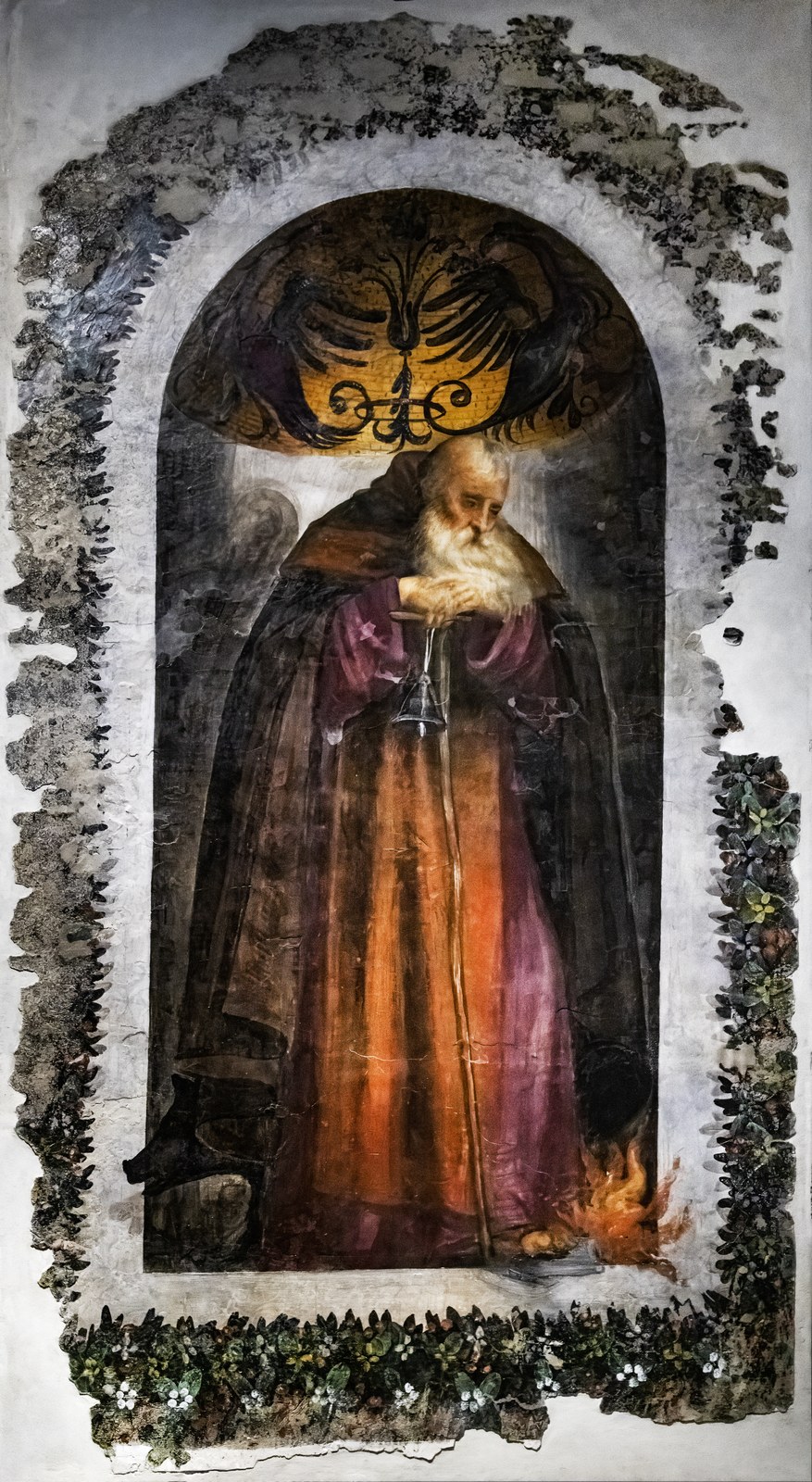
Painting: Venerable Anthony the Great · Pordenone, 16th c.
14 · Mountain in the desert

Repose

I had the custom of descending from the summit of the mountain to the brethren living at its foot and visiting them. On one such visit I told them of the approach of my death: “I have come to you for the last time, my children; I no longer hope to see you in this life, and it is time for me to be released from this life and to rest, for I have already lived one hundred and five years.” At these words the brethren were filled with deep sorrow and wept, kissing me as one already departing from the world; but I did not consent to remain with them and, bidding farewell, went up to the summit of the mountain, to my beloved dwelling.

After a few months I fell gravely ill. Calling to myself two monks who had struggled with me during the last fifteen years, I said to them: “My children! As it is written, ‘I go the way of all the earth’ (3 Kgs 2:2), the Lord is calling me to Himself, and I hope to taste of the heavenly blessings. Do not allow anyone to carry my remains to Egypt; bury me yourselves in the earth, and let no one but you know the grave where my body will be buried. Divide my garments as follows: the cloak and the worn-out undergarment on which I lie, give to Bishop Athanasius; give the other cloak to Bishop Serapion; take the hair shirt for yourselves. Farewell, my dear children! Anthony is departing, and he will be with you no more in this life.”

When after these words the disciples, bidding farewell, kissed me, I stretched out my legs and with quiet joy on my face, looking upon the Angels who had come for my soul as upon my friends, I died and was gathered to the holy fathers. My disciples, according to my testament, clothed the body and committed it to the earth, and besides them no one until now knows the place of my burial.

Source — St Demetrius of Rostov, “Lives of the Saints”
He had the custom of descending from the summit of the mountain where he himself dwelt to the brethren living at the foot of the mountain and visiting them. On one of these customary visits he told them of the approach of his death, which had been revealed to him by God. “I have come to you for the last time, my children,” he said, “I no longer hope to see you in this life, and it is time for me to be released from this life and to rest, for I have already lived one hundred and five years […] the brethren were filled with deep sorrow, they wept and kissed the elder as one already departing from the world […] having bid farewell to the brethren, he set off for the summit of the mountain to his beloved dwelling, the place of his ascetic labors. After a few months he fell gravely ill. Then, calling to himself two monks who had struggled with him during the last fifteen years and had ministered to the venerable one because of his old age, he said to them: “My children! As it is written (3 Kgs 2:2; cf. Josh 23:14), ‘I go the way of all the earth,’ the Lord is calling me to Himself, and I hope to taste of the heavenly blessings […] do not allow anyone to carry my remains to Egypt, that they might not give my body a sumptuous burial there […] Bury me yourselves, my children, in the earth and fulfill this commandment of your elder: let no one but you know the grave where my body will be buried […] Divide my garments as follows: the cloak and the worn-out undergarment on which I lie, give to Bishop Athanasius; give the other cloak to Bishop Serapion; take the hair shirt for yourselves. Farewell, my dear children! Anthony is departing, and he will be with you no more in this life.” […] When after these words the disciples, bidding farewell, kissed him, Anthony stretched out his legs and with quiet joy on his face, looking upon the Angels who had come for his soul as upon his friends, he died and was gathered to the holy fathers […] The disciples of the saint, according to his testament, clothed the body and committed it to the earth, and besides them no one until now knows the place of burial of the venerable Anthony.
Prayers to the Venerable Anthony the GreatSt Dimitry of Rostov, “Lives of the Saints”, in our libraryAll lives